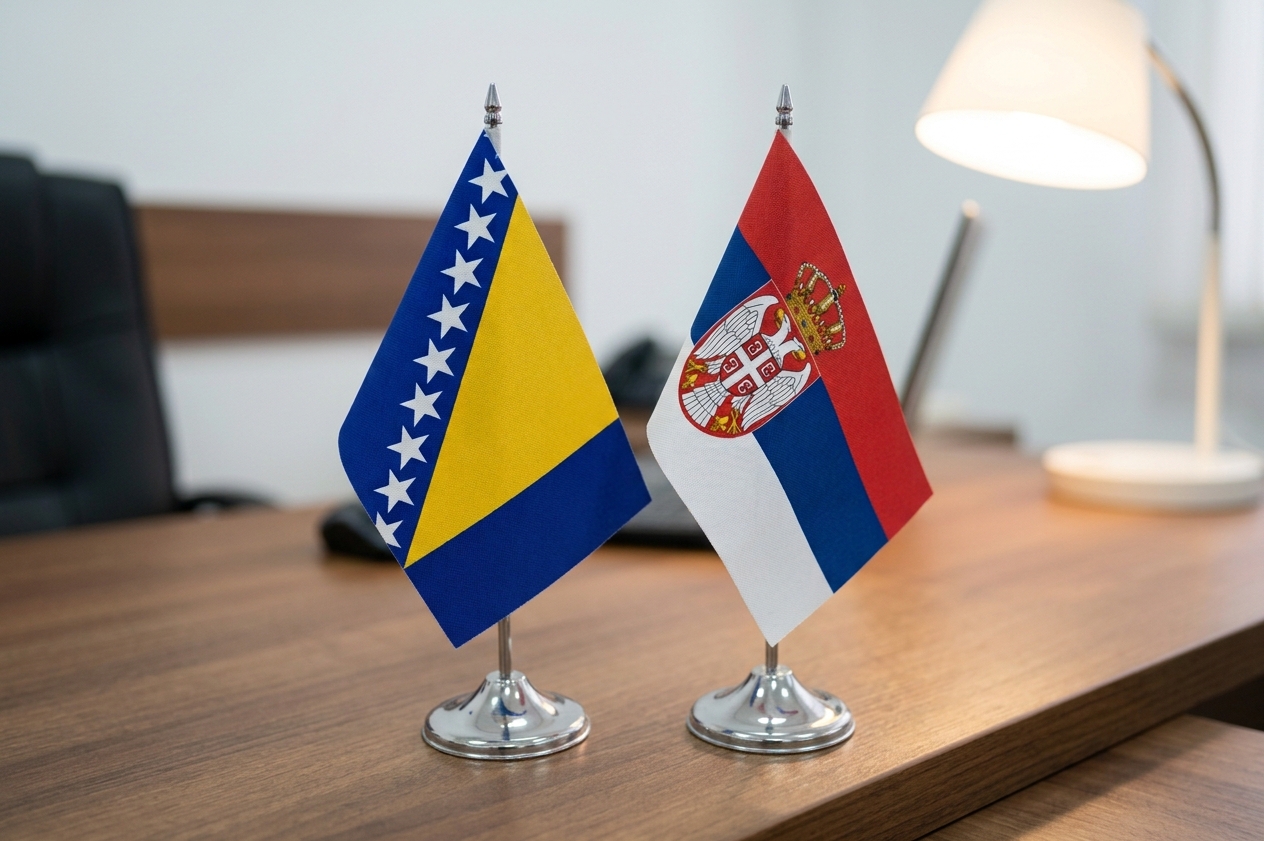
Relations between Bosnia and Herzegovina and Serbia have come under renewed strain after Bosnia and Herzegovina’s Foreign Minister Elmedin Konaković declared two Serbian diplomatic officials persona non grata following the public commemoration and funeral of convicted war criminal Ratko Mladić in Belgrade. The decision has triggered a political dispute inside Bosnia and Herzegovina, along with warnings of possible reciprocal action from Serbia, adding another layer of tension to already sensitive relations between Sarajevo and Belgrade.
Konaković ordered Serbian military attaché Milan Dulanović and an adviser linked to Serbia’s Security Intelligence Agency to leave Bosnia and Herzegovina within 48 hours. He said Serbia had crossed a “red line” by allowing the public glorification of Mladić, who was convicted by the International Criminal Tribunal for the former Yugoslavia of genocide, crimes against humanity and war crimes and sentenced to life imprisonment. The decision followed a funeral in Belgrade attended by thousands, with Serbian officials and other prominent figures among those present.
Bosnia-Serbia Tensions Expose Political Divisions
The move has also exposed divisions within Bosnia and Herzegovina itself. Republika Srpska representative on the state Presidency Željka Cvijanović has challenged Konaković’s authority, arguing that foreign policy is the responsibility of the tripartite Presidency and that the Foreign Minister cannot independently make decisions affecting diplomatic relations.
The disagreement reflects the complicated constitutional structure of Bosnia and Herzegovina, where responsibilities for foreign policy and state institutions are divided among several levels of government. Konaković, however, has defended his decision by referring to rules governing the declaration of foreign diplomats as undesirable persons.
He argues that the action was legally justified and necessary because of what he considers Serbia’s failure to adequately confront the legacy of the Bosnian War. The dispute over authority could therefore become almost as significant as the original diplomatic issue, particularly if the disagreement develops into a broader institutional confrontation within Bosnia and Herzegovina.
Serbia has signaled that it may respond with reciprocal measures, although President Aleksandar Vučić has said Belgrade would approach the situation carefully. He has indicated that Serbia must consider the possible consequences for Bosniaks living in Serbia and Serbs living in Republika Srpska, suggesting that Belgrade does not want the diplomatic dispute to further affect relations between the two communities.
Any reciprocal expulsions could nevertheless deepen the diplomatic crisis and reduce the space for cooperation between Sarajevo and Belgrade. The latest confrontation comes against a backdrop of longstanding disagreements over the legacy of the 1990s conflicts and the political relationship between Serbia and Bosnia and Herzegovina.
Europe Watches Diplomatic Dispute Closely
The controversy has also attracted strong criticism from European officials. EU Enlargement Commissioner Marta Kos canceled a planned visit to Serbia after condemning the glorification surrounding Mladić’s death, saying that it was incompatible with the values underpinning Serbia’s European path.
European Commission President Ursula von der Leyen and European Council President António Costa later described images from the funeral as “shocking” and warned that honoring a convicted war criminal could undermine Serbia’s efforts to move toward EU membership.
The United Nations has also expressed concern. UN Special Adviser on the Prevention of Genocide Chaloka Beyani said the large scale public commemoration of Mladić, particularly with political participation and official ceremonial elements, was deeply inappropriate. International courts convicted Mladić of genocide, crimes against humanity and war crimes, including crimes connected to the Srebrenica genocide and the siege of Sarajevo.
His death and subsequent funeral have therefore reopened painful questions across the region about how societies remember the wars of the 1990s and how political leaders address victims and survivors. The diplomatic dispute comes at a particularly sensitive moment for Serbia, which remains an EU candidate and faces continued pressure from Brussels to improve relations with its neighbors and confront the legacy of the conflicts.
The EU has not announced a specific measure against Serbia because of the funeral, but senior European officials have repeatedly emphasized that reconciliation and respect for the rule of law are important parts of the accession process. For Bosnia and Herzegovina, the episode highlights how unresolved questions surrounding the war continue to influence contemporary politics and relations with Serbia.
For Serbia, the reaction demonstrates the international consequences that can follow when figures convicted of serious wartime crimes are publicly celebrated. With possible reciprocal diplomatic measures still on the table, the coming weeks could determine whether the dispute remains a temporary diplomatic confrontation or develops into a wider deterioration in relations.
Ultimately, the latest Bosnia-Serbia tensions show that the legacy of the Bosnian War remains deeply sensitive more than three decades after the conflict. The expulsion of two Serbian diplomats is a significant diplomatic step, but the disagreement also raises broader questions about reconciliation, institutional authority and the region’s relationship with its European future. Whether Sarajevo and Belgrade choose escalation or a return to diplomatic dialogue will be closely watched across the Western Balkans.