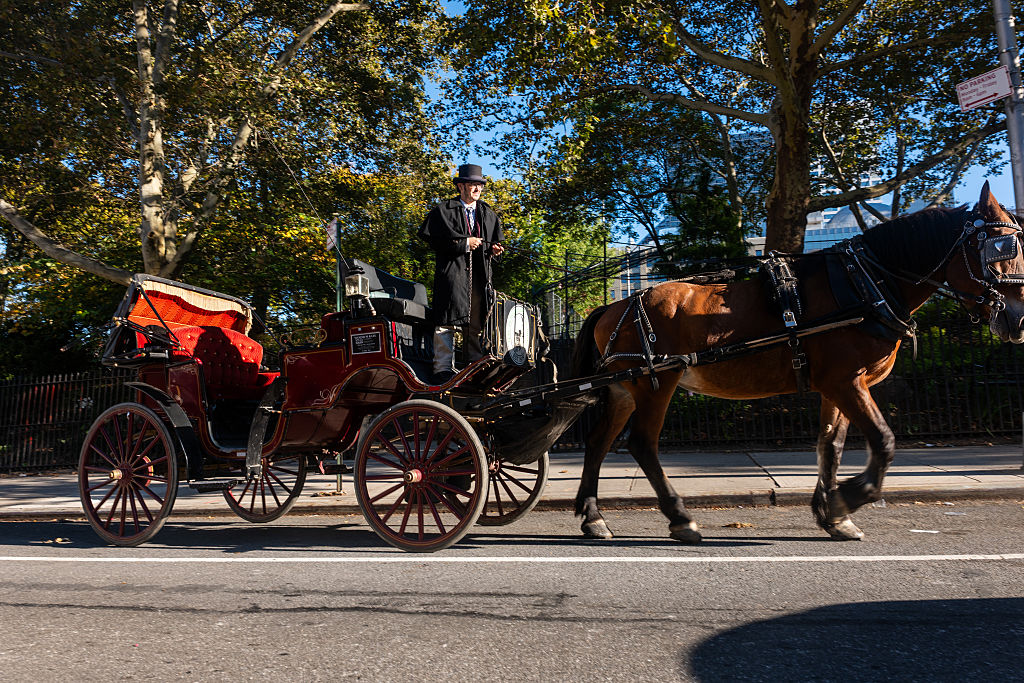
The New York City Council has approved a ban on horse-drawn carriages in Central Park, with the measure set to take effect on June 1, 2028, following years of heated debate over animal welfare, public safety and the city’s long-standing tradition.
The legislation passed by a vote of 40 to 7. Mayor Zohran Mamdani has not yet formally signed the measure, but he supports the ban and is expected to do so.
The issue has divided New Yorkers for years. Animal welfare advocates argue that horses should not be exposed to traffic, noise and potentially dangerous conditions, while supporters of the carriage industry point to a tradition dating back nearly 170 years.
A tradition dating back to Central Park’s early days
Central Park, one of New York City’s most famous green spaces, opened in 1858 in the heart of Manhattan. It was designed as a place where residents of the rapidly growing city could escape the urban environment and enjoy nature.
Horseback riding and carriage rides soon became popular activities. Wealthy New Yorkers initially used their own carriages to travel through the park and socialize, while others rented carriages for leisurely outings. Over time, the rides became a popular attraction for tourists visiting the city.
Growing controversy over animal welfare
Opposition to the carriage industry dates back to the 19th century. In 1866, Henry Bergh founded the American Society for the Prevention of Cruelty to Animals (ASPCA) after witnessing the mistreatment of working horses.
Bergh’s advocacy helped advance animal protection laws in New York. Today, the ASPCA remains one of the country’s best-known animal welfare organizations.
As automobiles replaced horse-drawn carriages for everyday transportation, the industry increasingly became a tourist attraction, intensifying debate over whether the practice should continue in a modern city.
The ASPCA and other animal welfare organizations have called for a ban, arguing that busy streets and crowded park paths create unnecessary risks for horses and visitors. The Central Park Conservancy, the nonprofit organization responsible for maintaining the park, has also supported ending the rides.
Fatal accident adds urgency to the debate
The campaign gained momentum following a fatal carriage accident in June involving 18-year-old Indian tourist Romanch Mahajan, who was visiting New York with his family.
According to reports, a horse became frightened and ran out of control, causing Mahajan to fall from the carriage and die.
The Central Park Conservancy has also cited seven horse-related incidents over a 13-month period. In one incident in May, a carriage driver was injured after a frightened horse struck another carriage, causing it to overturn. In January, a horse ran into traffic, triggering a collision involving several vehicles.
Another horse pulling a carriage died after ingesting a poisonous plant in Central Park.
The legislation is named in honor of Mahajan. Council Speaker Julie Menin said the measure was intended to prevent further deaths connected to the industry. Mahajan’s family attended the council vote.
Carriage operators point to strict regulations
Carriage operators maintain that their horses receive proper care and are protected by extensive city regulations.
Under existing rules, horses must undergo annual medical examinations and regular veterinary checks. They may work no more than nine hours within a 24-hour period and must receive at least 15 minutes of rest after every two hours of work. They are also entitled to at least five weeks of rest annually.
Additional restrictions apply during extreme weather. Horses must be provided with appropriate coverings in cold or rainy conditions, and they cannot work when temperatures exceed 32 degrees Celsius (about 90 degrees Fahrenheit) or fall below minus 8 degrees Celsius (about 18 degrees Fahrenheit).
The animals must also be housed in designated stables, most of which are located on Manhattan’s West Side, near Central Park.
Transition period planned for workers and horses
The city has previously considered banning horse-drawn carriages, but earlier proposals faced opposition from politicians and organizations representing carriage workers.
The new legislation establishes June 1, 2028, as the deadline for ending the rides, giving the city time to develop a transition plan for approximately 180 horses and 200 owners, drivers and other industry workers.
City officials intend to help affected workers find alternative employment. The legislation also prohibits the sale of the horses for similar work or for slaughter. Owners will be allowed to keep their horses if they choose to do so.
However, the Transport Workers Union, which represents carriage drivers, is considering legal action. Union representatives argue that workers have not been given sufficient guarantees about their future livelihoods and warn that the ban could lead to financial devastation for those employed in the industry.
Until the law takes effect, horse-drawn carriages will continue operating in Central Park, preserving a tradition that has been part of New York City’s history for nearly 170 years.