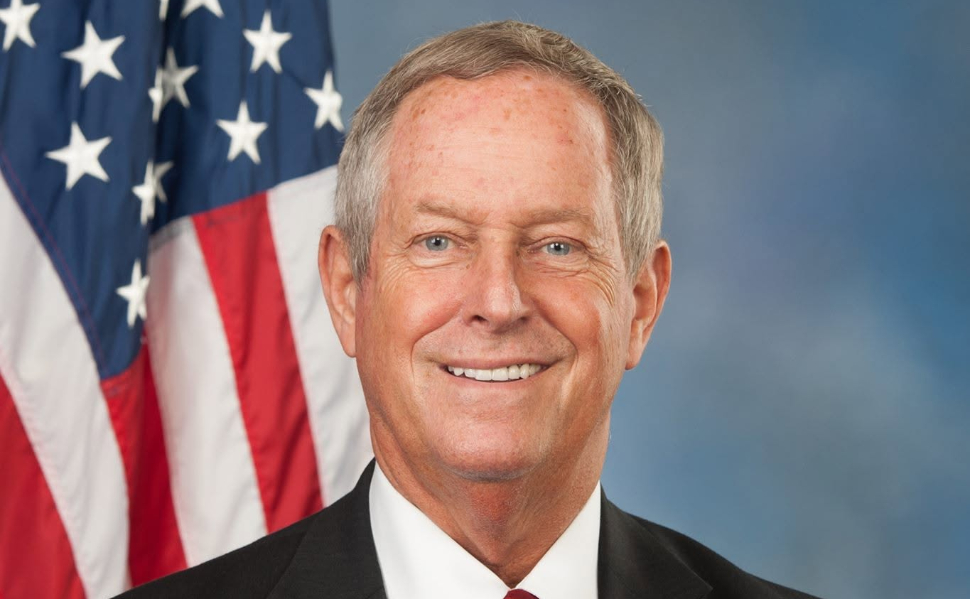
Republican Congressman Joe Wilson has urged Secretary of State Marco Rubio to impose U.S. visa and financial sanctions on four prominent Serbian businessmen whom he accuses of benefiting from government connections and undermining American interests. The proposed measures target executives from Millennium Team and Alta Bank, as well as the owner of Pink television. The businessmen and companies named have responded differently to the allegations.
Four Serbian businessmen with close ties to the country’s ruling establishment have been named in a request for U.S. sanctions submitted by Republican Congressman Joe Wilson to Secretary of State Marco Rubio.
The list includes Ivan Bošnjak and Stojan Vujko, associated with construction and infrastructure company Millennium Team; Davor Macura of Alta Bank; and Željko Mitrović, owner of Serbian broadcaster Pink TV.
According to a letter dated October 14 and obtained by Radio Free Europe/Radio Liberty (RFE/RL), Wilson is seeking restrictions that would prohibit the four men from entering the United States and accessing the American financial system.
Wilson submitted the request in his capacity as co-chair of the U.S. Commission on Security and Cooperation in Europe, commonly known as the U.S. Helsinki Commission.
The letter describes the businessmen as associates of former Serbian President Aleksandar Vučić and alleges that they use public resources for personal enrichment.
“They sustain his corrupt regime, have worked to undermine US interests in the country and the region, and are actively involved in rigging the October 25 election,” the letter states, referring to Serbia’s upcoming parliamentary elections. These are allegations made in the congressional request and have not been established as facts by a court.
Allegations Against Millennium Team, Alta Bank and Pink TV
Wilson’s letter makes separate allegations concerning the businesses associated with the four men.
It accuses Millennium Team executives Bošnjak and Vujko of benefiting from government contracts and agreements with Chinese companies, alleging that these arrangements disadvantage Western businesses, including American companies.
Regarding Alta Bank, the letter alleges involvement in money laundering. It also accuses Pink TV of consolidating media influence and serving as a propaganda outlet for the government.
Wilson further criticized Vučić’s record on the rule of law and democratic competition, arguing that the Serbian government has allowed Russian and Chinese influence to grow.
The congressman called on Rubio to consider sanctions as a way to increase pressure on Serbian authorities ahead of the October 25 vote.
Companies Reject Allegations
Millennium Team and Alta Bank rejected the accusations in responses to RFE/RL, while Mitrović did not directly address the specific claims in the letter.
Millennium Team said it operates transparently and in accordance with the law, describing the allegations as inaccurate and unfounded. The company said it would consider legal action to protect its rights if the claims were published.
Alta Bank categorically denied allegations of money laundering, corruption, misuse of public resources and interference in elections.
The bank said no competent authority had made any finding against Alta Bank, Alta Pay Group or Macura regarding the allegations. It described Macura as a private entrepreneur with interests in banking, payment services and other sectors.
The bank also emphasized that it operates under the supervision of the National Bank of Serbia and said its anti-money-laundering controls and compliance procedures had been confirmed through internal and external audits.
Alta Bank added that it had no evidence that a formal sanctions request had been submitted to the U.S. State Department and said it would seek clarification from the relevant authorities.
Mitrović responded to RFE/RL by directing the outlet to an Instagram post in which he congratulated the United States ahead of Independence Day and expressed hope for closer relations between Serbia and America.
Mitrović’s Previous U.S. and European Sanctions
Among the four men named in Wilson’s request, Mitrović has previously been subject to American and European sanctions.
He was sanctioned in the late 1990s because of his ties to the government of former Serbian and Yugoslav president Slobodan Milošević. The restrictions included a ban on entering the United States and prohibitions on certain business and financial dealings with American individuals and companies.
Bošnjak, Vujko and Macura have not previously been subject to international sanctions, according to RFE/RL. Neither Millennium Team nor Alta Bank has been subject to international sanctions.
The current request does not mean that new sanctions have been imposed. Any decision to introduce restrictions would require action by the relevant U.S. authorities.
The State Department told RFE/RL that it does not comment on communications with Congress or specific cases involving visa records, citing confidentiality requirements.
Serbia’s Elections Draw Increased U.S. Scrutiny
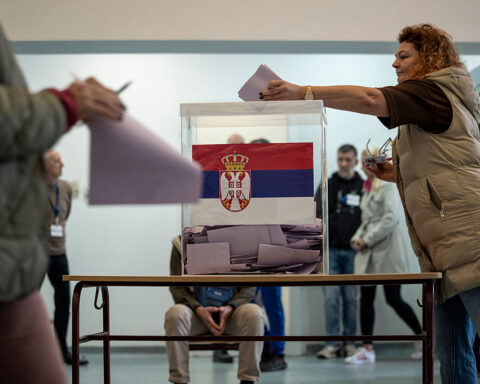
The request comes shortly before Serbia’s October 25 parliamentary elections, which are expected to be a significant political test for Vučić and his Serbian Progressive Party (SNS).
Vučić resigned as president on September 27 after serving two terms and is seeking a return as prime minister. His party has dominated Serbian politics for approximately 14 years.
Wilson’s initiative is part of a broader increase in scrutiny of Serbia by members of the U.S. Congress.
In August, Wilson and Democratic Representative Bill Keating introduced legislation proposing measures against Serbia over concerns about democratic backsliding and its relationships with Russia and China.
A bipartisan proposal was subsequently introduced in the Senate by Republican Senator Chuck Grassley and Democratic Senator Richard Blumenthal. The proposals include possible visa and financial sanctions against Serbian officials and changes to the U.S.-Serbia Strategic Dialogue, a framework for high-level cooperation.
In a separate development, a bipartisan group of U.S. senators called on Serbian authorities to ensure a level playing field for all electoral participants. They cited reports of alleged unlawful surveillance of opposition members and attempts to undermine election-observation missions.
The Serbian government and the SNS did not respond to RFE/RL’s requests for comment on the latest sanctions proposal.
What Happens Next?
The request now places the matter before the U.S. administration, but it remains unclear whether the State Department will take action against the four businessmen.
The proposed restrictions would affect their ability to travel to the United States and access the American financial system if implemented. For now, however, the request itself is not a sanctions decision.
The developments highlight continuing tensions surrounding Serbia’s political environment, the role of business interests close to the government and Washington’s concerns about democratic institutions and foreign influence in the region.