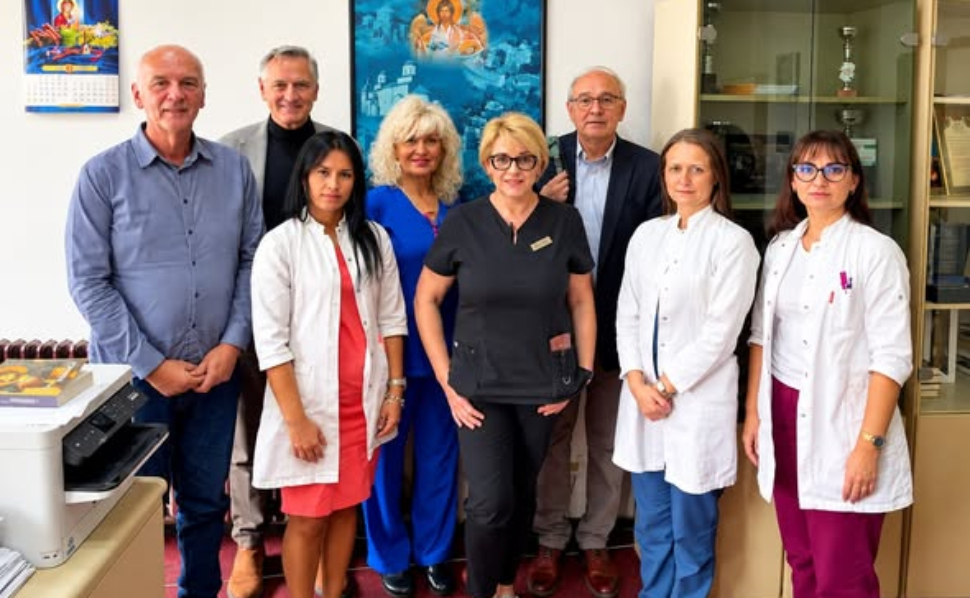
A delegation from the Srebrenica Memorial Center has completed a six-day visit to St. Louis, Missouri, seeking stronger partnerships with American schools, universities and museums to preserve the history of the 1995 Srebrenica genocide.
The visit, held from October 21 to 26, brought representatives of the Bosnia and Herzegovina-based institution together with educators, researchers, survivors, community leaders and US Congressman Wesley Bell.
Led by Memorial Center Director Emir Suljagić, the delegation also included Almir Salihović and Edin Ikanović, who coordinate the center’s school partnership programs.
St. Louis, home to a substantial Bosnian-American community, provided an important setting for discussions about preserving historical memory and connecting younger generations with their families’ experiences.
Bringing Srebrenica’s History Into American Classrooms
Education was a central focus of the visit, with meetings at Affton High School and Bayless High School exploring ways to incorporate the history of Srebrenica into teaching about human rights, genocide and international justice.
The discussions addressed the use of survivor testimonies, historical documents and court findings, as well as opportunities for teacher training and collaborative student research.
The delegation also engaged with representatives of Saint Louis University and other academic institutions to explore possible research partnerships and educational exchanges.
At the St. Louis Kaplan Feldman Holocaust Museum, discussions focused on preserving testimony, documenting mass atrocities and helping younger audiences understand difficult historical events.
The visit included meetings with Bosnian-American community organizations and survivors, emphasizing the importance of passing personal and family histories to future generations.
US Congressman Wesley Bell Meets Memorial Center Delegation
During the visit, Suljagić met with US Congressman Wesley Bell, who represents Missouri and serves as co-chair of the Congressional Caucus on Bosnia and Herzegovina.
The meeting, organized with support from the Congress of Bosniaks of North America, addressed the Memorial Center’s work and the importance of continued American engagement in preserving the historical record of the Srebrenica genocide.
According to the Memorial Center, the discussions also covered institutional pressures affecting its employees and opportunities to expand educational cooperation in the United States.
Suljagić thanked Bell for his previous support and invited him to visit the Memorial Center.
The delegation’s program also included discussions about preserving Bosnian-American history through oral-history projects, community archives and museum initiatives.
In July 1995, Bosnian Serb forces killed more than 8,000 Bosniak men and boys in and around Srebrenica. International courts have established that the atrocities constituted genocide.
More than three decades later, the Memorial Center continues to document the crimes, preserve victims’ memories and develop educational programs.
The St. Louis visit opened discussions about future cooperation, although specific new institutional agreements have not yet been publicly detailed.
For the Bosnian-American community, the initiative offers another opportunity to connect its history in the United States with efforts to preserve the memory of Srebrenica for future generations.