Albania has introduced fines of more than $6,000 for people who remain at demonstrations that turn violent, even if they do not personally participate in violent acts, as the government responds to months of anti-government protests.
Prime Minister Edi Rama‘s government approved the new measures on Wednesday, following increasingly violent confrontations between protesters and police in the capital, Tirana.
The legislation has raised questions about the consequences for peaceful demonstrators who remain in crowds where other participants engage in violence.
Albania Introduces Heavy Fines for Protesters
Under the new rules, individuals can face fines of up to 500,000 Albanian leks, equivalent to approximately $6,130, for remaining in crowds involved in violence or looting in public spaces.
The measures also target people who conceal their identities during such incidents.
The financial penalties are particularly significant in Albania, where the average monthly salary before taxes is approximately $1,026.
Police have also received additional authority to temporarily restrict public gatherings in certain areas when there is a risk of violence.
These restrictions may apply near schools, hospitals and government institutions.
The measures also introduce sanctions for online incitement to violence and provisions for compensating small businesses that suffer damage during demonstrations.
The new rules take effect immediately. However, Albania’s parliament must approve them within 45 days for them to remain in force.
Rama said his government’s approach was influenced by a French legislative proposal that would make protesters financially responsible for damage caused during demonstrations.
Protests Began Over Jared Kushner-Backed Resort Project
Albania’s protest movement began peacefully in May, when demonstrators opposed a luxury tourism development in a protected natural area.
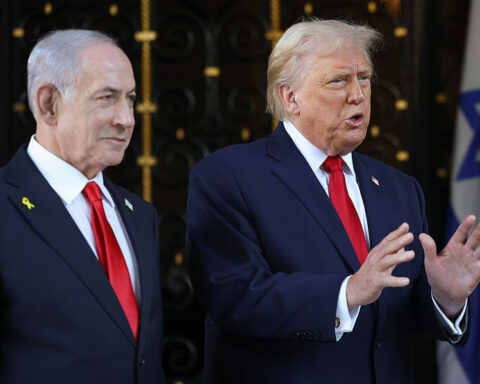
The project received backing from Jared Kushner, the son-in-law of US President Donald Trump.
What began as opposition to the development gradually expanded into a broader movement against the Albanian government.
By mid-October, student-led demonstrations had intensified, with protesters expressing frustration over alleged corruption, problems in the healthcare system and limited economic opportunities for young people.
The protests have also included demands for Rama’s resignation.
Recent demonstrations in Tirana have escalated into confrontations between security forces and protesters, with police detaining participants during several gatherings.
Rama has repeatedly blamed foreign actors for contributing to the unrest.
He has accused Russia and Iran of spreading online misinformation and encouraging instability, while also calling for dialogue with protesters.
The accusations have not been independently established in the reporting cited here.
The latest measures place Albania’s government under renewed scrutiny as it attempts to address violence during demonstrations without unnecessarily restricting peaceful assembly.
For Albanian communities in the United States and Canada, the developments are particularly relevant because the protest movement initially emerged around a tourism project connected to a prominent American political family.
With parliamentary approval still required, the future of Albania’s new protest restrictions remains uncertain.