Selected American journalists and influencers are expected to visit the besieged city of Oleshky under Russian military escort, following a humanitarian ceasefire reportedly brokered by First Lady Melania Trump. Critics warn Moscow could use the visit to portray its forces as rescuers while concealing the suffering of local civilians.
Russia is preparing to allow a select group of American journalists and social media influencers with ties to President Donald Trump’s administration to visit the occupied Ukrainian city of Oleshky, a town that has been largely cut off from the outside world for months.
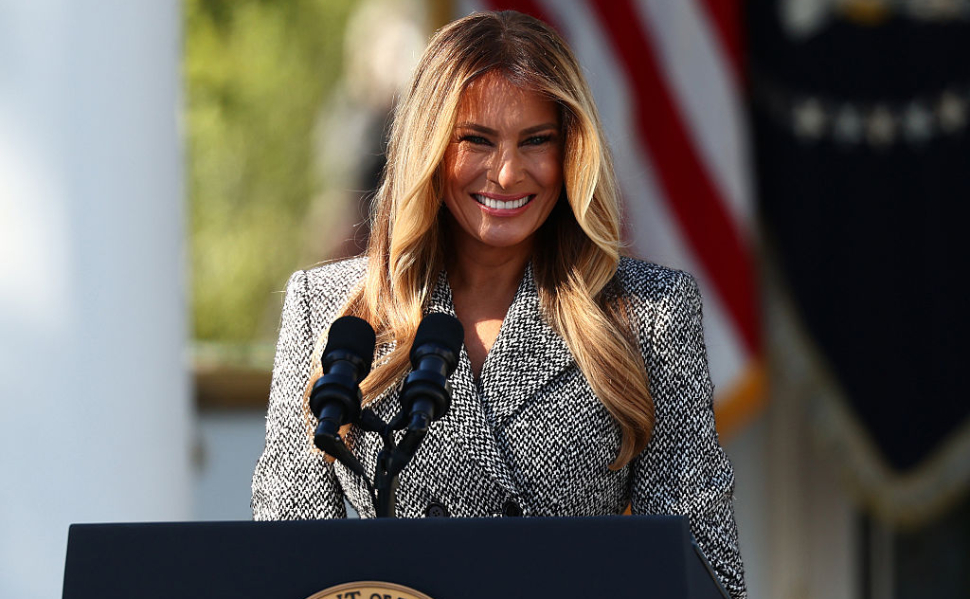
The planned visit follows a humanitarian ceasefire reportedly brokered with the involvement of U.S. First Lady Melania Trump. However, the arrangement has raised concerns that the Kremlin could use the opportunity to stage a carefully controlled propaganda operation, presenting Russian forces as humanitarian rescuers while obscuring the conditions faced by the remaining civilian population.
According to The Atlantic, journalists will be escorted through the city by Russian military personnel, making it difficult for them to independently assess the situation.
“Oleshky has now become the site of a humanitarian ceasefire negotiated by America’s first lady, Melania Trump,” The Atlantic writes, noting that Ukraine had repeatedly sought access to civilians in the city to deliver humanitarian aid or organize evacuations.
The publication warns that whatever visiting journalists discover about life in Oleshky may not reflect the full reality on the ground.
A City Cut Off From the Outside World
Oleshky is located on the eastern bank of the Dnipro River, directly across from Kherson, which remains under Ukrainian control.
Before the war, the city had approximately 24,000 residents. Today, fewer than 2,000 civilians are believed to remain.
Those who have stayed face extremely difficult conditions, including unreliable access to food, drinking water and medicine. Russian drones monitor streets and roads, while landmines further complicate the delivery of humanitarian assistance.
According to the Institute for the Study of War, Russian authorities have repeatedly obstructed civilian evacuations and humanitarian aid deliveries.
The city has become an example of what has been described as a “drone siege,” with unmanned aircraft monitoring civilian movements and making everyday activities increasingly dangerous.
Lyudmila, a woman who managed to escape Oleshky this spring while several of her relatives remained behind, described years of violence, hunger and fear to The Atlantic. She said Russian soldiers had occupied civilian homes while residents struggled to survive without basic necessities.
“Oleshky is an artificially created hell in the middle of the civilized world,” she wrote.
Why Melania Trump’s Role Has Raised Questions
According to an adviser to Melania Trump, Russian President Vladimir Putin personally insisted on her involvement in the humanitarian arrangement, reportedly saying she was the only mediator Russia would recognize.
However, analysts have questioned Moscow’s sudden willingness to cooperate, suggesting that the arrangement could also serve political interests.
John Foreman, a former British defense attaché in Kyiv and Moscow, told The Kyiv Independent that allowing Melania Trump to take credit for the agreement could help Russia improve its image among MAGA supporters ahead of the U.S. midterm elections.
Concerns Over a Carefully Controlled Media Visit
According to The Atlantic, access to Oleshky will be limited to selected American media representatives and influencers. Most Ukrainian and independent international journalists will reportedly be excluded.
That raises concerns that visitors could be shown a carefully staged version of events, featuring Russian soldiers distributing food, assisting elderly residents and organizing evacuations.
Conversations with civilians could also be monitored, while journalists are expected to be accompanied by interpreters provided by Russian authorities.
The circumstances make independent reporting particularly difficult. Residents depend heavily on the occupying authorities for food, medicine and permission to leave the city, raising questions about whether they would feel safe speaking openly in front of Russian soldiers.
Critics warn that Russian forces could present themselves as humanitarian rescuers to people whose suffering and isolation have been linked to the conditions imposed under the occupation.
Despite the concerns over potential propaganda, Ukrainian authorities have accepted the arrangement, as the possibility of evacuating civilians could save the lives of those still trapped in Oleshky.