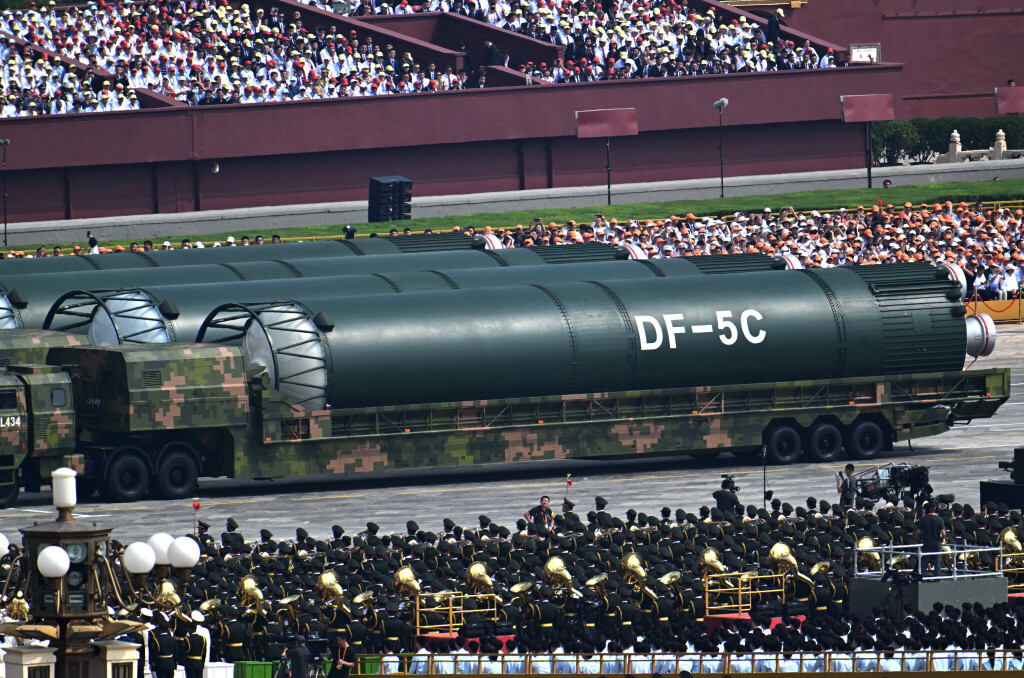
The United States government has publicly accused China of carrying out clandestine nuclear weapons tests—claims that were highlighted at a recent international disarmament forum and mark a serious escalation in global nuclear tensions.
U.S. Undersecretary of State for Arms Control Thomas DiNanno stated that U.S. intelligence believes China conducted at least one nuclear explosive test in June 2020 and may be planning further tests with yields in the hundreds of tons. He suggested that Beijing used techniques intended to disguise the blast so seismic monitoring systems would not readily detect it. China has strongly denied the allegations, calling them false and part of an effort to justify Washington’s own policy shifts.
Until now, major nuclear powers have largely upheld an informal global norm against explosive testing. The most recent full-scale nuclear tests by the United States and China occurred in the early 1990s and mid-1990s respectively, and both are signatories to the Comprehensive Nuclear-Test-Ban Treaty, although it has never entered into force.
Most countries possessing nuclear weapons have refrained from conducting explosive nuclear tests for many years. According to Ankit Panda, a nuclear weapons expert at the Carnegie Endowment for International Peace, the last full-scale nuclear test was carried out by North Korea in 2017.
The scale of past testing is still visible today. In Nevada, where the United States conducted hundreds of underground nuclear tests during the Cold War, the landscape remains marked by dozens of circular subsidence craters. These depressions were formed when massive underground explosions caused the ground above to collapse, leaving permanent scars on the desert surface.
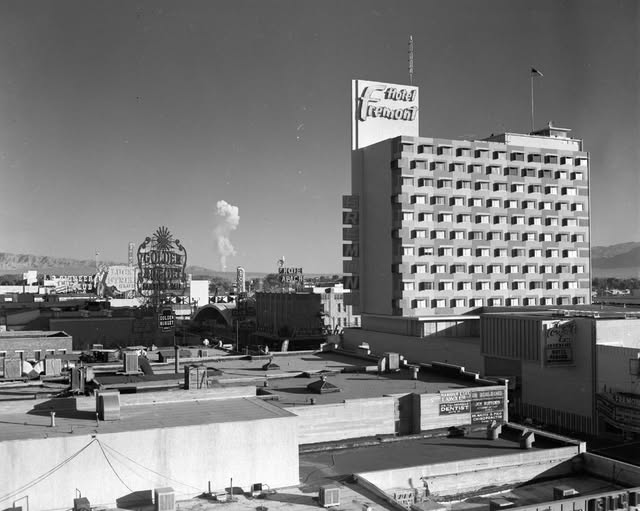

June 24, 1957 – cloud from an atomic blast at Nevada Test Site seen from downtown Las Vegas
The United States last carried out a nuclear test in 1992, while China’s most recent officially acknowledged test dates back to 1996. Both countries later signed the Comprehensive Nuclear-Test-Ban Treaty (CTBT), which bans all nuclear explosive testing. Although the treaty has never formally entered into force, most nuclear-armed states have broadly adhered to its restrictions, avoiding full-scale detonations.
The allegations come at a delicate moment: arms control mechanisms that once limited U.S. and Russian nuclear arsenals have lapsed, and Washington wants future agreements to include China. How Beijing’s denial and the broader geopolitical context will shape future treaties remains unclear.