Five years after the death of Đorđe Balašević, one of the most influential singer-songwriters in the history of the former Yugoslavia, the region continues to mark the anniversary with remembrance, reflection, and renewed appreciation of his work. Media across Serbia, Croatia, Bosnia and Herzegovina, and North Macedonia have revisited his life, music, and final days, emphasizing the emotional bond he maintained with audiences across borders. Known as the “Panonian Sailor,” Balašević remains a cultural symbol whose songs, words, and values continue to resonate long after his passing.
Anniversary Reflections and His Final Days
On the fifth anniversary of his death, numerous articles revisited Balašević’s final period, describing it as deeply emotional for both his family and the public. Reports recall that shortly before his passing, Balašević sent an email to his family, a gesture that has since been interpreted as a quiet, intimate farewell. Media also revisited the last moments he shared with his wife, Olivera, highlighting the closeness and mutual support that defined their marriage.
His death triggered an outpouring of grief across the region, with spontaneous memorials, candlelight vigils, and tributes appearing in cities from Novi Sad to Zagreb, Sarajevo, and Skopje. Many outlets emphasized that the reaction to his passing transcended national and political boundaries, reflecting the rare position he held as a unifying cultural figure.
A Career That Shaped Generations
Đorđe Balašević built a career spanning more than four decades, during which he developed a distinctive style rooted in storytelling, irony, empathy, and social observation. From his early days with the band Rani Mraz to his solo career, he became known for songs that blended personal narratives with broader reflections on love, war, everyday life and human flaws.
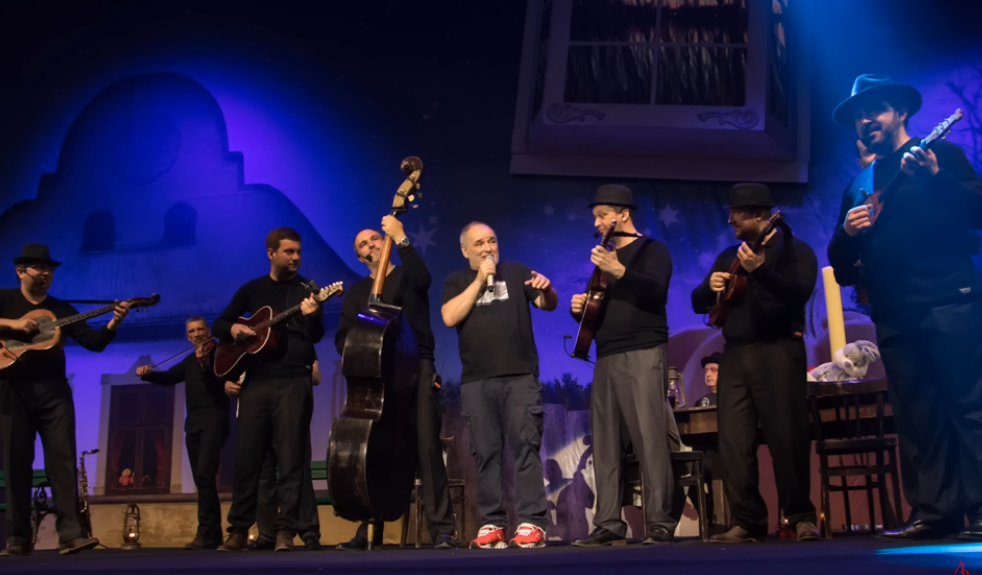
Media retrospectives highlight how Balašević consistently filled arenas and large halls throughout the former Yugoslavia, often performing multi-hour concerts characterized by long spoken monologues, humor, and direct communication with the audience. His concerts were not merely musical events but shared experiences that many fans describe as intimate conversations set to music.
At the same time, some articles note that his relationship with certain cities and periods was shaped by political and social tensions, which occasionally affected attendance. These moments are now recalled as part of the broader historical context in which he created, without diminishing his overall stature or influence.
The Man Beyond the Stage
Several anniversary features focused on Balašević as a person rather than solely as a public figure. Articles recount lesser-known details from his life, including anecdotes about his upbringing, family values and everyday habits. He is frequently described as modest, sharp-witted, and deeply attached to his hometown of Novi Sad and the wider Vojvodina region.
Journalists revisited stories about his principled stances, his reluctance to conform to commercial trends and his insistence on artistic independence. His lyrics and public statements often reflected skepticism toward nationalism, intolerance, and hypocrisy, which earned him both admiration and criticism during his lifetime.
Legacy Continued Through Film and Family
Five years on, Balašević’s legacy continues through projects connected to his family. His son Aleksa Balašević has spoken about the film Nevernik, which draws inspiration from his father’s work and worldview. Media coverage presents the project as an effort not to mythologize Balašević but to preserve the emotional and ethical core of his art.
Articles also note that Balašević’s songs remain widely listened to and shared, especially on anniversaries, birthdays, and moments of collective remembrance. His music continues to circulate among younger audiences, many of whom were not born during the peak of his career but have discovered his work through family, film and digital platforms.
An Enduring Cultural Presence
Across the region, tributes published on the fifth anniversary describe Balašević as irreplaceable. He is remembered not only as a musician, but as a chronicler of everyday life whose songs captured the spirit, contradictions, and emotions of several generations. Media commentaries emphasize that few artists managed to maintain such a broad and loyal audience while remaining true to their personal voice.
Five years after his death, Đorđe Balašević remains a defining cultural figure of the Balkan space. His words, melodies and stories continue to live on in concerts, films, private memories, and public discourse, confirming his lasting place in the cultural history of the region.