
American internet users have been searching for terms related to “World War 3” at noticeably higher rates this week, and social media chatter around the possibility of a large-scale global conflict has spiked, according to trend indicators and recent online activity.
While exact search query volumes from Google aren’t publicly released in real numbers, Google Trends — the platform that tracks how often terms are entered relative to total search traffic — shows “World War 3” and related terms climbing in the past 72 hours, placing them among trending concerns for US users.
At the same time, analytics firms monitoring social platforms report a significant rise in mentions of “WW3” across X, Telegram, Reddit, and other forums, representing some of the highest levels of discussion since previous geopolitical flare-ups last year. Spatial charts compiled by blockchain sentiment firms indicate that the frequency of “WW3”-related posts and speculation is peaking across crypto communities and other social feeds.
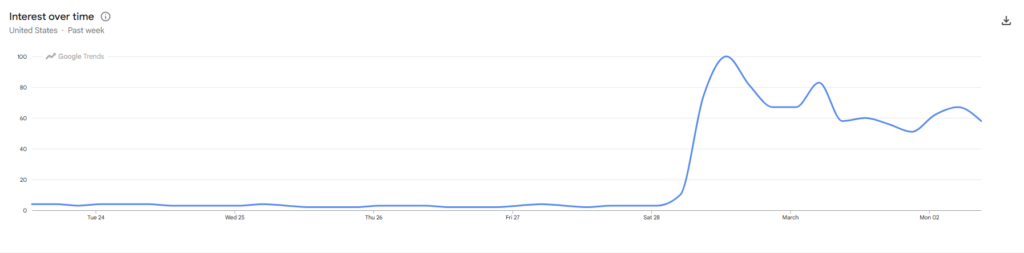

Why Now? Public Fears Mirror Real-World Tensions
Experts say the increase in online interest closely mirrors heightened geopolitical tensions involving the United States and regional actors — particularly developments in the Middle East that have drawn widespread media attention and sparked debate. In the absence of official data on absolute search counts, the rising relative interest suggests growing public concern, curiosity, or anxiety about the implications of escalating conflict.
Social platforms are amplifying that interest. Users on X and other platforms have been actively sharing memes, speculation, and questions about whether global hostilities are spiraling beyond regional limits — often under hashtags tied to fear of a “third world war.”
Online Behavior Reflects Broader Uncertainty
Analysts note that such spikes in search queries and social media mentions typically occur during periods of uncertainty or perceived risk. In the US, where people spend a significant portion of their online time on search engines—including Google, which accounts for more than 90 % of search traffic — even relative surges in specific terms often reflect widespread public curiosity or concern rather than isolated incidents.