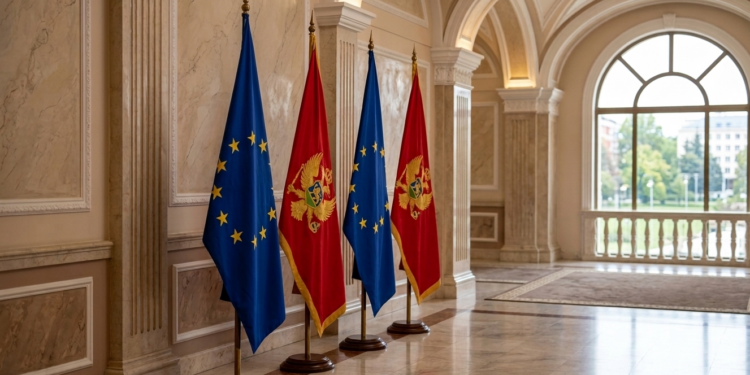
Montenegro has provisionally closed Chapter 21 (Trans-European Networks) in its accession negotiations with the European Union, bringing the total number of closed chapters to 14 out of 33. The development marks a significant step forward in the country’s integration process, with the European Commission describing it as a result of sustained reforms and consistent political commitment.
European Commissioner for Enlargement Marta Kos praised Montenegro’s progress at the Intergovernmental Conference in Brussels, emphasizing that the achievement reflects the country’s dedicated efforts. She described Montenegro as the most advanced candidate in the enlargement process and noted that its progress serves as an example for other aspiring member states. Kos also underlined the importance of maintaining momentum, particularly in strengthening the rule of law, ensuring judicial independence, aligning visa policy with EU standards, and promoting professional recruitment within the police.
Chapter 21 focuses on the development and integration of transport and energy infrastructure with European networks, a key element for deeper economic integration into the EU. Prime Minister Milojko Spajić stated that closing this chapter opens new opportunities for infrastructure development and confirms the country’s steady advancement in negotiations.
With 19 chapters still remaining, Montenegro aims to complete the technical aspects of the accession process by the end of 2026, while targeting full EU membership by 2028. The country, which began negotiations in 2012, continues to lead among Western Balkan candidates in terms of progress.
In contrast, North Macedonia has yet to begin substantive negotiations by clusters despite formally opening accession talks, as the process remains contingent on constitutional amendments and the resolution of outstanding issues with Bulgaria.