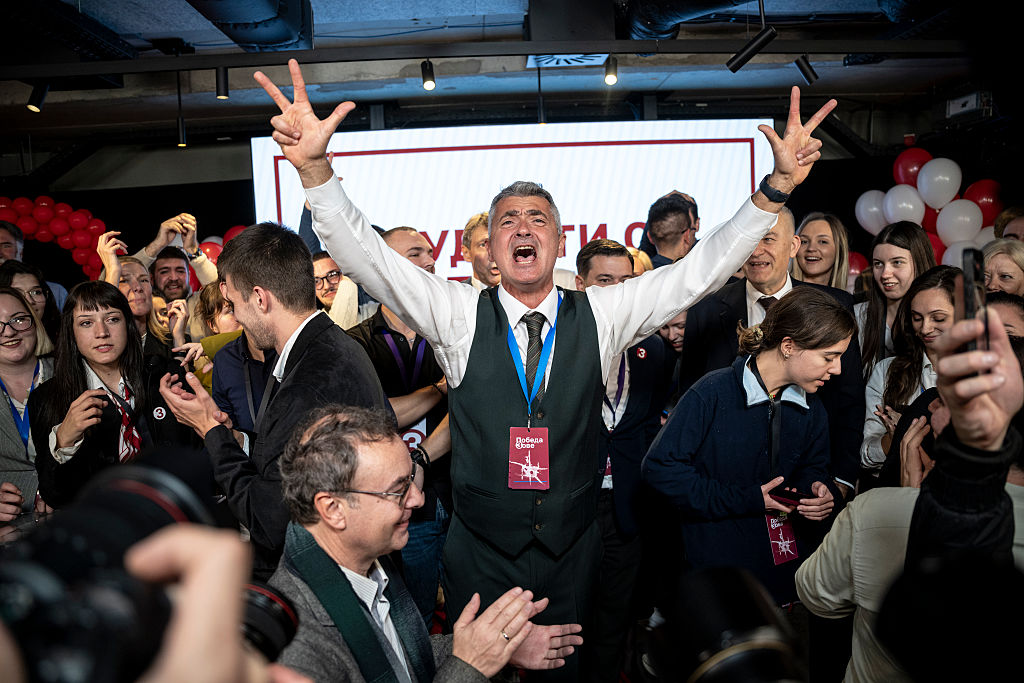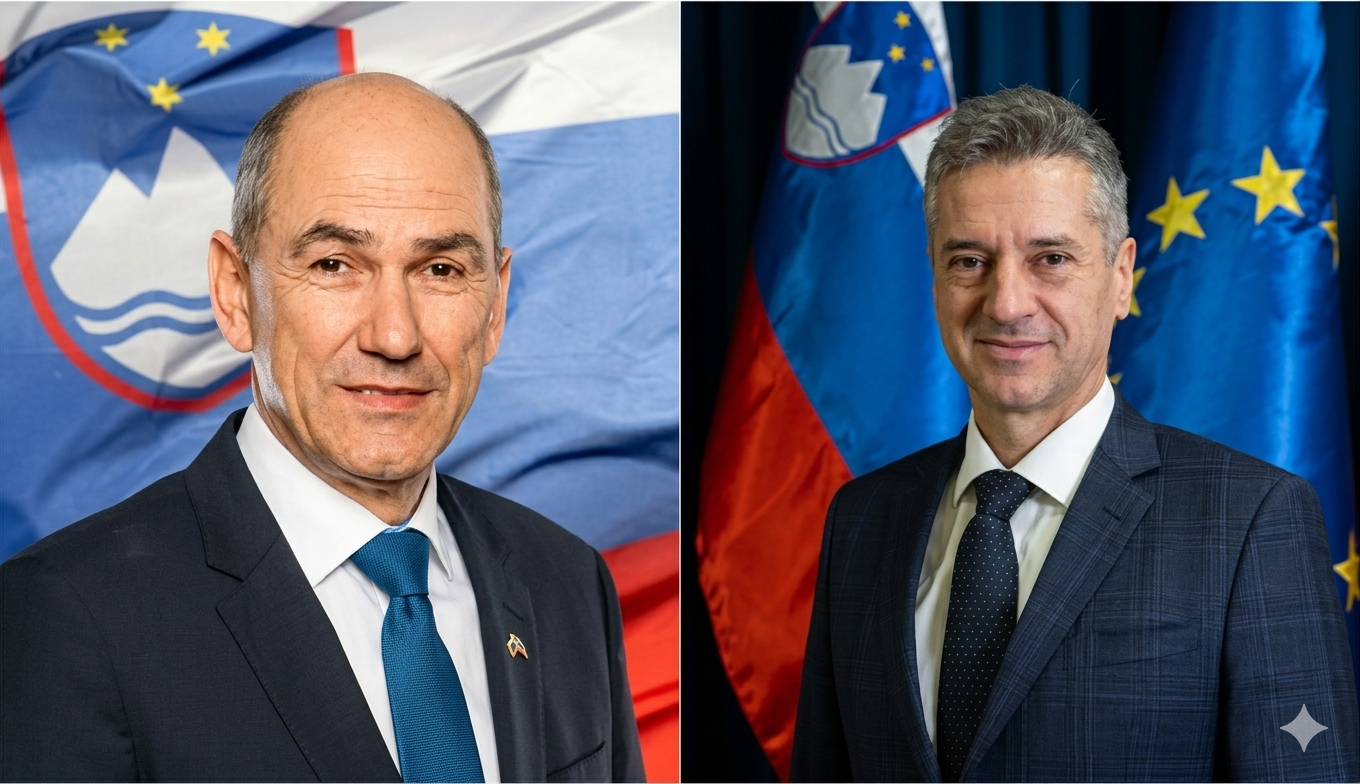
Slovenia entered the final stretch of its parliamentary campaign under the weight of a major political scandal after reports linked Israeli private intelligence operatives to covert activity during the election period. The controversy broke just days before the March 22 parliamentary elections, which are being framed in the reporting as a high-stakes contest between Prime Minister Robert Golob and his liberal, pro-European camp on one side and opposition leader Janez Janša and the right-wing Slovenian Democratic Party (SDS) on the other.
According to the reports, the broader political choice before voters is being presented as a decision between continuation of the current liberal course and a return to a more conservative, nationalist direction associated with Janša. In that setting, the allegations over covert operations, secret recordings and outside involvement landed at a particularly sensitive moment in the campaign.
Secret recordings and corruption claims at the center of the affair
A central part of the scandal involves a series of audio recordings and secretly filmed videos that appeared online in recent weeks through an anonymous Facebook profile called “Maske padajo” and a website identified in the reports as anti-corruption2026.com. The material accuses figures linked to the governing camp of systemic corruption, influence-peddling and misuse of public money in public procurement.
The main allegation highlighted in the reporting concerns the purchase of a neglected property at Litijska 51 in Ljubljana by the Ministry of Justice at the end of 2023 for €7.7 million, despite claims that the same property had been bought in 2019 for only €1.7 million. The articles say former Justice Minister Švarc Pipan approved the deal and is heard in the recordings saying she was under pressure to finalize it before the end of 2023; the same reporting notes that she resigned at the beginning of 2024. At the same time, the authenticity of the recordings had still not been confirmed in the reporting.
Other reports say the recordings featured a former justice minister, a prominent lawyer, and a lobbyist allegedly speaking openly about political connections, influence, and secret financing. Those appearing in the recordings denied wrongdoing and argued that the material had been selectively edited from fake job interviews arranged by a fictitious investment fund.
Black Cube allegations and reported meetings with Janša
The scandal widened when an investigation cited in the reports linked the affair to Black Cube, the Israeli private intelligence company known for employing former Mossad operatives. According to the reporting, the Slovenian weekly Mladina and civil-society investigators identified four people connected to Black Cube, including co-founder and chief executive Dan Zorella and retired Israeli major-general Giora Eiland, the former head of Israel’s National Security Council.
The reports further state that representatives of Black Cube allegedly visited Ljubljana three times toward the end of last year, and that during their last visit on December 22, 2025, Janša personally received them at the headquarters of the SDS. Another account says the visitors arrived on a private Hawker 800XP aircraft registered as 4X-CNZ, owned by a Tel Aviv charter company, and then headed to SDS headquarters after landing.
One report described these contacts as part of a carefully planned intelligence and pre-election operation, and some of the coverage characterized the affair as possibly the biggest political scandal in modern Slovenian history. The same reporting explicitly linked Janša and Black Cube to the covert recordings released at the end of the election campaign.
Government response: investigation, “attack on democracy,” national-security concerns
Prime Minister Golob announced that the Secretariat of the National Security Council would review a report by the Slovenian Intelligence and Security Agency concerning the Black Cube case. In statements cited in the reporting, he described the alleged involvement of Black Cube in secretly recording fake business conversations with prominent Slovenians as the “biggest scandal in Slovenia’s history” and as “high treason” by Janša.
The government also called for an investigation, while Slovenia’s foreign minister was quoted as describing the alleged role of foreign actors as an “attack on democracy.” A spokesperson for Slovenia’s intelligence agency, cited in the reports, said the alleged activity of a private intelligence organization during an ongoing election campaign “could represent a threat to national security.”
Janša and SDS deny wrongdoing
SDS denied involvement and said it had never heard of Black Cube before the allegations surfaced. The party also rejected claims that Janša had hired Israeli operatives and threatened to sue journalists who said he had met company representatives at party headquarters in December.
At the same time, the party praised the released material, saying that if Black Cube had indeed uncovered corruption on such a scale, it would deserve “a monument in the center of Ljubljana.” In another statement cited in the reporting, SDS said it had never heard of Black Cube and instead attacked what it called corruption within the left-wing elite shown in the videos.
Black Cube’s background and the broader international context
The reporting describes Black Cube as a company known for covert operations involving secret recordings and staged interviews in several European countries, including Belgium, where it said its actions were legal and intended to expose abuse. The articles also note that senior company officials previously received suspended prison sentences over attempts to intimidate Laura Kövesi, then a Romanian prosecutor and now head of the European Public Prosecutor’s Office. One of the reports added that it remained unclear whether Black Cube was in fact involved in the Slovenian case and that the company had not responded to requests for comment.
Polling, political stakes and the pressure of timing
The controversy unfolded in a campaign already marked by sharp polarization. One report said SDS was polling at around 28 percent, ahead of Golob’s Freedom Movement at about 23 percent, and noted that the leaked recordings were being widely shared online and amplified by SDS. The timing of the scandal, so close to election day, made it a potentially decisive factor in the final campaign phase.
Taken together, the reports depict a campaign shaken on two fronts at once: corruption accusations aimed at figures linked to the governing coalition, and a separate investigation alleging covert foreign-linked interference tied to the opposition camp. That combination of secret recordings, disputed evidence, intelligence-company allegations and direct national-security language from senior officials has turned the closing days of Slovenia’s parliamentary race into one of the most turbulent pre-election periods in the country’s recent political history.