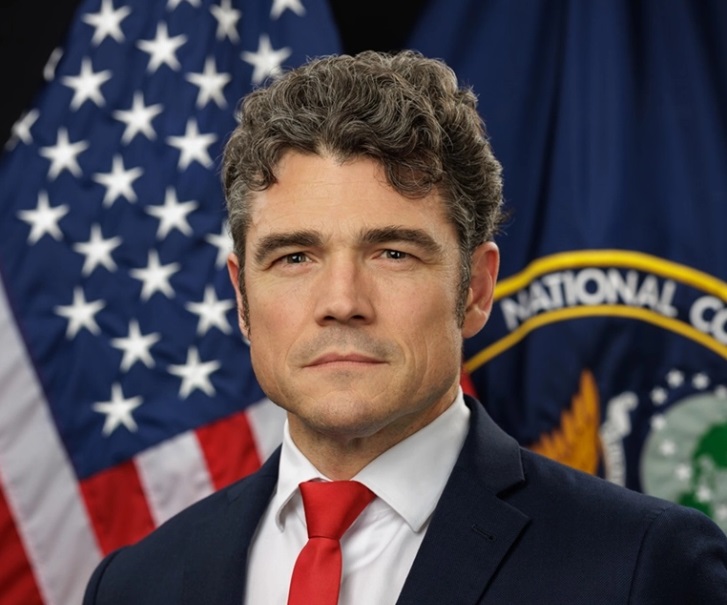
The resignation of former U.S. counterterrorism chief Joe Kent has quickly escalated into a broader controversy, as the Federal Bureau of Investigation is reportedly investigating him over the alleged leak of classified information.
Kent, who until recently headed the National Counterterrorism Center, stepped down just days ago, citing deep disagreements with the U.S. military operation against Iran—an intervention that has already exposed fractures within Washington’s national security establishment.
While officials have not confirmed details of the investigation, reports indicate it began even before Kent’s resignation, raising the possibility that his departure was not solely driven by principle but also by mounting institutional pressure.
Kent had been widely seen as a close ally of Donald Trump and was appointed to his post following a recommendation from Tulsi Gabbard. His sudden exit, therefore, signals more than a routine personnel change—it suggests internal dissent at the highest levels of the administration.
In public remarks, Kent questioned the very foundation of the military campaign against Iran, stating there was no credible intelligence indicating that Tehran was on the verge of developing nuclear weapons or planning imminent attacks against U.S. targets. Such claims, if accurate, directly challenge the narrative used to justify the intervention.
Even more concerning are Kent’s assertions about how decisions were made inside the White House. He described an environment in which dissenting voices were sidelined and where a narrow circle of advisers shaped critical national security choices without broader institutional debate.
This raises a deeper structural issue: whether key foreign policy decisions are being driven by comprehensive intelligence assessments—or by political alignment and external influence.
Kent also suggested that Israel played a significant role in pushing for the operation, implying that lobbying efforts by Prime Minister Benjamin Netanyahu and other officials may have outweighed internal U.S. intelligence evaluations.
Taken together, the case presents a troubling picture. On one hand, a senior official resigns in protest over what he views as a strategically unjustified war. On the other hand, he becomes the subject of a federal investigation tied to potential leaks—an overlap that inevitably fuels speculation about whether dissent within the system is being penalized.
The unfolding situation highlights a fundamental tension in democratic governance: the balance between national security secrecy and the need for internal accountability. As the investigation continues, the central question remains—was Kent a whistleblower raising legitimate concerns or a security risk who crossed legal boundaries?
Either way, the episode underscores growing unease over how major geopolitical decisions are made—and who, if anyone, is truly able to challenge them from within.