Final Address Before the UN
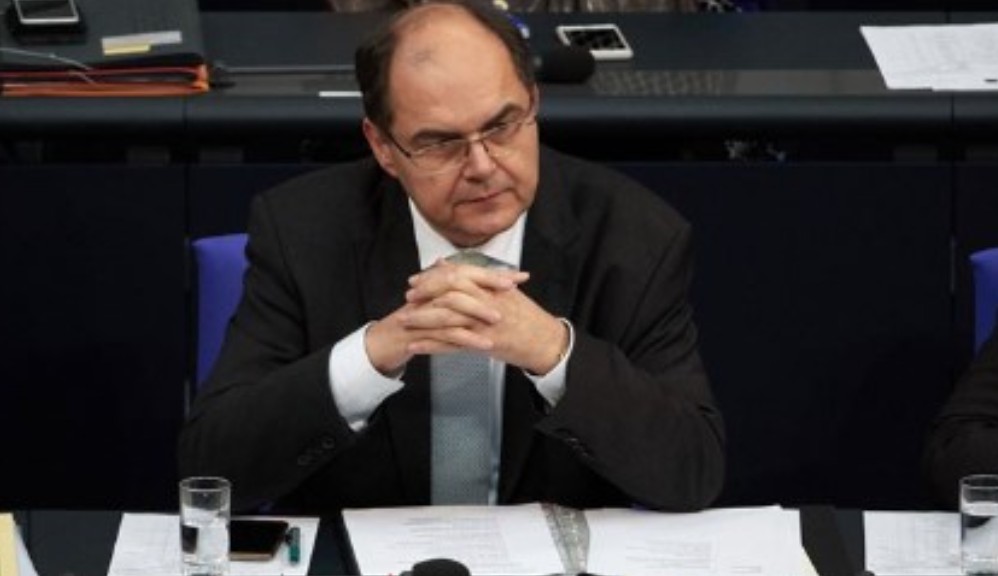
High Representative Christian Schmidt used his final address before the UN Security Council to warn that Bosnia and Herzegovina is facing what he described as a process of “quiet deconstruction” of the state. His latest report, covering the period from October 16, 2025, to April 15, 2026, notes that while the overall security situation remains stable, it is increasingly fragile due to political tensions and institutional challenges.
Warning Over Institutions and Democratic Standards
Schmidt stressed that Bosnia and Herzegovina is experiencing a gradual erosion of democratic standards, accompanied by systemic corruption that continues to undermine governance and public trust. He pointed to the weakening of state institutions and the lack of progress in key reforms, warning that these trends threaten the functionality of the state and its long-term stability. According to the reports, he emphasized that political actors are increasingly engaging in actions that challenge the constitutional order, contributing to institutional paralysis.
International Oversight Remains Essential
Despite announcing his departure, Schmidt underlined that the international community’s role in Bosnia and Herzegovina remains crucial. The Office of the High Representative (OHR) reiterated that his exit does not mark the end of the institution, as its mandate continues to be tied to the full implementation of the Dayton Peace Agreement. The reports highlight that Bosnia and Herzegovina has not yet fulfilled the necessary conditions for the closure of OHR, making continued international oversight necessary.
Departure Does Not Mean End of OHR
Schmidt confirmed that he is stepping down for personal reasons after nearly five years in office, but will remain in his position until a successor is formally appointed. He informed the Peace Implementation Council Steering Board of his decision and requested the initiation of the procedure for selecting a new High Representative. His mandate has been marked by the use of extensive executive powers, including the authority to impose laws and remove officials, which has often generated political controversy.
Political Context and Reactions
His departure comes amid a complex political environment in Bosnia and Herzegovina, where divisions between political actors remain deep. The reports indicate that reactions to his tenure have been mixed, with some political groups supporting his interventions, while others have criticized his decisions and questioned his legitimacy. The broader political climate, characterized by stagnation and recurring disputes, has further complicated the functioning of institutions.
Search for Successor and Future Uncertainty
The process of appointing Schmidt’s successor is expected to begin, but no clear candidate has been officially confirmed. His departure opens a new phase for Bosnia and Herzegovina, raising questions about the future direction of international supervision and the country’s ability to maintain institutional stability. The reports underline that the challenges identified in Schmidt’s final address, such as: weak institutions, political fragmentation and stalled reforms remain unresolved, making the choice of the next High Representative a key moment for the country’s future trajectory.