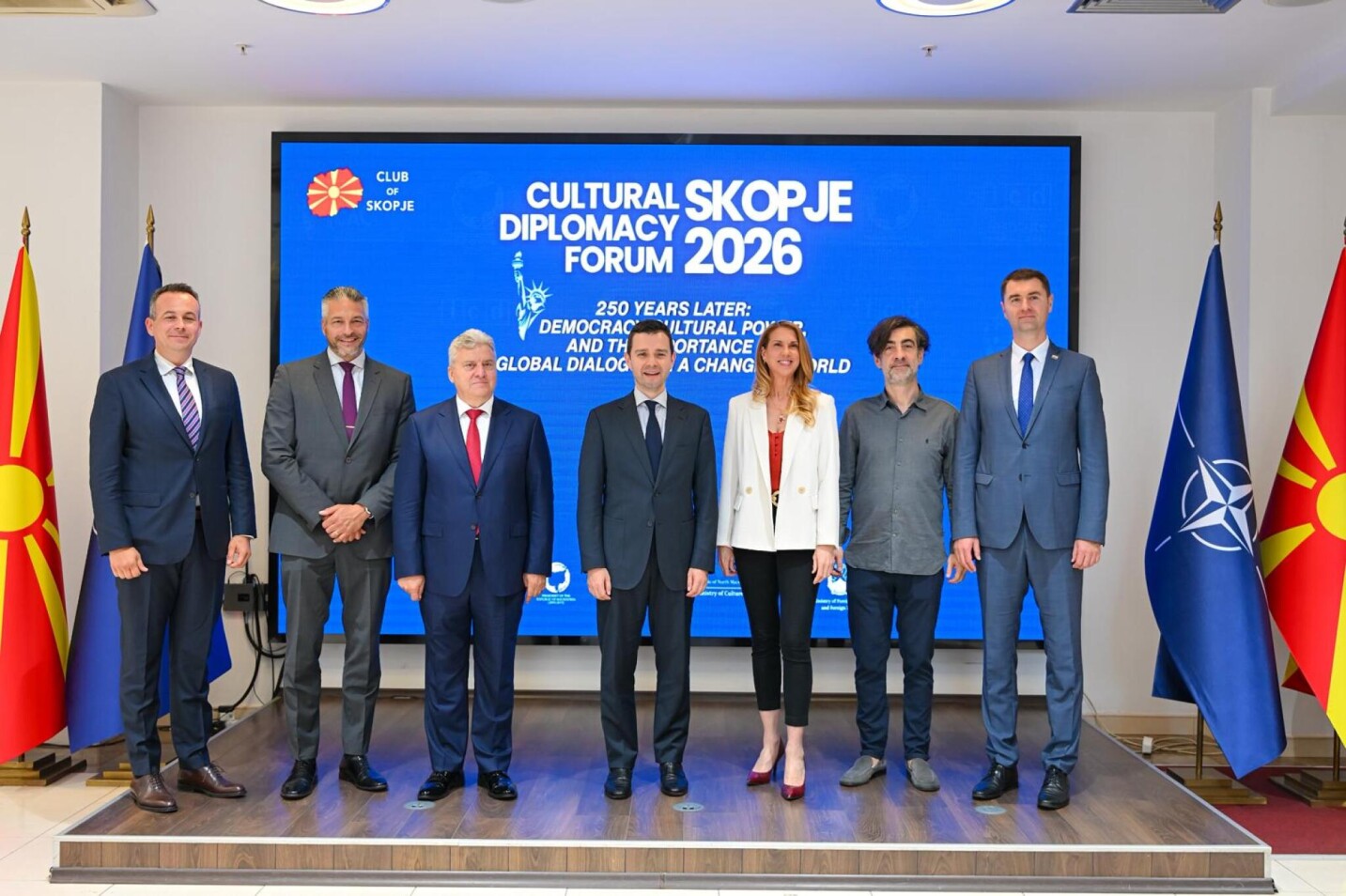
The 4th Cultural Diplomacy Forum “Skopje 2026” opened in Skopje under the motto “From Crossroads to Connections: Cultural Diplomacy and the Future of Global Dialogue,” gathering diplomats, politicians, academics, artists and international representatives to discuss the importance of culture in contemporary international relations.
Foreign Minister Timcho Mucunski said cultural diplomacy has become an important instrument for building trust, partnerships and long term influence in a world increasingly marked by instability, polarization and disinformation. He stressed that influence today is not measured only by economic or military strength, but also through credibility and the ability to create understanding between nations. According to him, trust is the most valuable capital in modern diplomacy.
Mucunski also said Macedonia, despite being a small country, has a strong cultural and historical identity that belongs to the European cultural space. Referring to the Balkans, he emphasized that history should not be used to block the future, but as a basis for dialogue, knowledge and mutual respect.
President Gordana Siljanovska-Davkova described cultural diplomacy as an irreplaceable dialogue in times of peace and crisis, saying culture creates deeper and more lasting bridges than conventional diplomacy. She said Skopje, because of its historical and cultural heritage, is a natural choice for European Capital of Culture 2028 and highlighted the importance of respecting cultural diversity as a path toward lasting understanding.
Acting U.S. Ambassador Nicole Varnes said cultural diplomacy is more important than ever in a period of rapid technological change and global competition, describing culture as the first shared language between peoples before formal political agreements are reached. She pointed to the long standing cooperation between the United States and Macedonia through educational and cultural exchange programs.
The forum is organized by the Office of former President Gjorge Ivanov, the International Center “Alliance of Civilizations” from Skopje and the Institute for Cultural Diplomacy from Berlin, with support from the Ministry of Culture and Tourism.