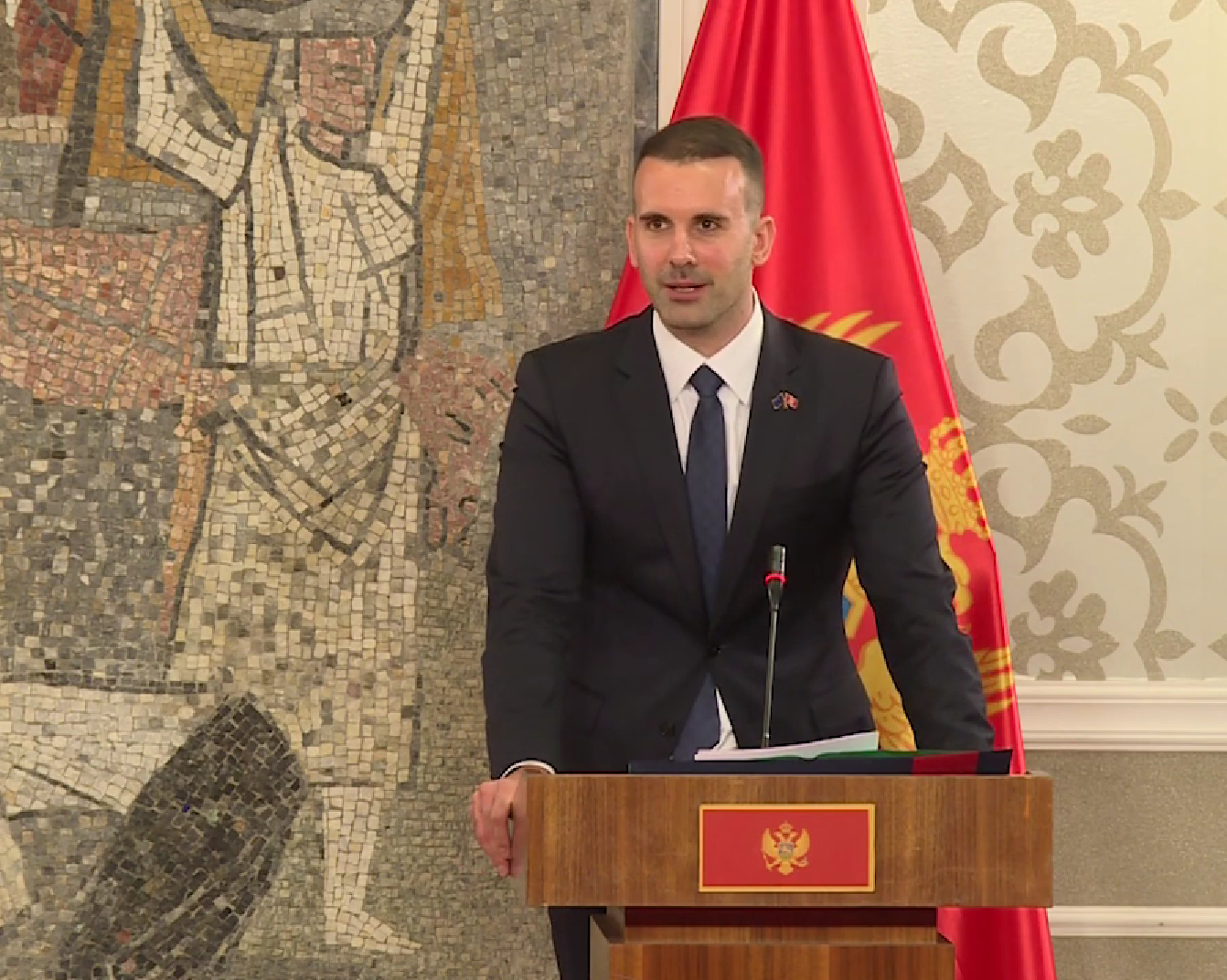
Montenegrin Prime Minister Milojko Spajić has publicly accused Milan Knežević, leader of the pro Serb Democratic People’s Party (DNP), of covertly aligning with the opposition Democratic Party of Socialists (DPS) in a coalition that Spajić claims is bound not by political ideology but by “a great debt.” The explosive statement came after Srđan Perić, leader of the small opposition party Preokret, was elected speaker of the Podgorica City Assembly with 30 votes, including crucial support from both DPS and DNP councilors. Spajić, writing on the social media platform X, framed the vote as the moment when Knežević’s obstruction of Montenegro’s EU path finally left “minimal political traces” and became explicit.
The accusation carries significant weight given the DNP’s recent history. Knežević’s party withdrew from Spajić’s ruling coalition in late December 2025 and formally pulled its support in January 2026, citing the prime minister’s refusal to advance legislation on the Serbian language, citizenship, and the historical tricolor flag. At the time, Knežević declared that Spajić had sent “a clear message that he does not want the DNP in the Government.” The DNP holds four parliamentary seats and is part of the broader “For the Future of Montenegro” (ZBCG) coalition alongside Andrija Mandić’s New Serb Democracy (NSD), a grouping that has been described as pro Serbian, culturally conservative, and historically close to Belgrade. Spajić’s claim that Knežević is now in league with DPS, Montenegro’s former ruling party that lost power in 2020 after three decades of dominance, represents a dramatic reframing of the country’s political fault lines.
Spajić’s rhetoric went further, alleging that both Knežević and DPS are bound by separate but equally compromising obligations. He claimed Knežević had “pledged obedience to his (in)formal boss from Belgrade,” a clear reference to Serbian President Aleksandar Vučić, who has publicly voiced support for the DNP leader. For DPS, Spajić cited an “anti European agreement with United Russia from 2011, which was never terminated”, a reference to a cooperation pact signed during the DPS era that has long been used by pro European parties to paint the opposition as beholden to Moscow. The Podgorica vote itself is significant because the capital’s city assembly has been deadlocked since the September 2024 elections, when DPS won a plurality with 29.9% and 19 seats, while Spajić’s Europe Now Movement (PES) took 21.8% and 14 seats. Perić’s election as speaker, backed by DPS and DNP votes, breaks that deadlock and gives the opposition a foothold in Montenegro’s most politically important municipality.
The broader context reveals a government under pressure on multiple fronts. Spajić’s ruling coalition, expanded to 32 members in July 2024 to include the pro Serb ZBCG and the Bosniak Party, has been criticized by the US Embassy for including figures who “do not condemn Russian aggression in Ukraine and oppose EU sanctions.” President Jakov Milatović, who fell out with Spajić earlier this year, has described the prime minister’s governance as “the most primitive political bargaining and irresponsibility.” The DNP’s departure from the coalition in January was triggered by a police crackdown on protesters in Zeta municipality opposing an EU funded wastewater plant, with Knežević briefly entering a police vehicle in solidarity with detained residents. Now, with Knežević accused of cutting deals with the very party his coalition helped oust in 2020, Montenegro’s political landscape is entering a new phase of fragmentation. For Spajić, who has staked his premiership on accelerating EU membership by 2028, the Podgorica vote represents both a local setback and a warning that his pro European agenda faces resistance not just from the opposition, but from former allies who may prefer alignment with Belgrade and Moscow over Brussels.