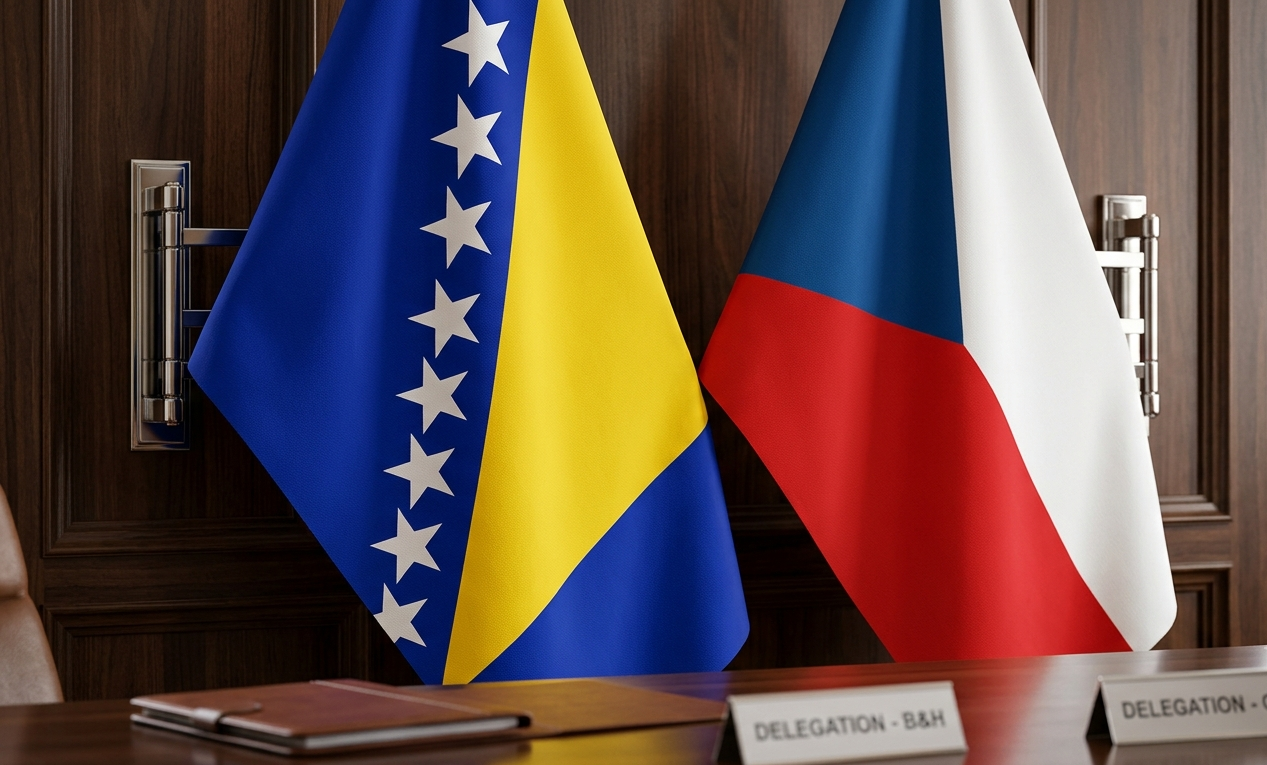
The Senate of the Czech Republic has adopted a resolution commemorating the 1995 Srebrenica genocide, sending a clear message that glorifying war criminals and denying established historical atrocities have no place in contemporary Europe. The resolution, passed during the Senate’s 26th plenary session on June 17, 2026, was informed by a recent visit of the Committee on EU Affairs to Bosnia and Herzegovina from May 11 to 14, during which Czech lawmakers assessed the country’s progress and challenges on its European path. The document explicitly recalls United Nations General Assembly Resolution 78/282, adopted on May 23, 2024, which designated July 11 as the International Day of Reflection and Commemoration of the 1995 Genocide in Srebrenica.
The Srebrenica genocide stands as the worst atrocity on European soil since the Second World War. In July 1995, Bosnian Serb forces under General Ratko Mladić systematically executed more than 8,000 Bosniak men and boys after overrunning the UN declared “safe area,” while forcibly displacing approximately 30,000 women, children, and elderly people. Both the International Criminal Tribunal for the former Yugoslavia and the International Court of Justice have ruled that these acts constituted genocide, with Mladić, Radovan Karadžić, and Radislav Krstić among those convicted. The UN resolution, sponsored by Germany and Rwanda and adopted by 84 votes to 19 with 68 abstentions, condemns without reservation any denial of the genocide and urges member states to preserve established facts through education and commemoration.
The Czech Senate’s resolution goes beyond remembrance to address present day political realities in Bosnia and Herzegovina. It emphasizes that over 30 years after the conflict ended, the country’s future must be built on reconciliation, mutual respect, peace, and progress. Crucially, it stresses the obligation of strong opposition to all forms of historical revisionism and separatist tendencies, implicitly addressing ongoing efforts by nationalist politicians in Republika Srpska to downplay or deny the genocide. The Senate affirmed that the European Union must have room for a prosperous Bosnia and Herzegovina as a state of all its citizens, regardless of nationality or religion. By linking commemoration to stability and unity in diversity, the resolution positions the Czech Republic firmly within the camp of EU member states that view acknowledgment of wartime crimes as a prerequisite for Balkan reconciliation and European integration. For Bosnia and Herzegovina, where genocide denial remains a politically potent force and where the Office of the High Representative continues to grapple with secessionist threats from Banja Luka, the Czech message adds another European voice to the chorus insisting that the past cannot be buried if the future is to be European.