France Faces One of Its Most Serious Heat Crises in Years
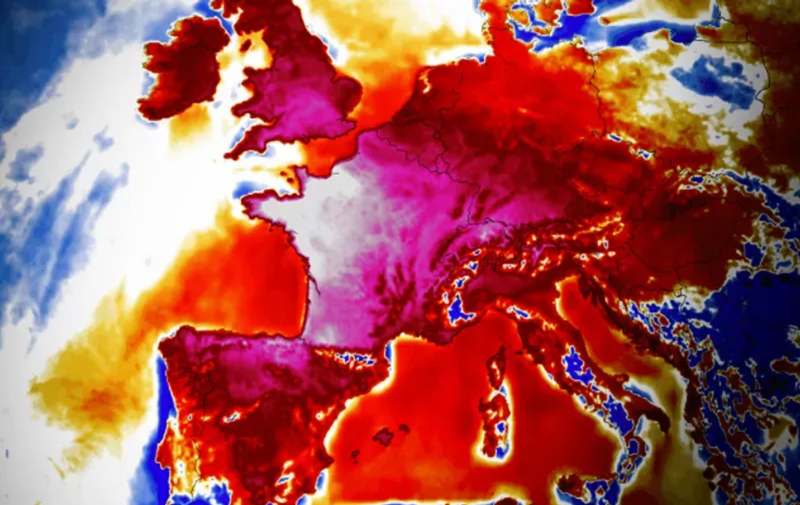
France is facing one of its most severe heatwave crises in recent years, with more than half of the country placed under red alert as extreme temperatures continue to affect daily life, public services and health systems. Authorities warned that the danger is not limited only to older people, children, chronically ill citizens or other vulnerable groups, but also extends to healthy people, especially those working outdoors, travelling, exercising or spending long periods exposed to the sun.
The heatwave has already had deadly consequences. At least 18 people have died in France, including two children who were reportedly left in a hot car. The children, aged two and four, were found dead in Carpentras, while investigators are examining heat as a possible cause. Separate reports also mentioned a large number of drownings during bathing, as many people tried to escape the extreme temperatures in rivers, lakes and swimming pools.
Temperatures reached record levels in several parts of France. In Bordeaux, in the western wine region, the temperature climbed to 41.9 degrees Celsius, breaking a record set in August last year. In Poitiers, in central France, the temperature reached 41.2 degrees, surpassing the previous maximum recorded in 1947. Meteorologists warned that temperatures in some areas would remain around 40 degrees, while in certain places they could rise to 42 degrees.
Schools Closed and Hospitals Under Pressure
Schools were among the first institutions affected by the crisis. Hundreds of schools and colleges, and according to the latest reports more than a thousand, remained closed, while thousands of others introduced shortened lessons or changed schedules. The reason was the inability of many classrooms to safely withstand temperatures approaching extreme summer levels.
The health system is also under growing pressure. Health officials warned that calls to emergency services have increased sharply and that the coming days would remain extremely hot. Special concern was expressed for isolated people, older citizens, children and people with chronic illnesses.
French authorities also warned that extreme heat does not kill only directly. They pointed to additional dangers such as alcohol consumption, swimming in unsecured areas, physical effort, travelling without water and leaving children or animals inside vehicles. Officials stressed that even brief carelessness in such conditions can have tragic consequences.
Government Measures and Transport Disruptions
The French government introduced measures aimed at reducing pressure on institutions and local services. Prime Minister Sébastien Lecornu instructed ministers to limit travel unless it was directly connected to managing the heatwave. A new interministerial crisis meeting was also scheduled, while ministers were asked to avoid unnecessary travel on June 25 and 26 so that local prefectures and field services would not be burdened with protocol visits during a health, transport and security crisis.
Transport problems were also expected. In the Île-de-France region, where Paris is located, authorities warned that the railway network could face serious disruptions because tracks and infrastructure were under heavy pressure from the extreme heat. Citizens were advised to travel only if necessary and to check in advance whether their trains were operating.
The timing of the heatwave has made the situation even more sensitive, as it comes early in the summer during exams, festivals, travel and mass public events. Millions of people are therefore exposed at the same time to high temperatures, crowds, transport difficulties and the risk of dehydration.
Italy Issues Red Alert for Major Cities
Italy is also facing extreme heat, with the health ministry declaring a red alert for 15 cities, including Rome and Milan. Authorities said the number would increase to 16 the following day. The red alert is the highest level of danger and signals conditions that can pose a health risk not only to vulnerable groups, but also to the wider population.
During the red alert, health services advised citizens to eat light food, avoid going outside during the hottest part of the day and cool themselves regularly with cold water. The warnings came as temperatures in parts of Europe exceeded 40 degrees Celsius, creating dangerous conditions across the continent.
Wider European Heatwave
The heatwave is affecting several European countries. In addition to France and Italy, red warnings were also issued in Spain, while Germany and Switzerland activated similar warnings for their citizens. In San Sebastián, in the traditionally cooler northern part of Spain, temperatures were expected to reach 40 degrees, more than twice the historical average for June 22 in that city.
The United Kingdom also faced warnings of possible record-breaking June temperatures. Meteorologists predicted that temperatures could reach at least 39 degrees Celsius, while night temperatures in many cities were not expected to fall below 20 degrees. The British meteorological service issued a rare red warning, saying serious and significant consequences were expected from the heatwave.
Scientists Warn of Intensifying Heatwaves
The current heatwave has been described as the second so-called “heat dome” to affect Europe in only two months. Scientists warned that climate change is increasing the frequency and intensity of extreme weather events, while the burning of fossil fuels such as coal, oil and gas is identified as a main driver of the global crisis.
European climate data show that Europe has been warming twice as fast as the global average since the 1980s. Experts warned that heatwaves are becoming more severe as greenhouse gases trap heat and reduce the planet’s ability to release it into space. A warmer atmosphere also increases the risk of sudden droughts, but can also contribute to extreme rainfall and floods when summer heat triggers powerful storms.
Public Safety Warnings
Authorities across affected countries urged citizens to take basic precautions: drink water several times a day, avoid going outside during the hottest hours, avoid outdoor sports, avoid alcohol during extreme heat, keep windows and shutters closed during the day and check on older or isolated relatives.
The message from officials was that the heatwave is not only a weather event, but a public health and safety crisis. With schools closing, hospitals under pressure, transport systems exposed to disruption and temperatures breaking records, Europe is facing a dangerous period in which extreme heat has become a direct threat to everyday life.