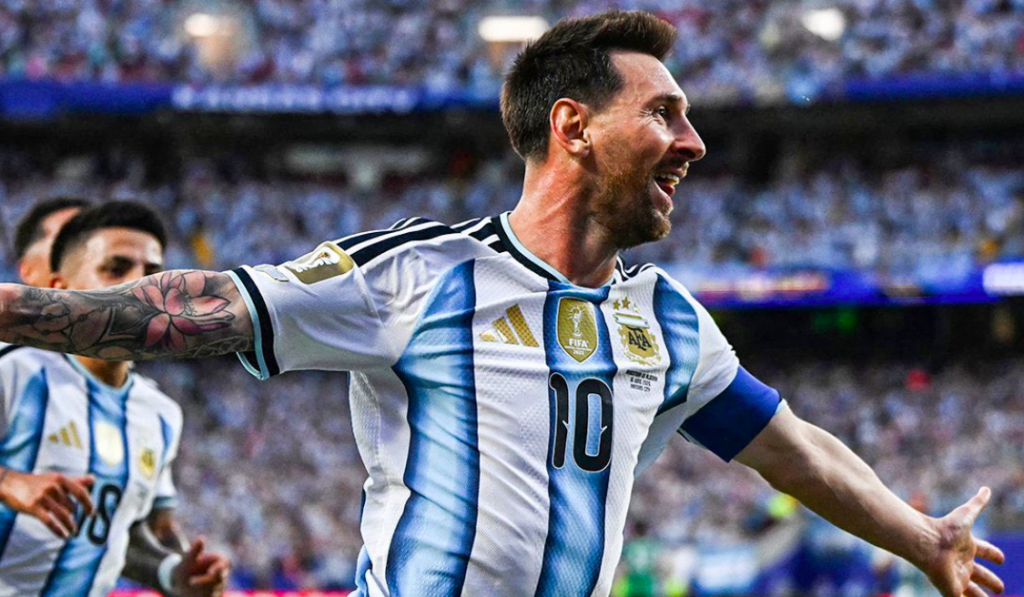
Lionel Messi has written a new chapter in World Cup history after scoring both goals in Argentina’s 2:0 victory over Austria in the second round of the group stage. The Argentine forward, who achieved the milestone two days before his 39th birthday, reached a total of 18 goals at FIFA World Cups and became the highest-scoring player in the history of the tournament.
Messi opened the scoring in the 38th minute after an assist from Facundo Medina. That goal was his 17th at World Cups and allowed him to move past Germany’s Miroslav Klose, who had previously held the record with 16 goals. The second goal came in the fifth minute of stoppage time in the second half. Messi led a counterattack, passed the ball to Julián Álvarez, whose shot was stopped by the Austrian goalkeeper, before the ball came back to Messi, who scored on the rebound for his 18th World Cup goal.
FIFA reacted to the achievement by paying tribute to Messi on social media, stating that history had been made and confirming him as the all-time top scorer in World Cup history. With 18 goals, Messi is now ahead of Klose, while Brazil’s Ronaldo is third with 15 goals. Behind them are France’s Kylian Mbappé and Germany’s Gerd Müller, who each have 14 goals.
The match against Austria also brought Messi four records officially registered by Guinness World Records. In addition to becoming the player with the most goals at FIFA World Cups, Messi also became the player with the most World Cup appearances, reaching 28 matches. He also set the record for most World Cup wins by a player, with 18 victories, and the record for most minutes played at the tournament, with 2,489 minutes.
The achievement came during Messi’s sixth World Cup appearance, further strengthening his place among the most decorated players in the history of the competition. His performance against Austria was presented as another historic moment in a career already defined by major individual and team accomplishments.
Argentina’s victory also continued the team’s winning run at the tournament and confirmed its strong form in the group stage. The wider World Cup round also brought expected results and matches with many goals, with Argentina, France and Norway continuing their winning streaks and confirming their dominance. Algeria, meanwhile, came back against Jordan to return to the race for qualification to the next stage.
At the same time, Erling Haaland and Kylian Mbappé continued their scoring form, remaining prominent figures in the tournament’s attacking storylines. However, the main focus of the day remained Messi’s record-breaking performance, as his two goals against Austria made him the new king of World Cup goalscorers and placed him alone at the top of one of football’s most prestigious all-time lists.