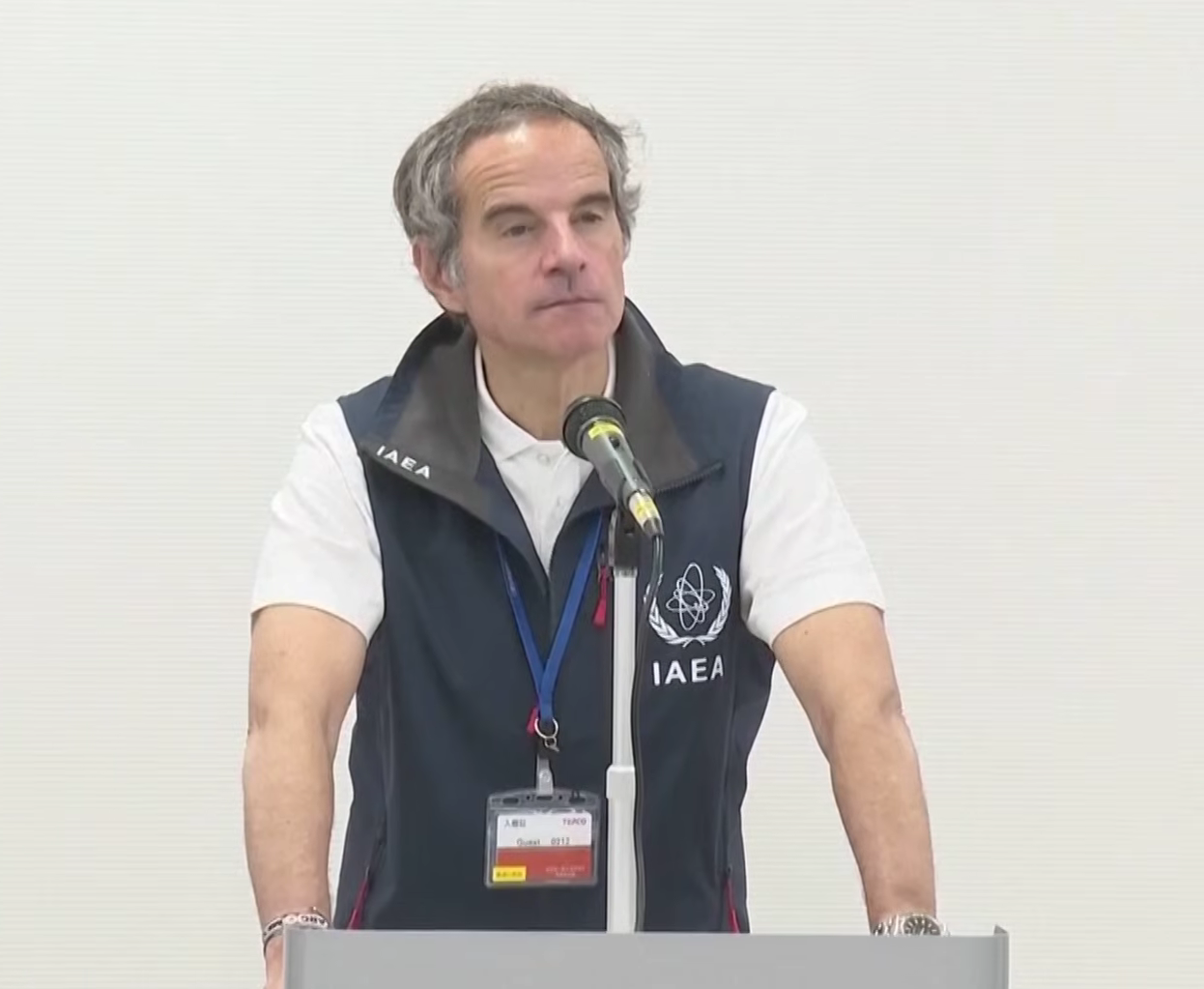
The head of the International Atomic Energy Agency, Rafael Grossi, has confirmed that inspectors will visit Iranian nuclear sites under the preliminary peace agreement signed last week by US President Donald Trump and Iranian President Masoud Pezeshkian, though the timing and scope remain subjects of sharp dispute between Washington and Tehran. Speaking to reporters in Japan, Grossi stated that the IAEA will “be working on the modalities, dates, procedures, places, very soon,” and emphasized that the memorandum of understanding “explicitly” mandates IAEA supervision of Iran’s enriched uranium down blending “in bold letters.” The declaration came amid a flurry of diplomatic activity, with US Secretary of State Marco Rubio meeting UAE President Mohamed bin Zayed Al Nahyan before traveling to Kuwait and Bahrain to reassure Gulf allies that Washington will not agree to any deal that undermines their security.
The inspection question has become the first major flashpoint in the fragile 60 day negotiation window. On Monday, US Vice President JD Vance announced after talks in Switzerland that Iran had “agreed to invite IAEA inspectors back into their country.” Tehran’s foreign ministry spokesman promptly contradicted him the next day, stating there had been “no detailed discussions” and that Iran had no plans to grant inspectors access to facilities bombed during the June 2025 US-Israeli strikes. Trump dismissed Iran’s denials as “protestations and false statements,” insisting the country had “fully and completely agreed” to inspections. Grossi sought to navigate the diplomatic crossfire, acknowledging the “war of words” but insisting the fundamental commitment exists in the signed text. “Whether this happens the day after tomorrow, or in one week, or in 10 days, it’s important but not essential,” he said.
Iranian Deputy Foreign Minister Kazem Gharibabadi pushed back more forcefully, writing on X that access to damaged nuclear facilities and nuclear materials would only be addressed within a final deal framework and after “practical steps” to lift all sanctions. “Media noise cannot be used to impose facts on the ground,” he added. The 14 point memorandum commits both sides to negotiate a final agreement within 60 days, with the minimum methodology being “down blending on site under the supervision of the IAEA.” Yet the IAEA’s own recent report reveals the scale of the verification challenge, inspectors were allowed to visit the Bushehr nuclear power plant earlier this month but were denied access to sensitive facilities bombed last June, leaving the agency unable to confirm the size, composition, or whereabouts of Iran’s enriched uranium stockpile. Much of that material, 440kg enriched to 60% purity before the war, theoretically enough for up to 10 bombs if further enriched to 90%, is believed to be stored in underground tunnels at Isfahan. The coming weeks will test whether the IAEA can translate paper commitments into boots on the ground, or whether the inspection dispute becomes the first crack in a deal that both sides have already begun to interpret very differently.