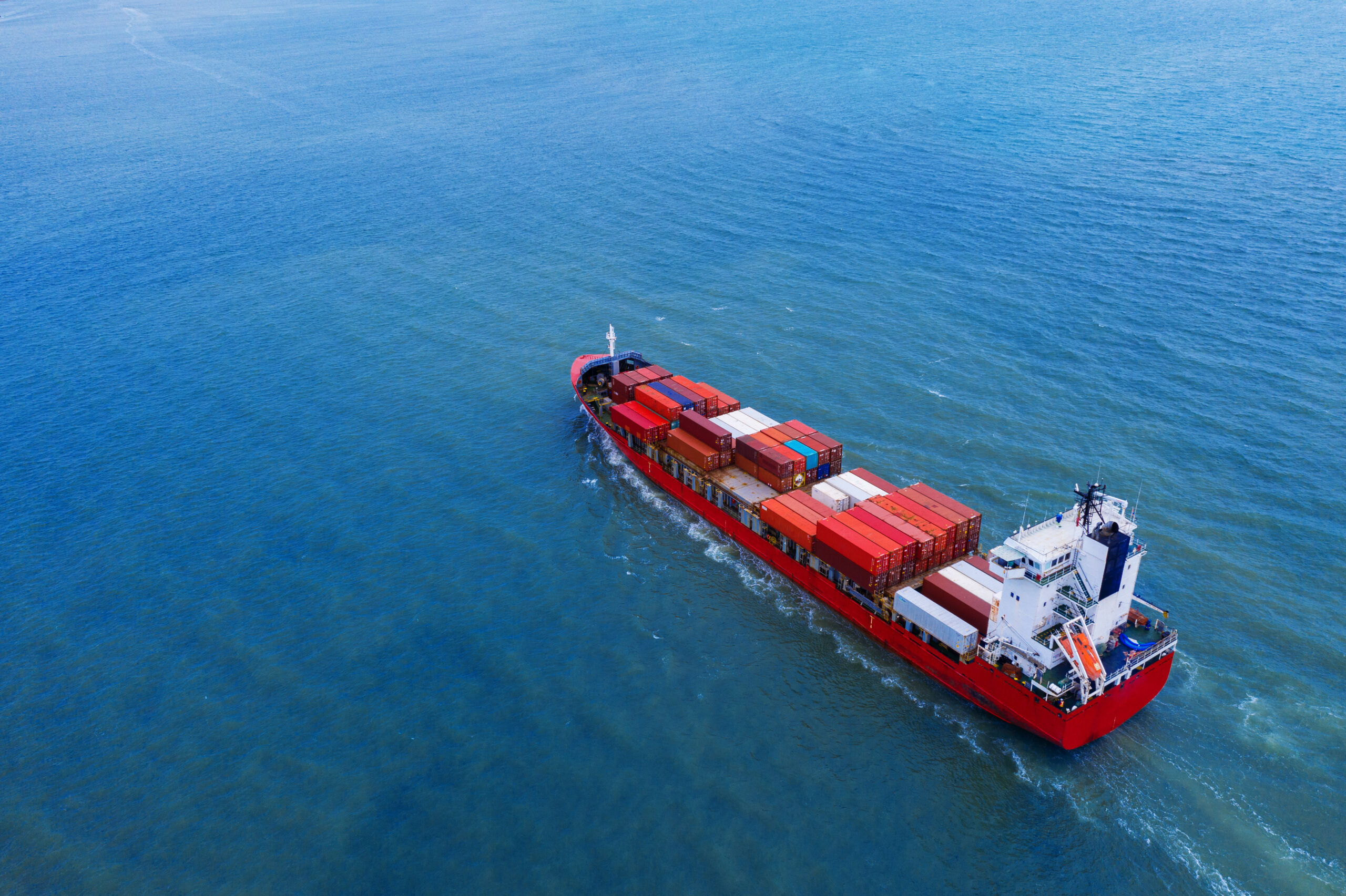
The United Nations International Maritime Organization has suspended its operation to escort ships through the Strait of Hormuz after a vessel was struck by what two US officials said was an Iranian fired projectile, casting fresh doubt on the durability of the preliminary US-Iran peace agreement signed just days earlier. Taiwan’s Evergreen Marine reported that its Singapore flagged ship, the Ever Lovely, was hit on the starboard side by an “unknown object” while transiting a route recommended by the British navy’s UKMTO agency near Oman. Initial inspections showed damage to the bridge windows, though the company confirmed that “the crew, vessel and cargo are all safe” and the ship has since departed the strait. The attack occurred hours after Tehran’s newly established Persian Gulf Strait Authority warned that vessels traveling outside Iranian approved routes would not be guaranteed safe passage.
The IMO’s decision to pause its evacuation initiative represents a significant setback to efforts to clear the hundreds of ships and thousands of seafarers stranded in the Gulf since the war began on February 28. Secretary General Arsenio Dominguez stated that the pause would allow the organization to “reconfirm that the necessary safety guarantees continue to be in place,” emphasizing that the attacked vessel was not part of the IMO’s voluntary evacuation scheme. That program, launched on Tuesday, offered two approved routes, one through Iranian waters and another through Omani waters with US oversight, to help stranded vessels exit the strait. The IMO’s caution underscores the precariousness of a situation where commercial shipping remains caught between conflicting claims of authority and the lingering threat of military action.
Iran’s posture has hardened even as diplomatic channels remain open. The Revolutionary Guards declared that safe passage would only be possible through Iranian designated routes and ordered two Panama flagged ships to change course on Thursday. “Consequences arising from passage through unauthorized routes shall be the responsibility of the owner, operator, and vessel commander,” the Persian Gulf Strait Authority warned. US Secretary of State Marco Rubio, wrapping up a Gulf tour to reassure allies about the interim pact, had stated earlier that if Iran threatened or blocked ships, “then we’re going to have a problem.” President Donald Trump has warned that if Iran does not honor the agreement, the US would “probably go back to bombing the country.” Despite the attack, some normalization continues, Saudi Aramco resumed oil loading at its Ras Tanura terminal for the first time in nearly four months, with two Very Large Crude Carriers seen loading 2 million barrels each, while South Korean President Lee Jae Myung announced that three more of his country’s ships would exit the strait over the weekend. Yet with oil prices dipping but remaining volatile, and with the 60 day negotiation window for a final deal just beginning, the Hormuz incident suggests that peace on paper does not guarantee peace on the water.