The Miroslav Gospel, the oldest preserved Serbian Cyrillic manuscript and one of the most precious monuments of medieval Slavic culture, will be on public display at the National Museum of Serbia in Belgrade on June 27 and 28, marking the Vidovdan holiday with free admission for all visitors. The 12th century illuminated manuscript, commissioned around 1180 by Prince Miroslav of Hum, brother of Grand Prince Stefan Nemanja, founder of the Nemanjić dynasty, represents the earliest known monument of Serbian literacy written in the Cyrillic script. Its exceptional historical, cultural, and artistic value earned it a place on UNESCO’s Memory of the World Register in 2005, alongside documents such as the 1789 French Declaration of the Rights of Man, Gutenberg’s Bible, and Nikola Tesla’s archive.
The manuscript’s physical form is as remarkable as its content. Written on fine parchment across 360 pages, the Miroslav Gospel contains nearly 300 lavish miniatures and initials rendered in terracotta, gold, yellow, red, and green, depicting motifs of birds, winged creatures, interlace patterns, and human figures. The text is composed in the Serbian recension of Old Church Slavonic, representing a pivotal stage in the development of the distinct Serbian language. Two scribes contributed to the work, with the name of Deacon Gligorije preserved in the colophon. The manuscript’s artistic style reflects a unique synthesis of Western Romanesque and Eastern Byzantine influences, making it a crucial testament to the cultural crossroads that medieval Serbia represented.
The Gospel’s survival through centuries of turbulence is itself a story of resilience. For seven centuries it was preserved in the Hilandar Monastery on Mount Athos, the spiritual heart of Serbian Orthodoxy. In 1896, King Aleksandar Obrenović received it as a gift during his visit to the Holy Mountain. During World War I, it was carried across the Albanian mountains with the retreating Serbian army and taken to Corfu for safekeeping. In World War II, it narrowly escaped destruction when the National Library in Belgrade was bombed in 1941, having been moved to the Rača monastery and then to the vault of the National Bank just in time. Today, the original is kept in a special climate controlled chamber at the National Museum, with strict limits on public display, no more than ten days per year, to protect the fragile parchment .One page, folio 166, remains in the National Library of Russia in St. Petersburg, cut out in 1845 by Russian Bishop Porfirije Uspenski during his visit to Hilandar.
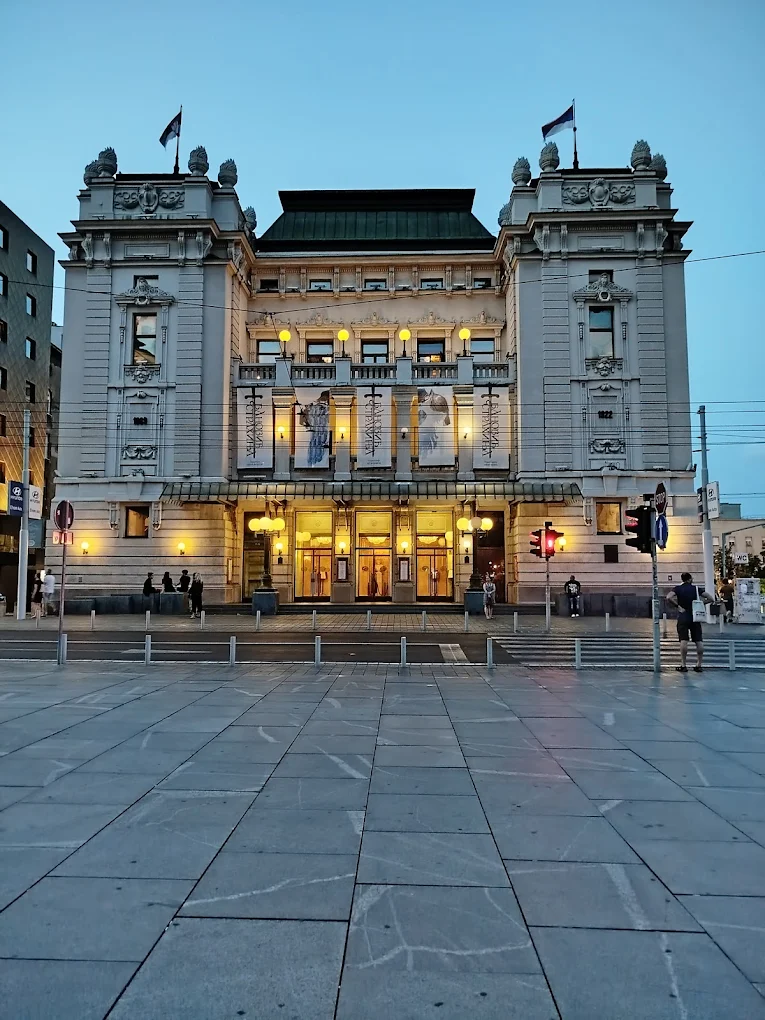
For Belgrade residents and visitors, this weekend offers a rare opportunity to view a document that has shaped Serbian identity for over 840 years. The National Museum’s decision to open its doors for free on Vidovdan, a day of profound historical significance for Serbs, marking the 1389 Battle of Kosovo, underscores the manuscript’s role not merely as an artifact but as a living symbol of cultural continuity. In an age of digital reproductions, the physical presence of the Miroslav Gospel retains an almost sacred power, connecting modern Serbia to the medieval world of its founding princes.