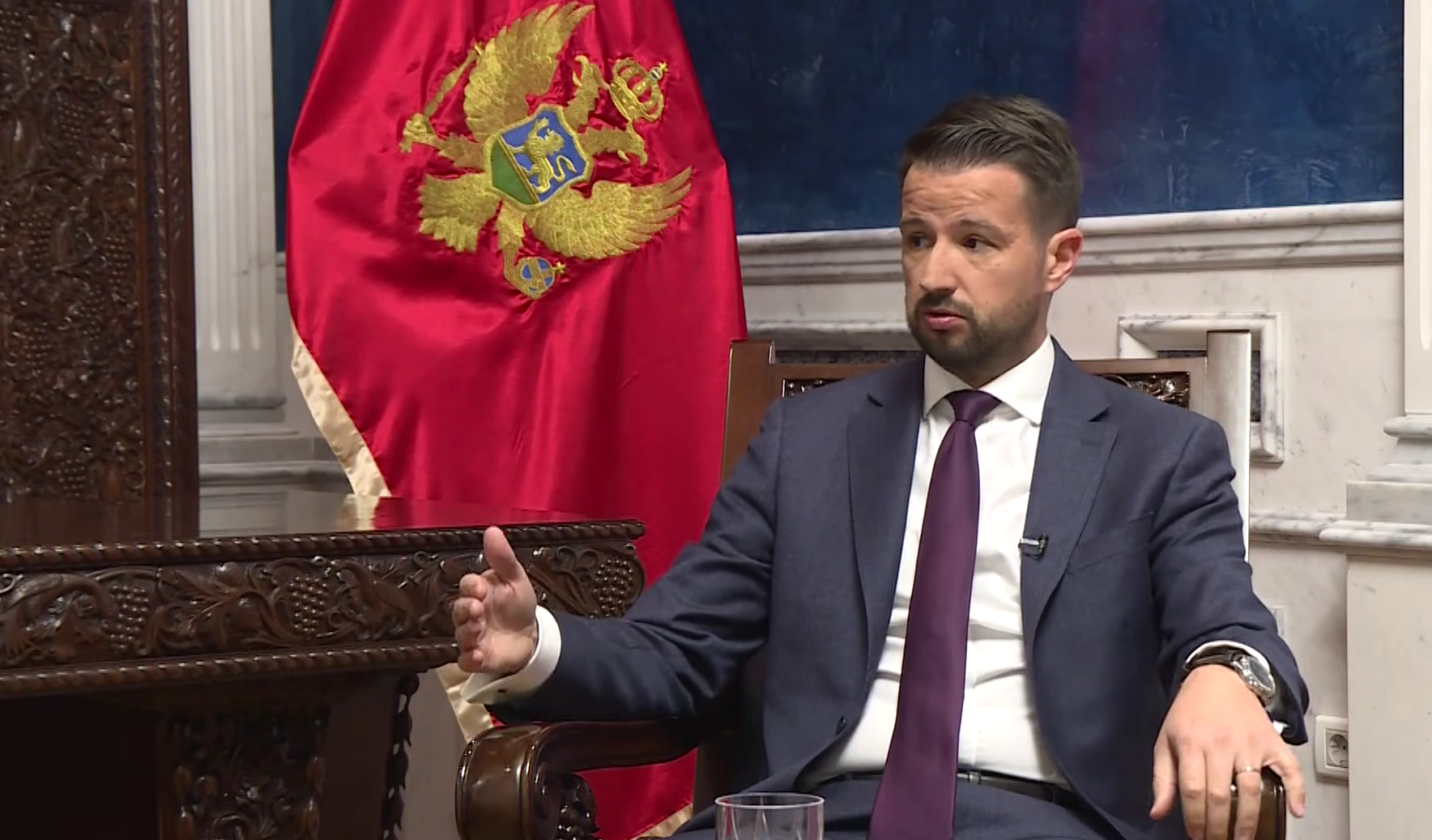
Montenegrin President Jakov Milatović has delivered a sweeping address framing his country’s European Union accession as both a historic opportunity and a decisive test of national seriousness, declaring that Montenegro “must finish its European job” and become the bloc’s 28th member by 2028. The speech, which draws on recent diplomatic milestones including the EU-Western Balkans Summit in Tivat, his address to the European Parliament in Strasbourg, and messages of support from Paris and Berlin, positions Montenegro as having entered the “final and decisive phase” of its two decade integration journey. “Montenegro is at the table. Montenegro is trusted. Montenegro is delivering results,” Milatović wrote, emphasizing that the country has moved from the margins to the center of the European process.
The president’s timeline is ambitious but increasingly grounded in institutional reality. On April 22, 2026, EU ambassadors endorsed the establishment of an Ad Hoc Working Party to draft Montenegro’s Accession Treaty, the first such exercise since Croatia’s accession in 2013 and a signal that Brussels views Podgorica as genuinely within reach of membership .As of June 2026, 16 of 33 negotiating chapters have been provisionally closed, with Chapters 2 (Freedom of Movement for Workers) and 28 (Consumer and Health Protection) added during the 27th Accession Conference on June 15. The government aims to close all remaining chapters by year’s end. European Council President António Costa has called the treaty drafting “a key step forward,” while Commissioner for Enlargement Marta Kos has described Montenegro’s Accession Treaty as “the first of a new generation” that will include enhanced safeguard mechanisms to prevent democratic backsliding.
Milatović’s vision extends beyond bureaucratic milestones to a fundamental transformation of the Montenegrin state. He outlined a clear reform agenda, strengthening institutions, making the judiciary more independent and efficient, professionalizing public administration, and intensifying the fight against corruption and organized crime. “European integration is not just a foreign policy goal. It is the internal transformation of our state,” he wrote, linking membership to tangible improvements in daily life, safer jobs, higher wages, better healthcare, stronger education, cleaner environment, and more investment. The president also positioned Montenegro’s accession as strategically vital for the entire Western Balkans, arguing that it would prove “the European promise is alive” and that “reforms are rewarded.” Yet he warned against complacency: “No one has the right to waste this historic opportunity on divisions, excuses, or narrow political interests.” With support from France’s Emmanuel Macron and Germany’s Friedrich Merz, and with the EU seeking to demonstrate that enlargement remains credible amid geopolitical uncertainty, Montenegro’s final exam is approaching. Whether it passes will depend not on declarations but on the daily work of every institution, ministry, municipality, and public official between now and 2028.