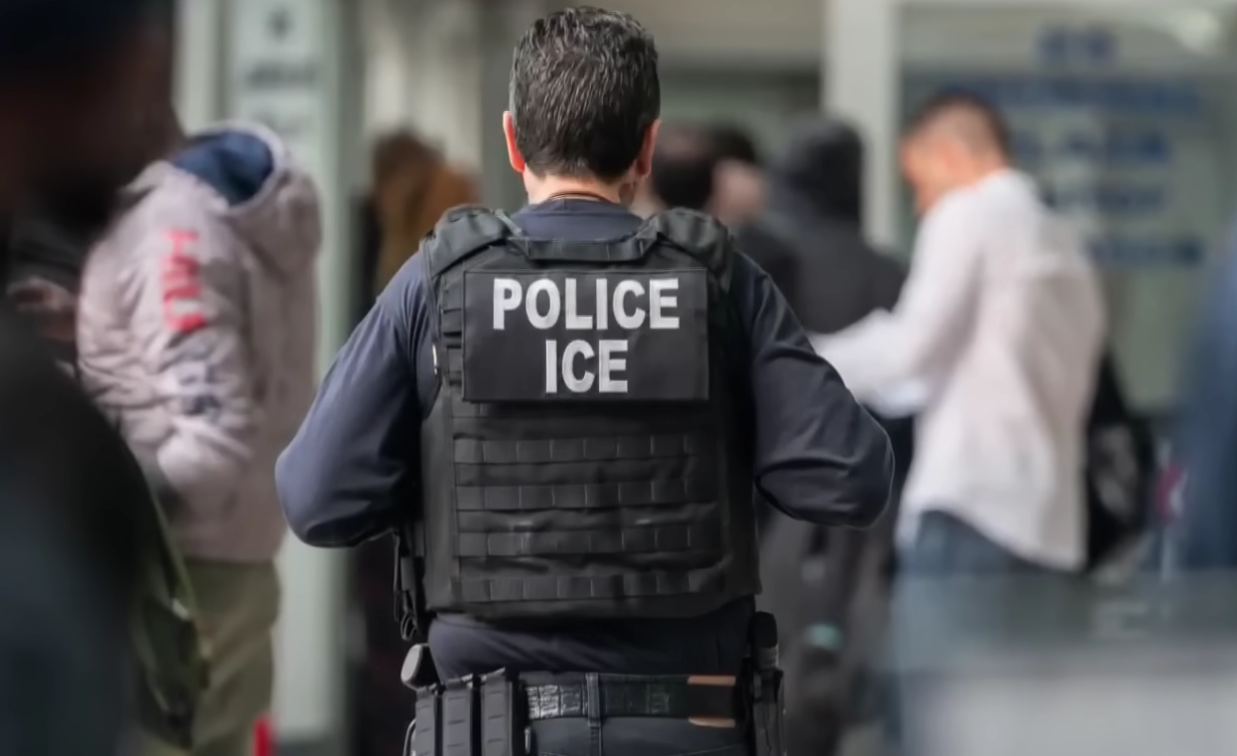
A federal judge on Thursday halted Philadelphia from enforcing a new city law that would have prohibited federal law enforcement agents from wearing masks, ruling that municipalities cannot dictate how federal agencies conduct operations. U.S. District Judge Chad Kenney, a Trump appointee, issued a preliminary injunction barring key provisions of the city’s “ICE Out” legislation before they took effect, finding that the Constitution prevents local governments from controlling federal law enforcement activities. The decision marks the latest victory for the Justice Department in a widening legal offensive that has already seen federal courts block similar mask bans in California, Virginia, and Los Angeles.
Philadelphia’s ordinance was enacted earlier this year as part of a broader “ICE Out” package designed to push back against masked immigration enforcement operations. The law would have barred officers from wearing masks or concealing identifying information, required visible badges and marked vehicles, and exposed violators to civil and criminal penalties. Kenney ruled that “this type of direct regulation of the federal government by a municipality is blatantly impermissible,” warning that endorsing Philadelphia’s position would allow every municipality to pass its own laws regulating when federal officers can conceal their identities. The Trump administration argued that forced disclosure would endanger agents and undermine undercover operations, while Philadelphia countered that its law contained exceptions for surveillance work.
The Philadelphia case is part of a coordinated federal pushback against a movement spreading through Democratic led states and cities. California became the first state to enact a mask ban in September 2025, but a federal judge blocked enforcement in February 2026, and the Ninth Circuit later struck down the state’s identification requirement under the Supremacy Clause. The Justice Department has also sued New Jersey, while Virginia saw its restriction halted this week. At least 33 states have proposed or enacted similar legislation. The legal battles center on intergovernmental immunity, which bars state and local laws that directly regulate or discriminate against the federal government.
The broader context reflects an intensifying confrontation over immigration enforcement tactics. Proponents of mask bans argue that concealed identities erode public trust and accountability, while the Department of Homeland Security contends that agents face unprecedented threats, citing dramatic increases in assaults and death threats. Independent analyses suggest 2025 was actually one of the safer years for ICE agents, and critics note that recent “assault” claims have included videotaping operations or asking to see warrants. The Justice Department has vowed to “keep fighting jurisdictions that try to obstruct President Trump’s immigration enforcement.” With the Ninth Circuit establishing that state laws regulating law enforcement agencies “qua government” are void, mask bans face an uphill battle in federal court, leaving cities to explore alternative approaches if they wish to demand transparency from federal officers operating within their borders.