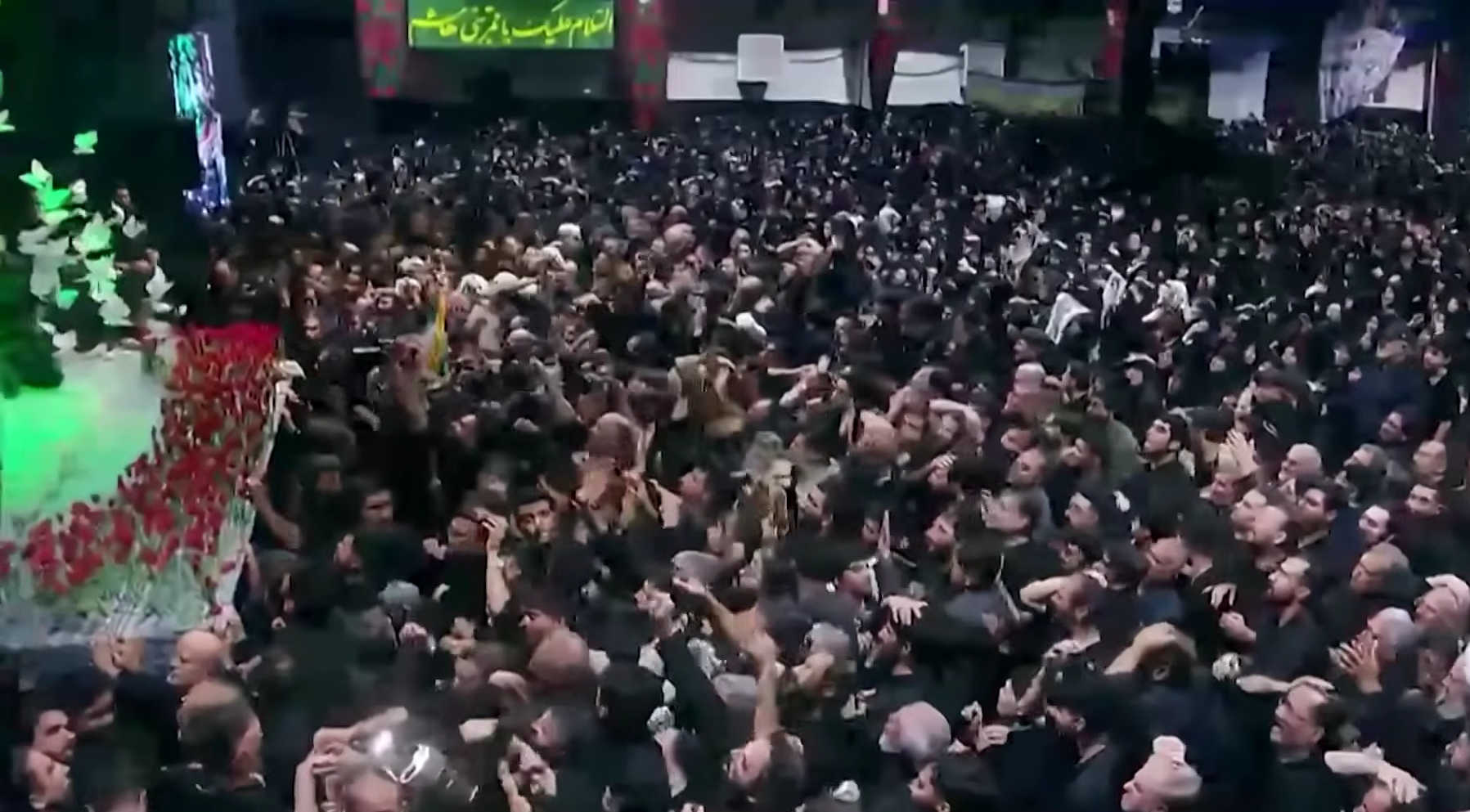
The state funeral of Ayatollah Ali Khamenei has begun in Tehran, with the slain Iranian Supreme Leader’s coffin and those of several family members displayed at the Grand Mosalla prayer complex as Iran launches six days of ceremonies expected to draw millions of mourners. Khamenei and relatives including his son in law Mesbah al-Hoda Bagheri, eldest daughter Seyyedeh Boshra Hosseini Khamenei, daughter in law Zahra Haddad Adel, and 14 month old granddaughter Zahra Mohammad Golpayegani were killed in late February during the opening phase of the war with the United States and Israel. All coffins are draped in the Iranian flag, with a photograph of the infant girl placed before her small casket. The ceremonies, originally scheduled for March but postponed due to the war, will span Tehran, Qom, Iraq, and finally Mashhad, where burial is set for July 9 at the Imam Reza Shrine.
The central question hanging over the funeral is whether Mojtaba Khamenei, the new Supreme Leader and son of the deceased, will make his first public appearance since being wounded in the same strike that killed his father. Mojtaba has remained entirely in hiding for over four months, communicating only through written statements, and was conspicuously absent even from his own wife’s funeral held Wednesday in Tehran. Iranian officials claim his injuries were minor, but US Secretary of State Marco Rubio has suggested he suffered serious burns to his face and lips that may affect his ability to speak. His appearance at the funeral prayers would be crucial for establishing legitimacy under Shia tradition, where a son must lead prayers at his father’s grave to consecrate succession, his absence would deepen skepticism about his health and raise questions about who truly governs Iran.
Iran has invited guests from approximately 100 countries, though most nations are sending high ranking rather than top level officials. Pakistan’s Prime Minister Shehbaz Sharif, whose country served as a key mediator between Iran and the US, confirmed his attendance to express condolences. China is sending He Wei, vice chairman of the National People’s Congress Standing Committee, while India is dispatching Minister of State for External Affairs Pabitra Margherita and Bihar Governor Lt Gen Syed Ata Hasnain. Two senior Taliban officials from Afghanistan and Georgian President Mikheil Kavelashvili are also expected. The diplomatic turnout reflects Iran’s effort to project stability and international solidarity despite its decimated leadership, though the absence of major Western leaders underscores the isolation the regime faces after months of war.
Iran has taken extraordinary security and logistical measures for the event, suspending diplomatic activities, restricting air traffic over Tehran and Mashhad, and preparing 5,000 mosques and 700 schools to accommodate pilgrims. Authorities have arranged 50 million loaves of bread and ordered grocery stores to operate around the clock. The regime has also issued fresh warnings to the US and Israel against any attacks during the mourning period, while simultaneously using the funeral to amplify its narrative of martyrdom and resistance. For a leadership that has lost its founder, much of his family, and numerous top military commanders in a single strike, the funeral represents both a moment of vulnerability and a carefully orchestrated attempt to turn grief into political capital.