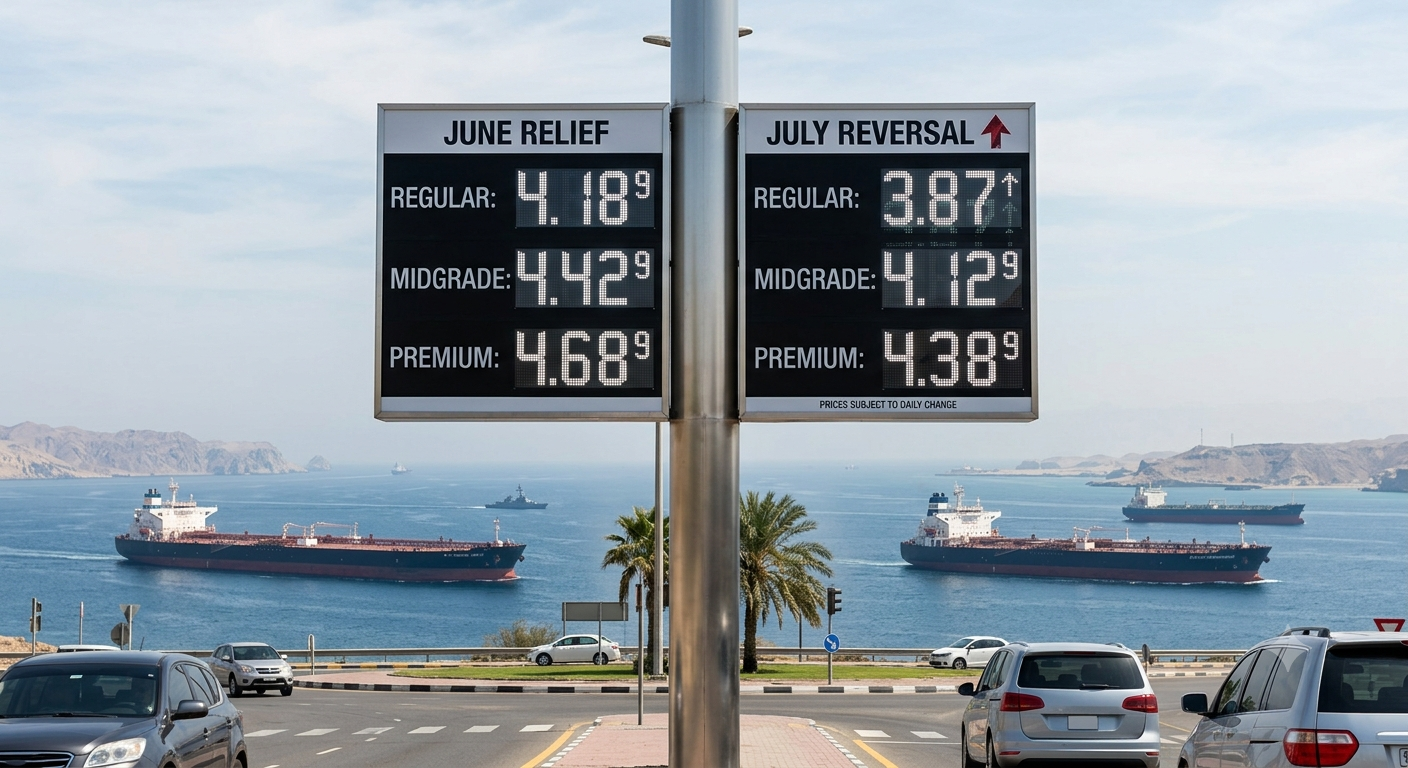
US consumer inflation is expected to have slowed in June, with economists forecasting the Consumer Price Index rose 3.8% year over year, down from May’s 4.2% peak, the largest annual increase since April 2023. The anticipated moderation largely reflects a retreat in gasoline prices, which dropped to an average of $4.18 per gallon from May’s $4.61, the highest level since July 2022. However, the fragile ceasefire between the US and Iran collapsed last week after commercial tankers came under fire in the Strait of Hormuz, sending gasoline prices climbing back to $3.87 per gallon and threatening to reignite inflationary pressures just as consumers were beginning to feel relief.
The core CPI, which excludes volatile food and energy prices, is forecast to have risen 2.8% year over year, slightly down from May’s 2.9%. While some economists view this as a positive sign that the energy shock from the Iran war did not significantly pass through to broader prices, others caution that underlying inflation remains sticky. “The pain level just went down from 10 to 9, consumers are still in a lot of pain,” said Boston College economics professor Brian Bethune. Diane Swonk, chief economist at KPMG, noted that even with grocery stores cutting prices to lure customers back, “the level of prices is still compounding.” The monthly CPI is expected to have dipped 0.1%, which would mark the first monthly decline since May 2020, though this relief could prove temporary. The US-Israel war with Iran has already raised fertilizer prices and distribution costs, and together with dry conditions in some parts of the country, could drive food prices higher later this year and into 2027.
The Federal Reserve faces a delicate balancing act. The central bank left its benchmark interest rate unchanged at 3.50%-3.75% at its June 16-17 meeting, but minutes published last week showed policymakers’ concerns about inflation mounted as the month progressed. Financial markets are now pricing in roughly a 50.8% chance of a rate hike at the September 15-16 policy meeting, according to CME’s FedWatch tool. JPMorgan chief economist Bruce Kasman noted that while “the energy surge that pushed headline CPI momentum to about 6% through May is now reversing,” the message on core inflation “is more mixed.” Services inflation remains elevated, with hotel and motel prices lifted by the FIFA World Cup, and motor vehicle insurance expected to rebound after a sharp drop in May. Apple raised prices on MacBooks and iPads late in June, reflecting upward pressure on hardware from the AI infrastructure boom, a trend that will likely show up in July data. “June’s CPI report is unlikely to decisively lean toward or rule out the Fed tightening policy this year,” said Samuel Tombs, chief US economist at Pantheon Macroeconomics. With President Trump reinstating the naval blockade on Iranian shipping and vowing to become the “guardian angel” of the Strait of Hormuz, the inflation outlook hinges less on domestic price dynamics than on whether the Middle East conflict can be contained before it sends energy costs spiraling again.