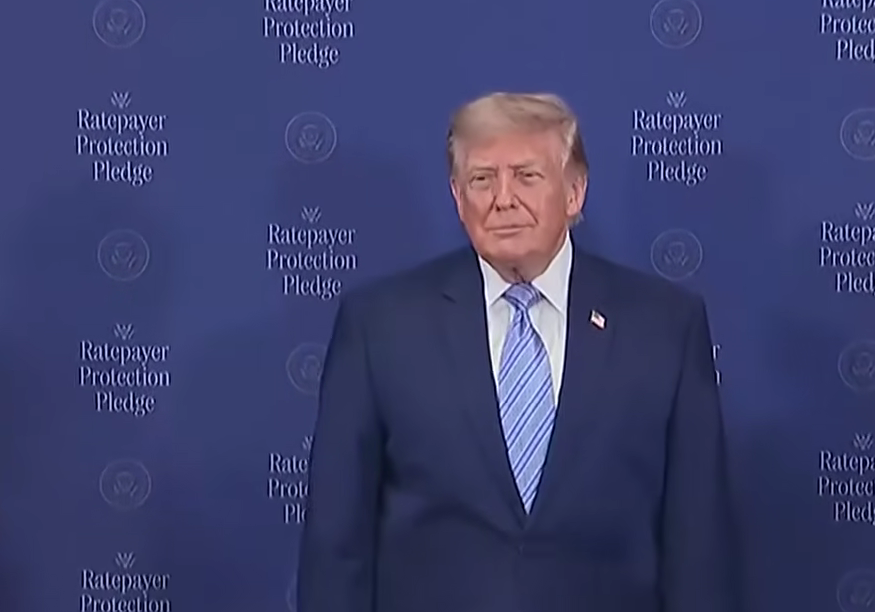
The U.S. Department of Education has eliminated “disparate impact” regulations that for decades prohibited school policies with discriminatory effects even when no intent to discriminate could be proven, drawing immediate condemnation from 60 civil rights and education organizations. The move, announced on July 23, 2026, implements President Trump’s April 2025 executive order opposing disparate impact liability and directing federal agencies to stop enforcing it. Under the new rules, the Education Department’s Office for Civil Rights (OCR) will investigate only claims of intentional discrimination, disparate treatment, while policies that disproportionately harm minority students but appear neutral on their face will no longer trigger federal enforcement.
The practical consequences are significant. Disparate impact regulations have been the primary tool for challenging policies like school closures, discipline practices, and tracking systems that appear race neutral but produce racially skewed outcomes. The Education Department defended the change by claiming the old rules had prevented schools from “clamping down on minority students who were disruptive” and led institutions “to consider race and engage in racial balancing.” Assistant Secretary for Civil Rights Kimberly Richey stated that “the left’s notion of ‘equity’ should never prevent teachers from keeping their classrooms and students safe,” adding that schools would now be “empowered to address classroom issues without fearing the federal government will weaponize anti discrimination laws.”
Richey’s appointment in October 2025 was itself a flashpoint. Confirmed on a 51-47 party line vote, she had previously served as acting assistant secretary under Trump’s first term and co authored an op-ed encouraging parents to fight gender inclusive bathroom policies. Civil rights groups, including the NAACP Legal Defense Fund and the National Women’s Law Center, warned during her confirmation that she had demonstrated “a willingness to disregard Supreme Court precedent when it conflicts with her ideological views.” She now leads an OCR that has been gutted by layoffs, down to five of 12 regional offices, with attorneys juggling an average of 115 cases each, more than double the previously reported caseload of 42. A GAO report found that OCR dismissed roughly 90% of the more than 9,000 new discrimination complaints received between March and September 2025.
The 60 protesting organizations framed the disparate impact tool as essential for addressing systemic barriers. “The disparate impact tool is designed to remove unjustified barriers in education and ensure that all students have an equal opportunity to learn and succeed,” they said in a joint statement. They pointed to school closure policies that shutter predominantly minority schools, discipline codes that suspend Black students at far higher rates, and tracking systems that funnel students of color into less rigorous courses, all practices that can be challenged under disparate impact theory but are extremely difficult to prove as intentionally discriminatory. The DOJ had already dropped disparate impact liability from its own Title VI regulations in December 2025, and the Education Department’s action brings federal education policy into alignment with that narrower interpretation.
The change is part of a broader Trump administration assault on diversity initiatives across education and government. Since January 2025, the Education Department has dissolved its Diversity & Inclusion Council, canceled over $2.6 million in DEI training contracts, withdrawn its Equity Action Plan, and removed more than 200 web pages promoting equity resources. The administration frames these moves as restoring meritocracy and ending “race based” discrimination, critics call it a rollback of hard won civil rights protections that will leave marginalized students vulnerable. With no private right of action for disparate impact claims under Title VI, the federal government was the only enforcement mechanism. Its removal means that schools can now implement policies with known discriminatory effects, provided no one can prove they were designed that way. For students of color, students with disabilities, and English language learners, the legal shield against systemic inequality has just become significantly thinner.