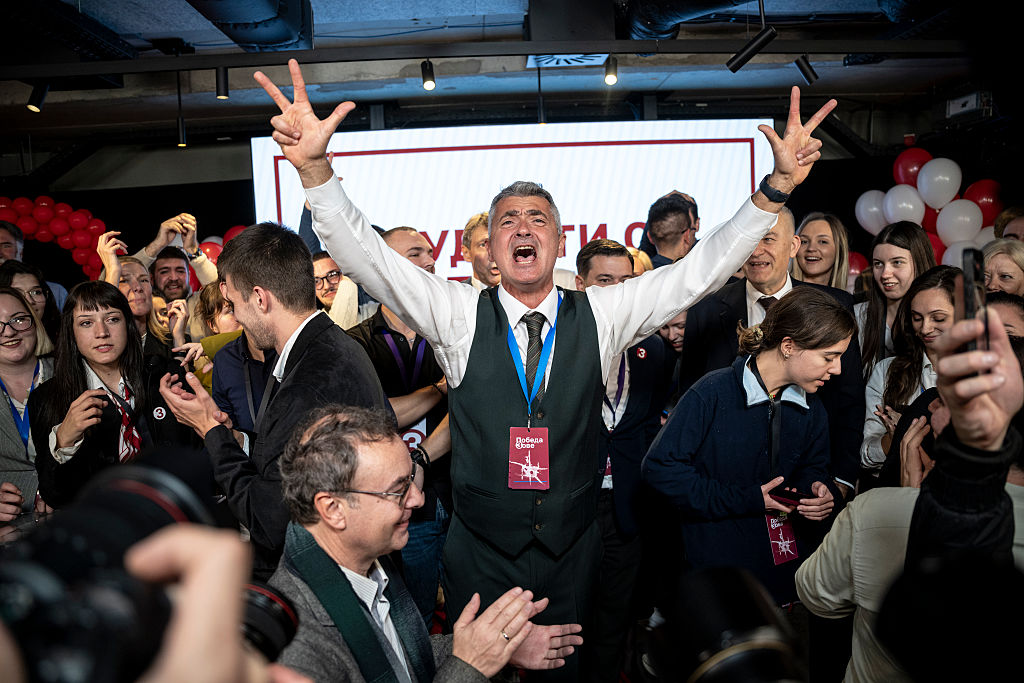
Former Montenegrin Prime Minister Dritan Abazović has launched a scathing attack on the country’s current government, accusing officials of being insatiably greedy for power and privileges while ordinary citizens struggle with the rising cost of living. The outburst from the leader of the Civic Movement URA came after the coalition government led by Prime Minister Milojko Spajić swelled to 34 members, an exceptionally large cabinet for a nation of roughly 600,000 people that now surpasses the governments of far larger European states like France and Italy in sheer headcount. Abazović, who served as prime minister from April to August 2022 before his government was toppled in a no confidence vote, did not mince words in his assessment of the current administration’s priorities. “What is this, people? Who are these people? Have they had enough? No, these people are insatiable. They cannot get enough to eat or drink. You have never seen such a group,” he declared, painting a vivid picture of a political class consumed by self interest rather than public service.
The criticism cuts deeper given Montenegro’s persistent economic challenges. Despite being an EU accession frontrunner with NATO membership since 2017, the country faces significant structural weaknesses including an oversized public sector, entrenched clientelism, and a tourism dependent economy vulnerable to external shocks. According to the Bertelsmann Transformation Index 2026, public sector salaries accounted for more than one fifth of total budget expenditures in 2023, with spending increasing 19% from the previous year even as no significant steps were taken to reform public services. The EBRD’s draft country strategy for 2026-2031 notes that Montenegro’s private sector remains dominated by micro enterprises with limited capacity to scale, while governance gaps persist around regulatory unpredictability, slow permitting, and weak enforcement. Abazović argued that the ruling coalition’s political energy is being directed entirely toward distributing government positions rather than addressing problems that directly affect citizens’ standard of living, a sentiment echoed by many Montenegrins who express skepticism that EU membership will solve their daily struggles.
In response, Abazović outlined URA’s alternative agenda focused squarely on economic relief for ordinary Montenegrins. The party has called for increasing wages and pensions, raising child benefits, and protecting the country’s natural resources, issues that resonate in a country where the average wage hovers around €6 per hour and pensions average roughly €300 monthly. URA has also pushed for reducing excise taxes on fuel to ease inflationary pressure, proposing a 40 euro increase to all pensions that would raise the minimum pension from €450 to €490, and advocating for compensation of €12,000 for former employees of bankrupt state owned companies. Abazović urged citizens to keep these bread and butter issues in mind when they head to the polls at the next elections, framing the choice as one between a government obsessed with patronage and one committed to improving living standards. The confrontation underscores the growing tension in Montenegro between the ruling coalition’s survival strategy of expanding political favors and an opposition demanding tangible economic reforms, a dynamic that will likely intensify as the country navigates its EU path while grappling with domestic discontent over governance and affordability.