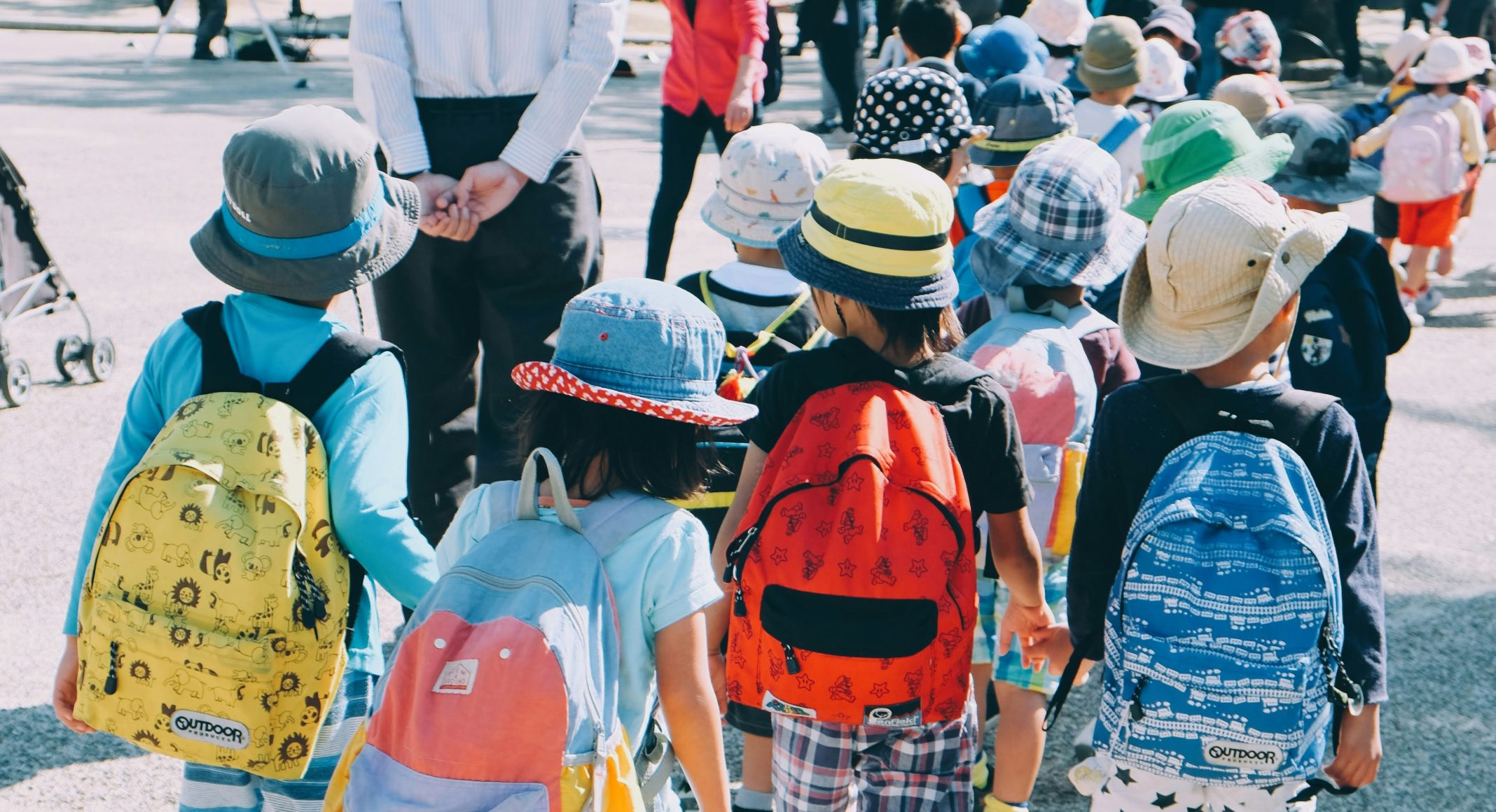
When the school bell rings on September 1, classrooms across Macedonia will welcome a new generation of first-graders. However, thousands of desks are expected to remain empty. Based on current enrollment figures, around 4,900 fewer children are expected to start first grade compared to last year.
The final number has not yet been confirmed, as additional enrollments are still possible. Even so, the Ministry of Education and Science expects the incoming generation to be at least 3,000 students smaller than the previous one.
“This trend is expected to continue next year as well, which is deeply concerning for the country,” Education Minister Vesna Janevska warned.
The decline extends far beyond education. Fewer children entering school today means fewer high school students and university graduates in the future, followed by a smaller workforce, fewer taxpayers, lower consumer demand, and fewer young families. What was once reflected mainly in birth-rate statistics is now becoming increasingly visible in the country’s schools.
The children reaching school age today were born during a period when birth rates had already begun to decline significantly. In 2019, North Macedonia recorded 19,845 live births, a 7% decrease compared to 21,333 births in 2018, meaning the country welcomed nearly 1,500 fewer babies in just one year.
The impact is already evident throughout the education system. At the beginning of the 2024/2025 school year, regular primary schools had 180,627 students, representing a 0.8% decline from the previous year. Secondary schools enrolled 67,143 students, down by 0.2%.
According to preliminary Ministry data, approximately 17,250 children enrolled in first grade last school year, already signaling that each new generation is becoming smaller.
The demographic decline is not affecting all regions equally. While several municipalities in Skopje face shortages of classrooms due to internal migration toward the capital, many schools in other parts of the country have only a handful of students.
The Ministry reports that around 100 school facilities have fewer than five pupils. Roughly two-thirds of these are satellite schools, which together educate only 12% of all primary school students. As a result, authorities plan to optimize the school network by connecting smaller satellite schools with larger educational centers.
Meanwhile, more than 200 schools have already introduced single-shift teaching, particularly in municipalities such as Kavadarci, Prilep, Bitola, and Shtip. In contrast, Skopje continues to require new classrooms and school expansions to accommodate its growing population.
This has created two very different educational realities within the country: schools that are steadily emptying and schools struggling with overcrowding. The situation reflects not only declining birth rates but also significant internal migration and uneven regional development.
The downward trend is also reaching higher education. According to Minister Janevska, fewer pupils in primary and secondary education will inevitably result in fewer university students. At the same time, demand differs considerably across academic fields.
Universities are experiencing shortages of students preparing to become mathematics, physics, and geography teachers, while some regions also face a lack of future Macedonian language teachers. By contrast, information technology, electrical engineering, and mechanical engineering continue to offer strong employment prospects, whereas opportunities in certain social science disciplines are becoming more limited.
To better align higher education with labor market needs, the Ministry has begun adjusting university enrollment quotas. For example, a faculty accredited for 500 students may receive approval to enroll only 400 if labor market analyses indicate lower demand for graduates in that field.
However, with each new generation shrinking by several thousand children, adjusting university quotas addresses only the consequences rather than the underlying problem. The greater challenge remains creating conditions that encourage young people to build families, have children, and remain in Macedonia.
Although the final number of first-grade enrollments may increase slightly before September, officials expect the new generation to still be at least 3,000 children smaller than last year’s.
That represents the equivalent of more than 100 average-sized school classes.
Today, these are empty seats in first-grade classrooms. In little more than a decade, they could become empty lecture halls at universities, and eventually unfilled positions across businesses, public institutions, and the broader economy.