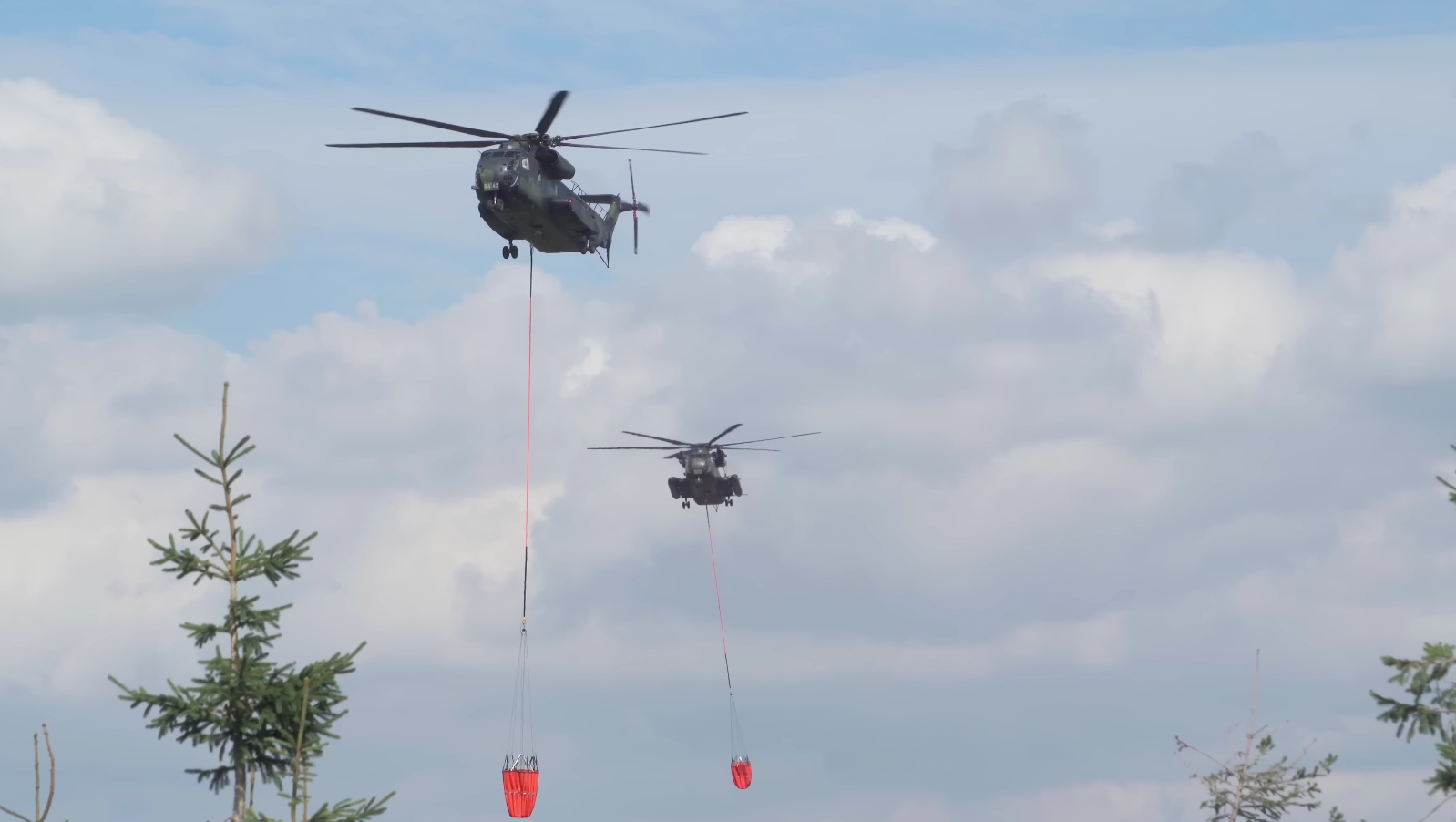
A helicopter from the 2nd Helicopter Squadron of the Armed Forces of Bosnia and Herzegovina has been battling a wildfire in the Konjic municipality since the afternoon of August 6. The operation is among the more challenging aerial firefighting missions undertaken by the country’s armed forces because of difficult terrain and heavy smoke.
According to the Ministry of Defense, crews have completed nearly four hours of flight time and dropped 12 buckets of water, equivalent to approximately six tons, onto the fire. The operation has consumed around 1,000 liters of jet fuel as crews continue working to prevent the flames from spreading.
The fire began in the Kanjina area during the night of August 5-6 and threatened nearby homes and railway lines. A helicopter from the Ministry of Interior of Zenica Doboj Canton has also been involved in the response, with the Armed Forces expected to continue providing support at the request of civilian authorities.
The Ministry of Defense said crews are following prescribed safety standards and procedures throughout the operation. The Konjic wildfire comes as Bosnia and Herzegovina faces a wider series of fires during an exceptionally hot and dry summer.
Extreme Heat Increases Wildfire Risk Across Bosnia
The Konjic wildfire is part of a broader wave of fires affecting Bosnia and Herzegovina during the summer of 2026. Extreme temperatures reached 43-44 degrees Celsius at the end of July, creating highly favorable conditions for fires to spread rapidly through dry vegetation and heavily forested areas.
More than 48% of Bosnia and Herzegovina’s territory is covered by forests, making prolonged periods of heat and drought particularly concerning. Satellite monitoring has also recorded fire activity above average levels, with 67 VIIRS fire alerts reported between late July and early August.
The Konjic region presents additional challenges for firefighters because of its mountainous landscape and limited road access. Landmines left from the 1992-1995 war also complicate ground operations in some areas, increasing the importance of aerial firefighting when fires develop in difficult to reach locations.
Previous fires around Konjic have threatened important infrastructure, including railway lines and the Igman ammunition factory. The ability to deploy helicopters quickly can therefore be critical when flames approach populated areas or strategically important facilities.
The operation also highlights the capabilities and limitations of Bosnia and Herzegovina’s aerial firefighting resources. The Armed Forces operate UH-1H Huey II helicopters, upgraded multi mission aircraft received from the United States in 2021 as part of a $38.5 million package that included training for pilots and maintenance personnel.
Bosnia and Herzegovina is also working to modernize its helicopter fleet. Six new Leonardo AW119Kx helicopters were approved for purchase in 2025, with the aircraft intended for multiple roles including firefighting, search and rescue, and medical evacuation in mountainous terrain.
However, the country has faced longstanding criticism over its limited fleet of dedicated aerial firefighting aircraft. Bosnia and Herzegovina has not acquired specialized planes such as the Air Tractor AT-802, which is widely used for wildfire suppression in Europe, including in neighboring Croatia and Montenegro.
A 2020 analysis found that authorities had delayed the acquisition of dedicated firefighting aircraft despite a scientific study identifying such platforms as a preferred option for Bosnia and Herzegovina. Military helicopters therefore remain an important part of the country’s aerial firefighting response.
For now, the Armed Forces can provide an effective response to localized fires such as the blaze near Konjic. But as climate change contributes to longer and more intense fire seasons across the Western Balkans, Bosnia and Herzegovina may face increasing pressure to expand its dedicated aerial firefighting capabilities.