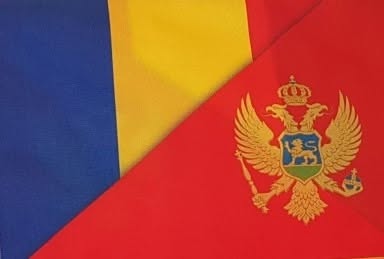
The Romania and Montenegro partnership is marking 20 years of modern diplomatic relations, built on historical ties, shared European values and growing cooperation in security, trade and regional development.
In a joint opinion article, Romanian Foreign Minister Oana Țoiu and Montenegro’s Deputy Prime Minister and Foreign Minister Ervin Ibrahimović reflected on the relationship between the two countries and outlined priorities for its future.
Diplomatic Relations Restored After Montenegro’s Independence
Montenegro held its independence referendum on May 21, 2006, and formally restored its independence on June 3.
Romania became one of the first countries to recognize Montenegro, doing so on June 13. The two countries formally restored diplomatic relations at the embassy level by signing a joint statement on Aug. 9, 2006.
However, their diplomatic ties extend much further into the past.
Both countries received formal international recognition at the Congress of Berlin on July 13, 1878. Romania established a framework for official diplomatic relations with Montenegro in 1879.
In 1881, Romanian King Carol I sent a historic letter to Montenegro’s Prince Nikola I Petrović-Njegoš, confirming the close relationship between the two countries.
The monarchs maintained regular communication during the Belle Époque. In 1911, one year after Montenegro became a kingdom, the two countries signed their first bilateral trade agreement.
Romania Supports Montenegro’s EU Ambitions
Romania has consistently supported Montenegro’s NATO membership and its effort to join the European Union.
The two foreign ministers described EU enlargement into the Western Balkans and Eastern Europe as a strategic requirement for regional security, prosperity and a more resilient Europe.
They acknowledged that EU membership requires difficult reforms, political compromise and sustained efforts to strengthen democratic institutions against disinformation, hybrid threats and manipulation.
Montenegro has fully aligned its foreign and security policy with that of the EU. It has also continued closing negotiating chapters, while the Council of the EU recently established an ad hoc working group to prepare the country’s accession treaty.
According to the ministers, these developments place Montenegro in a strong position to become the Western Balkans’ next successful EU enlargement story.
Montenegro aims to become an EU member by 2028. Romania said it would continue sharing its experience through technical assistance, legal alignment, stronger institutions and reform management.
Security Cooperation in a Changing Europe
The ministers said Russia’s war against Ukraine has fundamentally changed Europe’s security environment.
They argued that no country, regardless of its size or geographical position, can confront major security challenges alone. For the Western Balkans, they said, the conflict reinforces the importance of unity, resilience and cooperation with partners that share common values.
Romania has been a NATO member for 22 years and an EU member for nearly two decades. Montenegro, meanwhile, has completed nine years of NATO membership and continues advancing toward the EU.
Both countries emphasized the importance of collective security, sovereignty, territorial integrity and international law.
Bilateral Trade Exceeds €32 Million
Economic cooperation is also becoming a more important part of the Romania and Montenegro partnership.
Bilateral trade exceeded €32 million at the end of 2025, representing growth of nearly 30% compared with the previous year.
Romanian companies are already implementing sustainable projects involving smart public lighting and solar energy systems in Montenegrin municipalities, including Tivat and Bar.
The two countries have also organized business missions focused on tourism, food retail and information technology.
The Romanian-Montenegrin Economic Club, established in October 2025, is expected to provide a more structured framework for business cooperation. Efforts are also underway to establish a bilateral chamber of commerce.
Honorary consulates in both countries are expected to support companies, connect markets and create new commercial opportunities.
Tourism and Direct Flights Could Strengthen Connections
The number of Romanian tourists visiting Montenegro continues to rise, while more Montenegrin travelers are also visiting Romania.
The ministers said this trend strengthens people-to-people connections, improves mutual understanding and creates new opportunities in tourism and related industries.
A direct air connection between Bucharest and Podgorica could further support trade, tourism and personal ties if the route proves commercially sustainable.
Three Priorities for Future Cooperation
The two governments identified three main priorities for their future partnership.
First, they will continue working together to support Montenegro’s EU accession, strengthen its institutions and ensure that reforms deliver practical benefits for citizens.
Second, they plan to deepen economic cooperation by encouraging investment, supporting innovation and connecting companies with local communities.
Third, they intend to expand regional and multilateral cooperation.
Romania is chairing the Central European Initiative and the South-East European Cooperation Process. Montenegro is chairing the Berlin Process and will later lead the Council of Europe’s Committee of Ministers.
The ministers said these platforms could support political dialogue, economic development, regional connectivity, information security and closer alignment with European standards.
Romania and Montenegro intend to use their cooperation to support a Western Balkans region that is firmly and permanently integrated into the European Union.