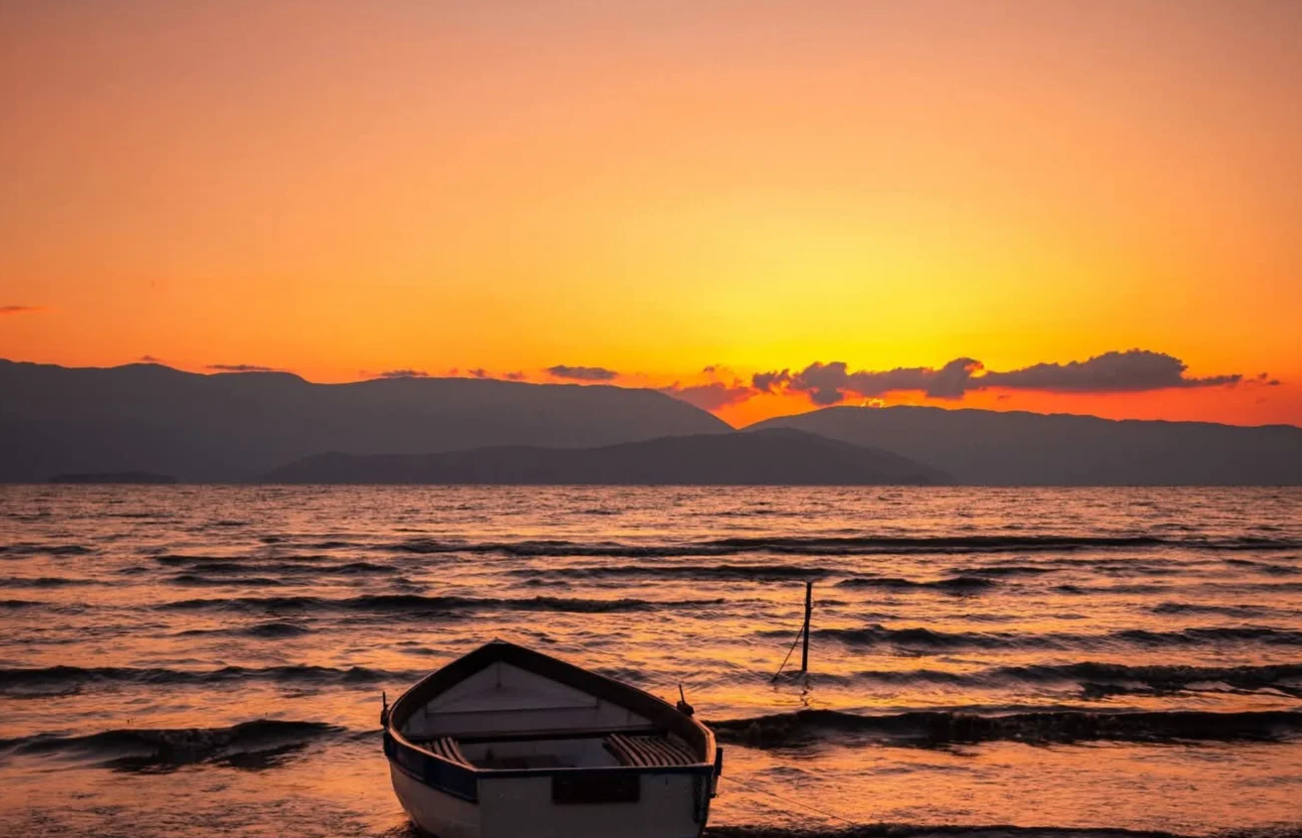
Lake Prespa is currently in a better position than it was at the same time last year, but new measurements show that the improvement may not signal a lasting recovery for one of Macedonia’s most important lakes. On September 7, the lake’s water level was 53 centimeters higher than on the same date in 2025, largely because the previous wet season brought unusually heavy precipitation. However, the dry period began around 20 days earlier than usual this year, and the lake has already lost 43 centimeters of water since reaching its seasonal high at the end of May. The figures, presented in an analysis by Dejan Trajkovski and published by “Emiter,” show a complicated picture: Lake Prespa has significantly more water than it did a year ago, but the seasonal decline has started earlier and the long term pressure on the lake remains.
The beginning of this year’s dry season was recorded on May 30, when the water level reached approximately 562 centimeters below the reference elevation. That was only two centimeters below the highest level recorded in 2024, meaning the lake entered the summer with a relatively strong water position. Since then, however, the level has fallen by 43 centimeters over roughly three months. According to the analysis, that decline is still within the range of an average seasonal decrease, but another 20 to 25 centimeters could disappear before the wetter period normally begins around the start of December. Based on those projections, the annual minimum could reach between 620 and 630 centimeters below the reference level. Despite the expected decline, experts do not currently expect Lake Prespa to reach another record low this year.
The reason for the more positive situation this year can be traced back to the exceptionally wet season that came before the current dry period. Heavy precipitation during the previous winter and spring raised the lake level by about 111 centimeters, while the United Nations Development Programme has also noted that the rainfall saturated surrounding soils and increased the amount of water flowing into Lake Prespa. That additional water has helped prevent the kind of dramatic decline seen in some previous years. However, the lake’s recent history shows why a single wet season is not enough to reverse the broader trend. During the previous two years, annual water level losses were estimated at around 50 to 55 centimeters, significantly higher than the long term average annual decline of approximately 18 centimeters.
The longer term picture remains a serious environmental concern. Data cited from NASA and reported by Reuters indicate that Lake Prespa lost around seven percent of its surface area and nearly half of its volume between 1984 and 2020. Compared with the late 1970s, its water level is now more than eight meters lower. The lake is shared by Macedonia, Albania and Greece and forms part of a unique transboundary ecosystem, making changes in its water balance important not only for local communities but also for wildlife and the wider Prespa region. For a genuine reversal of the decline, several consecutive wet seasons with substantial rainfall would likely be needed. Until then, the current 53 centimeter advantage over last year provides some relief, but it does not yet represent a recovery from the much larger environmental changes Lake Prespa has experienced over the past several decades.