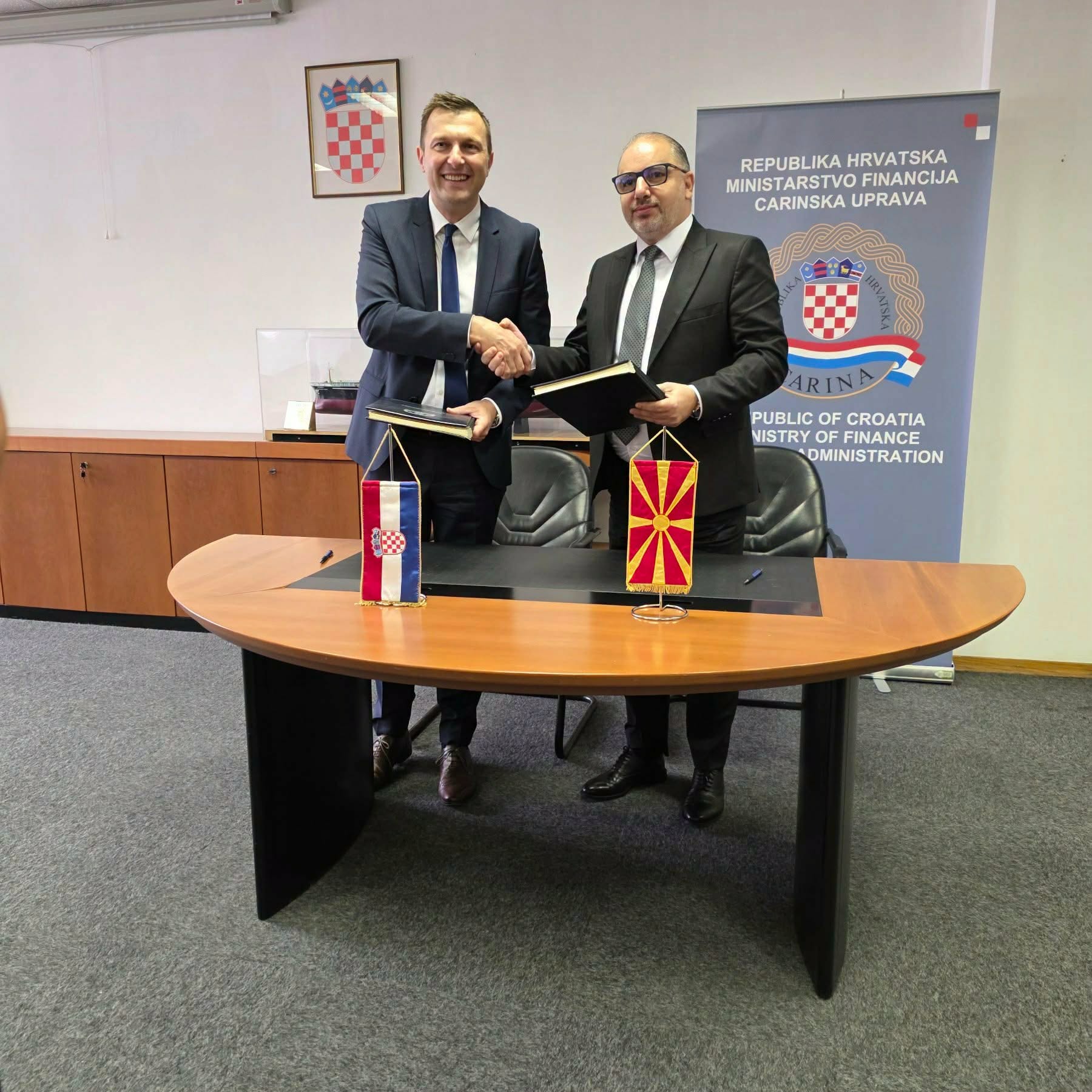
Macedonia is taking another step toward closer alignment with European Union customs standards after its Customs Administration signed a memorandum of cooperation with Croatia’s Customs Administration. The agreement is intended to strengthen cooperation between the two institutions and support the modernization of Macedonia’s customs system as the country continues preparations for future EU membership. Croatia’s experience is particularly relevant because its customs administration went through the process of adapting national procedures and legislation to the European customs framework before the country joined the EU in 2013.
The cooperation is expected to provide Macedonia with an opportunity to benefit from Croatia’s experience in areas connected to European customs procedures, administration and the implementation of EU standards. Customs authorities have an important role in international trade because they are responsible not only for collecting duties and other revenues, but also for controlling the movement of goods, preventing illegal trade and making cross border procedures more efficient. For a country preparing for EU accession, bringing these systems closer to European rules is an important part of the wider integration process, since EU customs legislation applies across the Union and requires member states to operate within a common legal and administrative framework.
Croatia’s own experience demonstrates how extensive this preparation can be. Before joining the European Union, Croatia had to introduce and implement European customs legislation and adapt its national administration to the requirements of the EU customs system. Following its accession in July 2013, EU customs legislation became part of the framework governing customs operations in the country. Today, Croatia’s Customs Administration is responsible for areas including customs and excise regulations, the supervision and processing of import, export and transit procedures, revenue collection and the prevention of customs related violations. Its experience therefore offers Macedonia a practical example of the institutional changes required when moving toward EU membership.
For Macedonia, the memorandum represents more than routine cooperation between two government institutions. It comes as the country continues to work toward closer integration with the European Union, where the modernization of public administration and alignment with EU legislation are important parts of the accession process. Stronger cooperation with a neighboring EU member state can give Macedonian customs officials access to experience that was developed during Croatia’s own accession process, while also helping improve cooperation on trade and cross border procedures. The long term goal is to create a customs system that is more compatible with European standards, more efficient for legitimate businesses and better equipped to protect the country’s borders and public revenues as Macedonia moves closer to the EU.