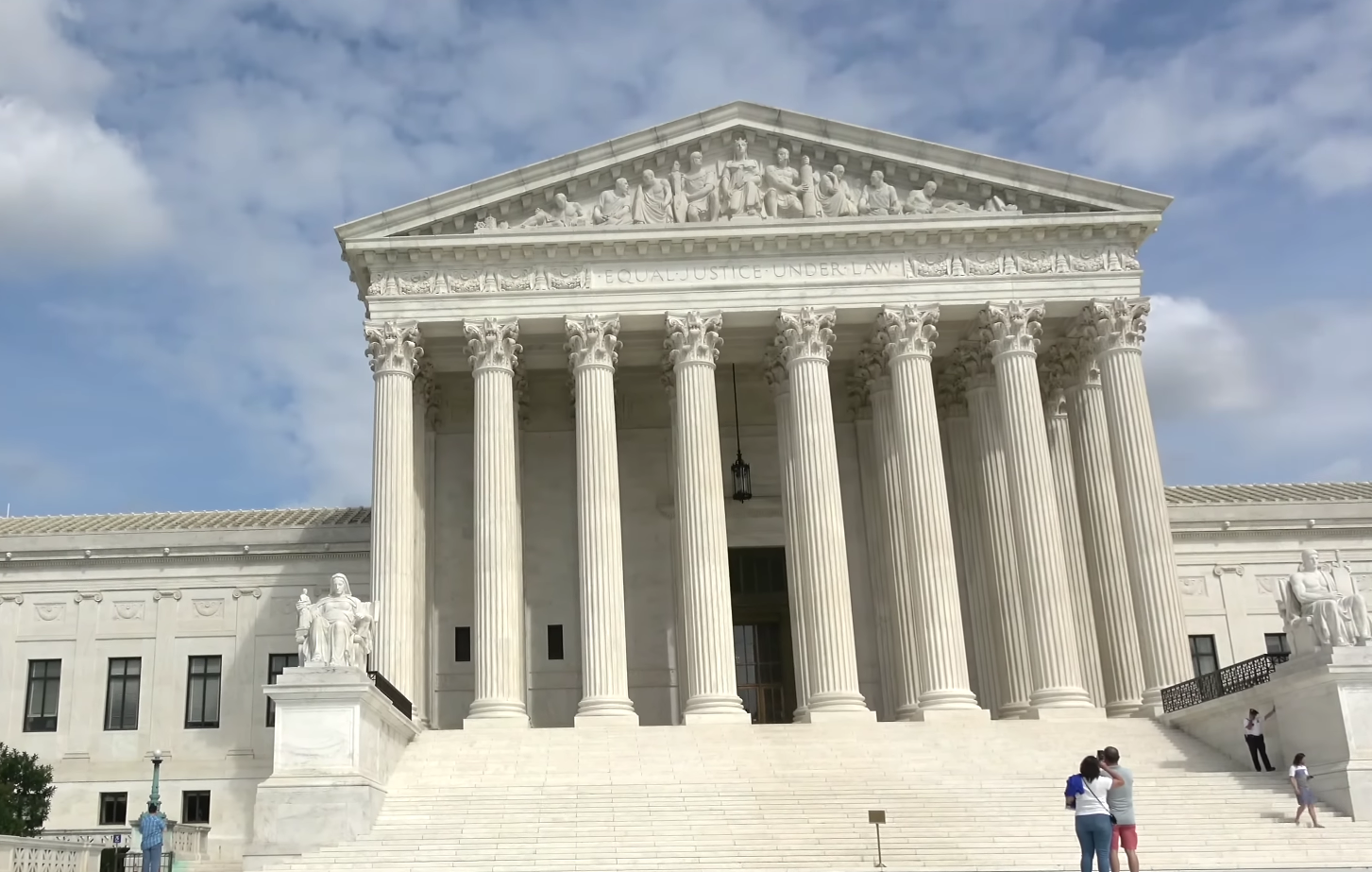
The United States Supreme Court has agreed to examine a major legal challenge to President Donald Trump’s immigration policy, which requires many immigrants who entered the country without authorization to remain in detention while their deportation cases proceed, without the opportunity to request release on bond. The decision places one of the administration’s central immigration measures before the nation’s highest court and could have significant consequences for people facing removal proceedings across the United States.
The case comes after conflicting rulings in lower courts raised questions about how federal immigration law should be interpreted. At the center of the dispute is a policy introduced by the Department of Homeland Security in July 2025. The administration’s guidance instructed immigration officials to treat many immigrants already living in the United States as individuals seeking admission to the country.
Under the administration’s interpretation of federal law, this classification makes detention mandatory while immigration cases are pending, removing the possibility of bond hearings that had previously been available to many people arrested inside the country. The Trump administration argues that its interpretation follows the requirements of federal immigration law, while opponents maintain that the statute was not intended to impose mandatory detention on such a broad group.
The policy represents a significant departure from a longstanding approach to immigration detention. For decades, many immigrants who had entered the United States and established lives there could ask an immigration judge to consider whether they should be released while their deportation proceedings continued. Judges could assess individual circumstances, including potential risks and the reasons for continued detention.
Supreme Court Immigration Detention Case Centers on Federal Law
The Supreme Court agreed to hear the case involving Ricardo Aparecido Barbosa da Cunha, a Brazilian national who entered the United States around 2004 or 2005 and remained in the country for approximately two decades. He was arrested by immigration authorities in September 2025 while driving to work in Massachusetts. Initially denied a bond hearing under the new policy, he subsequently challenged the decision in court and was later released on bond during the proceedings.
The legal dispute reached the 2nd U.S. Circuit Court of Appeals, which ruled against the administration’s interpretation. The court concluded that federal law did not support applying mandatory detention in the manner proposed by the government. The ruling reflected broader disagreement among federal courts, with several appellate courts rejecting the policy while others have accepted the administration’s position.
The conflicting decisions have made the Supreme Court’s review particularly significant because a final ruling could establish a consistent interpretation of the law nationwide. The justices will have to consider how federal immigration law applies to people already living in the country who are detained while their removal proceedings continue.
Immigrant-rights organizations have strongly opposed the policy, arguing that prolonged detention without access to a bond hearing can have serious consequences for individuals and their families. Michael K. T. Tan, deputy director of the American Civil Liberties Union’s Immigrants’ Rights Project, said the organization intends to defend its position before the Supreme Court. The ACLU argues that the administration has expanded the meaning of federal law beyond what Congress intended and that people should have the opportunity to challenge their continued detention through individual hearings.
The administration maintains that the policy is legally justified and necessary to enforce immigration law. A Department of Homeland Security spokesperson welcomed the Supreme Court’s decision to take up the case, arguing that the government is applying existing legislation as Congress intended. Officials have also criticized the previous administration’s approach to immigration enforcement, presenting the new policy as part of a broader effort to strengthen border and immigration controls.
Supreme Court Ruling Could Reshape US Immigration Detention Policy
The scale of the legal challenges illustrates how extensively the policy has affected the federal court system. According to the figures cited in the original reporting, immigrants filed more than 73,000 related cases in federal court during 2026, representing approximately one quarter of all civil lawsuits filed in federal court over the period discussed. A separate analysis published earlier in the year found that judges had repeatedly ruled that immigration authorities unlawfully detained individuals under the policy. These cases demonstrate the legal and administrative difficulties created by disagreements over detention authority.
The Supreme Court’s decision also comes amid several other major disputes involving the Trump administration’s immigration agenda. Earlier in the week, the justices allowed the government, for now, to resume deporting certain migrants to countries other than their countries of origin without first providing an opportunity to challenge the potential harm they might face. Arguments in that separate case are scheduled for December.
Together, these proceedings place immigration enforcement, detention authority and the legal protections available to migrants among the prominent issues before the court during its new term. The cases address different aspects of federal immigration policy, but both involve questions about the government’s authority and the legal procedures available to people facing removal.
The outcome of the mandatory detention case could determine whether the administration can continue applying its current interpretation of immigration law or whether certain immigrants must again be given access to bond hearings while their cases proceed. A decision in favor of the government could reinforce its ability to hold a broad group of immigrants in custody during removal proceedings. A ruling against the policy could require changes to detention practices and affect thousands of pending cases.
The Supreme Court has not yet decided the merits of the dispute, and the legal questions remain unresolved. As the case moves forward, the central issue will be how federal immigration law defines the government’s authority to detain people who are already living in the United States while their deportation cases are being considered.
The administration’s enforcement priorities, the interpretation of existing legislation and the rights available to detained immigrants will all be part of the debate. The court’s eventual ruling is expected to clarify an issue that has divided lower courts and become a major part of the country’s ongoing immigration policy dispute.