Montenegro has taken steps to address two longstanding disputes with Croatia, changing the name of a swimming pool in Kotor and approving a memorial plaque at the former Morinj prison camp. Compensation for former detainees and several other issues remain unresolved as Podgorica pursues its goal of joining the European Union by 2028.
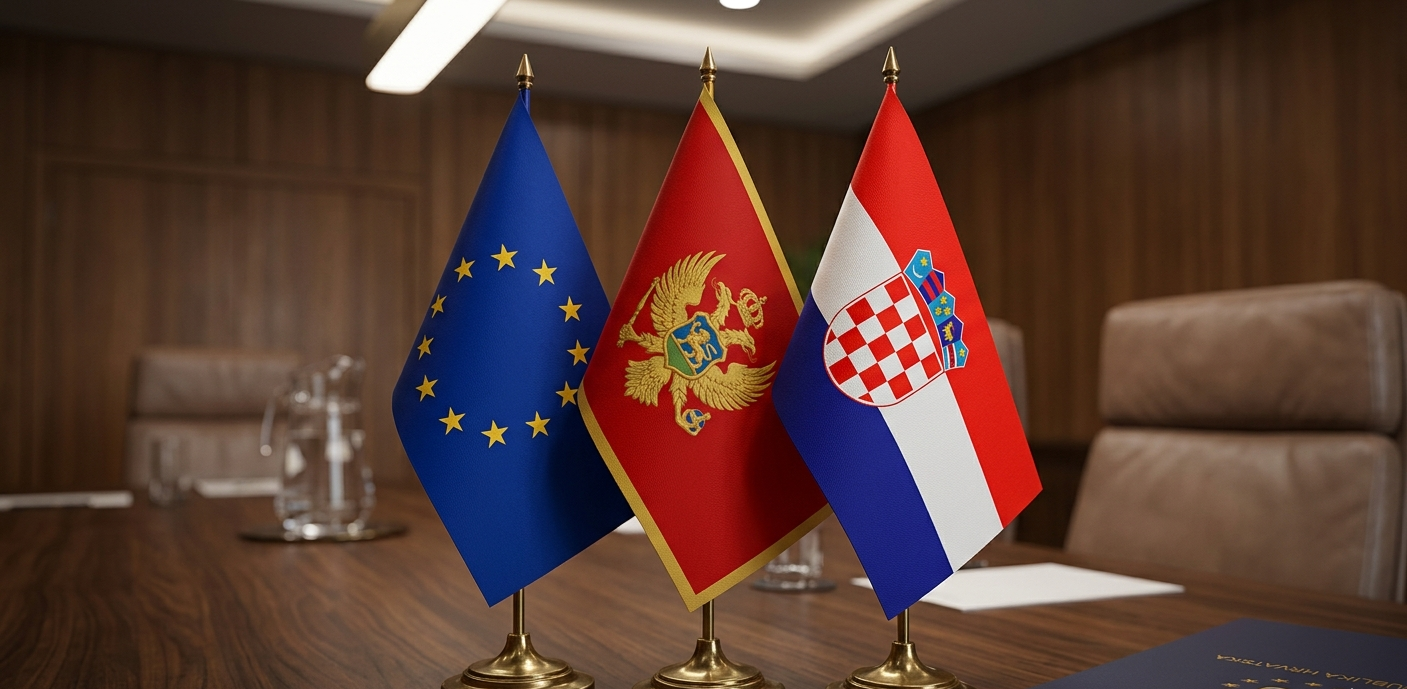
Montenegro’s government has approved decisions to rename the municipal swimming pool in Kotor and formally authorize a memorial plaque at the former Morinj detention camp, addressing two of Croatia’s demands in a broader dispute that could affect Montenegro’s European Union accession process.
The decisions were adopted on October 19 and announced by the government on Tuesday, October 20, 2026.
Montenegrin Foreign Minister Ervin Ibrahimović had said the previous day that Podgorica was preparing a response to three issues raised by Zagreb: the swimming pool’s name, the memorial plaque and compensation for former detainees.
“I believe that we will soon send a response regarding the renaming of the swimming pool in Kotor, the plaque at the Morinj camp, as well as compensation. This government approaches these issues responsibly,” Ibrahimović said on October 19.
The government has now acted on the first two issues, while the status of compensation and the remaining disputes requires further clarification.
Kotor Swimming Pool Renamed After Petar II Petrović Njegoš
The swimming pool in Kotor, previously named after water polo player Zoran Gopčević, will now be called the City Swimming Pool – Petar II Petrović Njegoš, after Montenegro’s government approved the change.
Gopčević’s name became a point of contention because Croatia maintains that he served as a guard at the Morinj detention camp during 1991–1992. The camp held Croatian civilians and prisoners of war from the Dubrovnik region during the wars accompanying the breakup of Yugoslavia.
Montenegro’s recent amendments to its sports legislation provided a legal basis for changing the names of sports facilities.
The decision represents a response to one of Croatia’s demands, although it does not resolve the broader historical and political disagreements between the two countries.
Memorial Plaque at Morinj Formally Approved
The government also approved a memorial plaque at the site of the former Morinj camp, where Croatian detainees were imprisoned during the war.
The camp operated from October 1991 until August 1992. Its legacy remains one of the most sensitive issues in relations between Podgorica and Zagreb.
The plaque, installed in October 2022, commemorates the Croatian detainees who suffered at the camp. Its preservation has been a central demand of Croatian authorities.
For former detainees and their families, the issue extends beyond diplomatic relations to include recognition of their suffering and accountability for wartime abuses.
Croatia has also requested compensation for approximately 300 of its citizens who were detained and mistreated at Morinj. Although Montenegro has taken steps concerning the pool and memorial plaque, a comprehensive resolution of the compensation issue has not yet been established.
Croatia’s Eight Demands
Croatia has presented its outstanding concerns in an eight-point list shared with EU member states and European institutions. Zagreb says concrete progress is necessary before Montenegro’s accession negotiations can be completed.
The demands cover:
- Compensation for former detainees of the Morinj camp.
- Permanent preservation of the memorial plaque at Morinj.
- Renaming the swimming pool in Kotor.
- Continued efforts to locate 14 people still missing from the Croatian War of Independence.
- Prosecution of war crimes, including consideration of command responsibility.
- Resolution of outstanding property claims involving Croatian families in Montenegro.
- Continued negotiations on the maritime boundary between the two countries.
- Return of the training ship Jadran to Croatia.
The latest government decisions address the swimming pool and the plaque, but the remaining matters require additional negotiations and, in some cases, legal or institutional action.
The search for missing persons carries a particular humanitarian significance. Croatia wants Montenegro to cooperate in establishing their fate and locating their remains.
Property disputes concern Croatian families seeking the resolution of claims involving property in Montenegro, some of which have been subject to lengthy legal proceedings.
Dispute Over the Training Ship Jadran
The training ship Jadran remains another major point of disagreement.
Croatia and Montenegro have competing positions on the vessel’s ownership. On October 9, representatives of the two countries met in Zagreb to discuss the ship and other outstanding questions relating to the succession of former Yugoslav military property.
Following the meeting, Croatia’s Ministry of Foreign and European Affairs reiterated its position on ownership and said further consultations and examination of the documentation could help bring the longstanding dispute to a conclusion.
Montenegro, meanwhile, maintains that the ship belongs to it and has called for a solution that takes into account the arguments of both sides.
Maritime delimitation is also unresolved, adding another layer to the broader bilateral dispute.
Croatia Links Progress to Montenegro’s EU Accession
Croatian Prime Minister Andrej Plenković has repeatedly said that the outstanding questions have remained unresolved for years and that Zagreb has not seen sufficient progress during the past two years.
Croatia argues that good-neighbourly relations are a key political criterion in the EU enlargement process. Its Foreign Ministry has emphasized that bilateral disputes should be resolved rather than carried into the Union.
“Croatia continues to strongly support Montenegro’s European path, while expecting outstanding issues to be addressed through constructive dialogue, in line with commitments undertaken and European values,” the Croatian ministry said following the October 9 meeting on the Jadran.
Germany has meanwhile urged a constructive approach to avoid allowing bilateral disagreements to derail Montenegro’s accession process.
German Chancellor Friedrich Merz said on October 16 that Montenegro had met almost all the requirements for EU membership and that the remaining local disputes with Croatia could be resolved. He also confirmed that the European Commission had been asked to prepare the accession treaty.
Montenegro’s 2028 EU Goal
Montenegro aims to join the European Union by 2028 and has made substantial progress in its accession negotiations.
As of October 2026, the country had provisionally closed 21 of its 33 negotiating chapters, following the closure of three additional chapters on October 12. The remaining negotiations and the agreement of all EU member states are necessary before membership can be finalized.
Croatia’s position adds uncertainty to the final stage of the process, particularly because the country’s demands concern historical accountability, property rights and unresolved matters arising from the breakup of Yugoslavia.
The decisions on the Kotor swimming pool and the Morinj memorial plaque mark tangible progress. However, they should not be interpreted as a settlement of all eight demands or as confirmation that Croatia has accepted every outstanding issue as resolved.
The next steps will depend on Podgorica’s response regarding compensation and its willingness to continue negotiations on missing persons, war crimes, property claims, the maritime boundary and the Jadran.
For Montenegro, the challenge is to turn the recent decisions into broader agreements while maintaining momentum toward its 2028 EU membership objective.