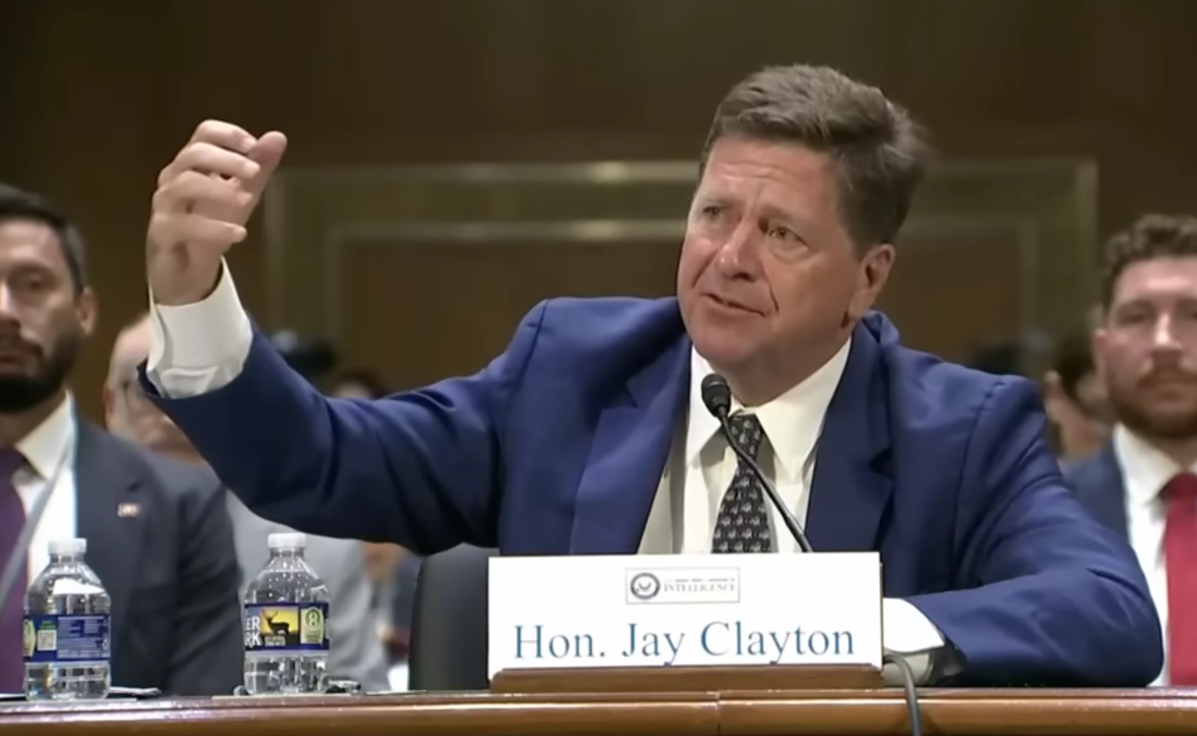
The Jay Clayton nomination for director of national intelligence has moved closer to final confirmation in the U.S. Senate.
Senators voted 51-43 on Monday to advance President Donald Trump’s choice for the country’s top intelligence position. The vote largely followed party lines, with Republicans supporting Clayton and Democrats voting against the nomination.
A final confirmation vote could take place later this week.
Jay Clayton’s Background and Intelligence Role
Clayton is a former chairman of the Securities and Exchange Commission and currently serves as U.S. attorney for the Southern District of New York.
If confirmed, he would lead the Office of the Director of National Intelligence and oversee coordination among the U.S. intelligence community’s 18 agencies.
Supporters point to his legal and national security experience, including work involving terrorism, counter-espionage and financial crimes.
Democrats Raise Concerns Over Nomination
The nomination has faced opposition from Democrats, who have raised concerns about Clayton’s independence and his responses during his confirmation hearing.
Lawmakers questioned him about the 2020 election and his handling of subpoenas involving journalists.
The Senate Intelligence Committee previously advanced his nomination by a narrow 9-8 vote, highlighting the political divisions surrounding his appointment.
Intelligence Community Faces Leadership Transition
Clayton’s potential appointment also comes at a sensitive time for the intelligence community.
The position became vacant after Tulsi Gabbard left the role in June, leaving Bill Pulte as acting director.
Lawmakers from both parties have stressed the importance of having a permanent intelligence chief, while Republicans argue that Clayton’s leadership and legal background make him suited to the job.
What Happens Next for Jay Clayton?
The Senate vote does not yet make Clayton the director of national intelligence, but it brings him significantly closer to the position.
If the final confirmation succeeds, he will take charge of one of the most important national security roles in Washington.
His appointment could also shape the relationship between the intelligence community, Congress and the Trump administration as the United States faces a range of domestic and international security challenges.