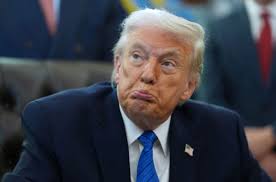
A U.S. Supreme Court ruling that struck down former President Donald Trump’s emergency tariffs has reshaped the global trade landscape, handing relief to some of the countries that were previously hardest hit while eroding advantages secured by others.
The court found that Trump’s use of the International Emergency Economic Powers Act (IEEPA) to impose sweeping import duties was unlawful. As a result, several major exporters — including China, India, and Brazil — are now expected to face lower effective tariff rates on shipments to the United States.
Although Trump subsequently proposed a new global tariff of 15%, analysts estimate the average effective rate would settle at around 12%. That would mark the lowest level since the so-called “Liberation Day” tariffs were unveiled in April.
Asia Sees Immediate Relief
Economists at Morgan Stanley project that Asia’s weighted average tariff rate will fall to 17% from 20%. For Chinese goods specifically, average duties are expected to decline from 32% to 24%.
The relief may not be permanent. Trump’s team has indicated it could reintroduce targeted, sector-specific tariffs to restore parts of its original trade regime. Still, Morgan Stanley economists led by Chetan Ahya said the peak of tariff uncertainty and trade tension appears to have passed.
China also benefits from the removal of a separate 10% fentanyl-related tariff, further easing pressure on its exporters.
Who Gains — and Who Loses?
The policy reset effectively levels the playing field among U.S. trading partners.
Winners include:
-China
-India
-Brazil
-Canada
-Mexico
Canada and Mexico, which had faced fentanyl-linked tariffs, now stand to benefit if exemptions under the USMCA trade agreement remain intact.
Relative losers include:
-United Kingdom
-Australia
-Japan
The UK and Australia had negotiated 10% tariff arrangements under the previous reciprocal framework. With a new 15% baseline, their preferential positioning weakens. Japan, which had faced a competitive 15% rate, now loses that relative advantage as the same rate becomes more broadly applied.
Market Reaction and Ongoing Talks
Financial markets reacted cautiously. The U.S. dollar and S&P 500 futures edged lower amid renewed uncertainty over trade policy, while Chinese stocks in Hong Kong advanced.
Senior U.S. officials are reportedly pressing key partners—including the European Union and Japan—to uphold commitments made in earlier negotiations. Washington has also called for maintaining the one-year trade truce with China, ahead of a planned visit by Trump to Beijing for talks with President Xi Jinping.
Limited Macro Impact Expected
Despite the legal shake-up, economists argue the broader macroeconomic impact may be contained. Analysts at Goldman Sachs estimate that the combined effect of the court ruling and the newly proposed tariff measures would trim the increase in the effective tariff rate since early 2025 from just over 10 percentage points to roughly 9.
They expect imports from countries benefiting from tariff reductions to rise in the coming months. However, any boost to GDP could be offset by inventory adjustments, shifts in trade flows, and modest increases in duties for some nations.
In short, while the court decision removes a layer of legal uncertainty and offers breathing room to several major exporters, global trade dynamics remain fluid — and far from settled.