Election Formally Called, Campaign Environment Intensifies
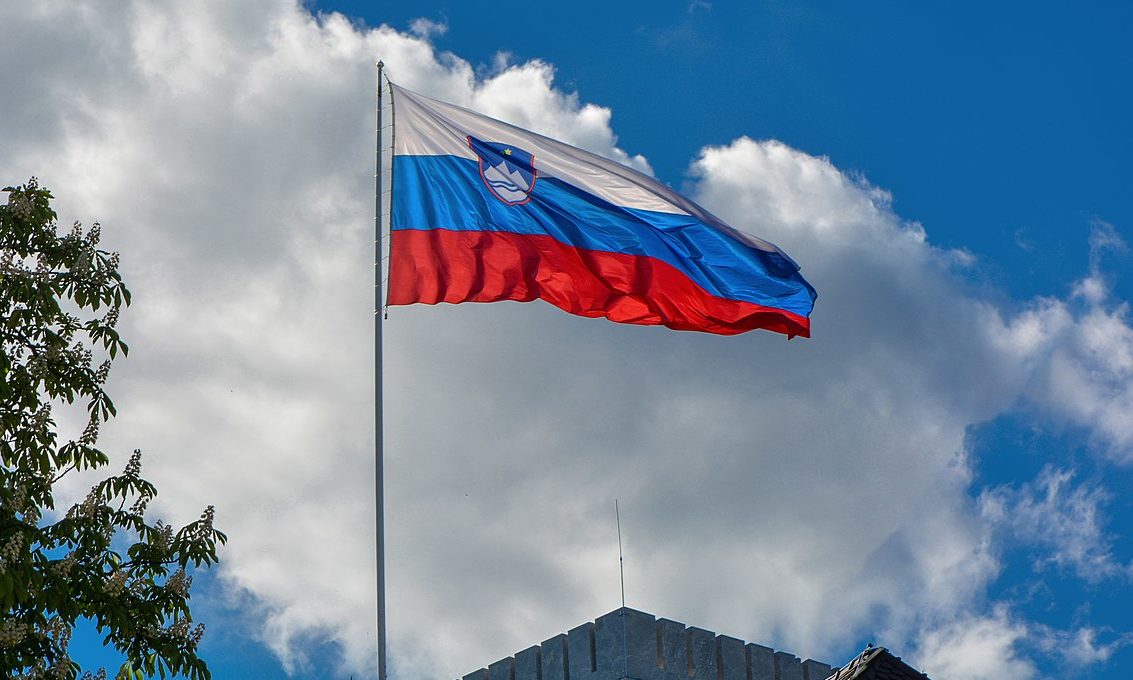
Slovenia will head to the polls on 22 March 2026 for parliamentary elections that are shaping up to be among the most competitive in recent years. The election was formally called by President Nataša Pirc Musar, who emphasized the need for a responsible and issue-focused campaign, warning against polarization and the spread of disinformation. The official start of the campaign has intensified political positioning, with parties sharpening their rhetoric and clarifying coalition preferences as public opinion surveys fluctuate.
Janša vs. Golob: A Narrowing Duel
Recent polling data and seat projections indicate an increasingly tight contest between Janez Janša’s Slovenian Democratic Party (SDS) and Prime Minister Robert Golob’s Freedom Movement (Gibanje Svoboda). One mandate projection shows both parties potentially securing 27 seats each, signaling a statistical tie at the top. Other surveys suggest SDS holds a slight advantage in overall vote share, though the margin remains narrow and within ranges that could shift during the final weeks of campaigning.
The duel between Janša and Golob has become the defining feature of the election cycle. Analysts note that voter mobilization and turnout—particularly among undecided voters—may prove decisive. The narrowing gap reflects an electorate that remains divided, with both major blocs attempting to consolidate support while smaller parties seek to position themselves as potential kingmakers.
Fragmented Parliament and New Political Actors
Poll projections consistently suggest that the next National Assembly is likely to be fragmented. In addition to SDS and Freedom Movement, several mid-sized parties are expected to enter parliament, including Social Democrats (SD), Levica–Vesna, Demokrati, and the NSi–SLS–Fokus alliance. The movement led by Vladimir Prebilič (Prerod) is also projected to pass the threshold in some scenarios.
Certain polls indicate that two new parties could secure parliamentary representation, further complicating coalition arithmetic. This fragmentation increases the likelihood that post-election negotiations will be complex and prolonged, with coalition stability becoming a central concern.
Coalition Scenarios: Multiple Mathematical Possibilities
Under one projection, a center-left coalition composed of Freedom Movement, SD, Levica–Vesna, and Prerod could reach 47 seats, just surpassing the 46-seat majority needed in the 90-member parliament. Conversely, an SDS-led bloc combined with NSi–SLS–Fokus and Demokrati would reach 41 seats, requiring additional support to govern.
Given the close numbers, even minor shifts in voter preference could dramatically alter coalition feasibility. The presence of undecided voters—highlighted across multiple surveys—introduces further uncertainty. Political observers suggest that coalition negotiations may depend not only on seat totals but also on strategic alliances and ideological compatibility among smaller parties.
Uncertain Outcome as Undecided Voters Hold Key
Across surveys, a significant share of voters remains undecided, making the final outcome unpredictable. The competition between the SDS and the Freedom Movement remains open, with no clear dominant force emerging. Analysts emphasize that turnout, campaign momentum, and late shifts in voter sentiment could decisively influence the distribution of mandates.
As Slovenia approaches the March election date, the political landscape appears balanced between two major blocs, with coalition mathematics likely to determine the country’s next government. The tight race underscores a broader dynamic of electoral volatility and a fragmented but highly mobilized political environment.