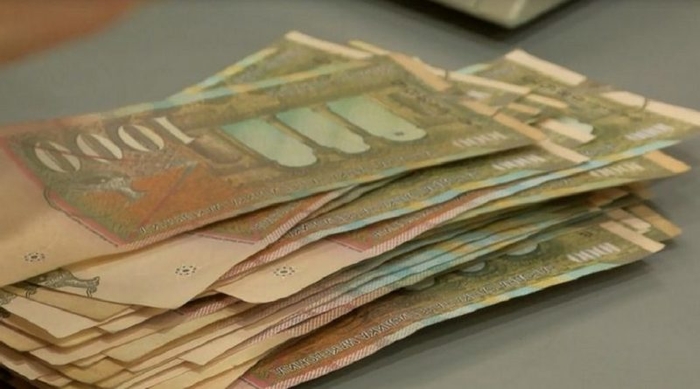
North Macedonia’s minimum wage has been set at 26,046 denars, reflecting an increase of about 1,600 denars, a move that has triggered strong opposition from the Federation of Trade Unions of Macedonia (SSM), whose president, Slobodan Trendafilov, announced protests in March, while Prime Minister Hristijan Mickoski and Minister of Economy and Labor Besart Durmishi defended the adjustment as legally grounded and economically justified.
Trendafilov: “The Increase Is Only 1,600 Denars — We Will Protest”
North Macedonia’s new minimum wage has been set at 26,046 denars, reflecting an adjustment of approximately 1,600 denars, a move that has triggered sharp criticism from the Federation of Trade Unions of Macedonia (SSM). SSM President Slobodan Trendafilov announced that the union does not accept the level of harmonization and has already left a session of the Economic and Social Council in protest.
Trendafilov stated that the increase is insufficient given the current cost of living and emphasized that the SSM will organize protests in March. According to his remarks, the adjustment does not correspond to the real needs of workers, and he reiterated the union’s earlier demand for a substantially higher minimum wage. He argued that the legally calculated increase of around 1,600 denars fails to address the growing gap between wages and living expenses. The union leadership signaled that workers will express dissatisfaction publicly and that organized protest actions are being prepared.
The SSM’s position is that the methodology applied for calculating the new minimum wage leads to an automatic but minimal adjustment, rather than a politically negotiated solution that would significantly raise workers’ purchasing power. Trendafilov underscored that the union remains firm in its demand and will continue to exert pressure through institutional and public mechanisms.
Mickoski: The Minimum Wage Is Increased in Line with the Law
Prime Minister Hristijan Mickoski stated that the new minimum wage amount of 26,046 denars has been determined in accordance with the existing legal framework and the prescribed calculation methodology. He emphasized that the increase is the result of legal harmonization and not a discretionary political decision.
Mickoski underlined that the government is acting within the law and that the adjustment reflects the formula tied to average wage movements and other economic indicators. According to his statements, the government has fulfilled its legal obligation regarding the minimum wage calculation. He rejected claims that the authorities are neglecting workers’ interests and stressed that the process follows established procedures.
Durmishi: Government Basket 13% Cheaper Than Union’s
Minister of Economy and Labor Besart Durmishi addressed the broader debate about living costs, stating that the government’s calculated average consumer basket is 13 percent cheaper than the one presented by the trade unions. His remarks directly relate to the dispute over whether the minimum wage increase is sufficient in relation to real household expenses.
Durmishi argued that methodological differences account for the discrepancy between the government’s and the union’s figures, suggesting that the official data indicate a lower cost of living than what the SSM claims. He maintained that the government’s calculations are grounded in official statistical parameters and defended the current approach to wage harmonization.
Ongoing Social Dialogue and Escalating Tensions
The developments have intensified tensions within the framework of social dialogue between the government, employers, and trade unions. The SSM’s departure from the Economic and Social Council session marks a significant escalation, signaling dissatisfaction not only with the outcome but also with the negotiation process.
With the minimum wage now officially set at 26,046 denars and protests announced for March, the dispute highlights a widening gap between the government’s interpretation of legal compliance and the trade unions’ demand for stronger intervention to improve workers’ living standards. The issue remains central in the broader debate over wage policy, inflation, and the calculation of the average consumer basket in North Macedonia.