Early reports and political signaling before Tehran’s confirmation
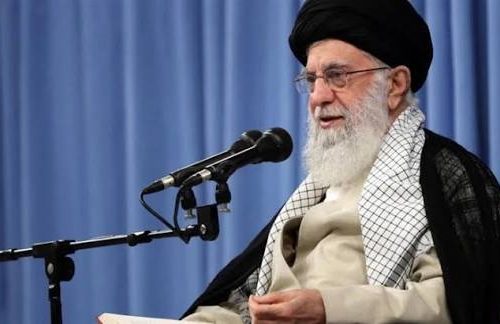
Claims that Iran’s Supreme Leader Ayatollah Ali Khamenei had been killed began circulating after a wave of U.S.-Israeli strikes on Iran, with a senior Israeli official telling Reuters that Khamenei was dead and that his body had been found, while there was initially no immediate official confirmation from Iran.
During the same period of uncertainty, U.S. President Donald Trump publicly suggested the reports were accurate—saying the U.S. believed it was a “true story” when asked about claims that Khamenei had been killed—while other reporting noted he posted that Khamenei was “dead” on social media, without presenting evidence in that post.
Iranian state-media confirmation and initial official measures
Hours later, Iranian state media confirmed that Khamenei had been killed in a series of air and missile strikes carried out by the United States and Israel, according to the reports cited in the provided coverage. The same reporting said Iranian authorities declared a 40-day national mourning period, signaling the start of an uncertain political transition at the top of the Islamic Republic.
Parallel coverage also described Iranian officials and institutions issuing threats of retaliation after the confirmation, with statements attributed to Iran’s Revolutionary Guard and additional reports of continued strikes and explosions in and around Tehran as the confrontation escalated.
Iran’s president and foreign minister: “Declaration of war” and “the path will continue.”
Iran’s President Masoud Pezeshkian was quoted describing Khamenei’s killing in the U.S.-Israeli attacks as a “declaration of war against Muslims,” framing the event not only as a leadership loss but as an assault on the wider Islamic world.
Iran’s Foreign Minister Abbas Araghchi, meanwhile, was quoted saying that Khamenei’s “path will continue,” a message aimed at projecting continuity and stability at a moment when questions about leadership succession and internal control were intensifying.
Succession steps: appointment to a temporary leadership council
As attention shifted to what happens next, Iran moved to formalize an interim leadership arrangement. Reporting said Ayatollah Alireza Arafi was appointed to a temporary leadership council that will lead the country following Khamenei’s killing, alongside the president and the head of the judiciary, until the Assembly of Experts selects a permanent leader “as soon as possible.”
Putin’s reaction: “cynical act” and condemnation of legality and morality
Russian President Vladimir Putin condemned Khamenei’s killing, calling it a “cynical act” that violates “all norms of human morality and international law,” while also describing Khamenei as an “extraordinary statesman.” The same reporting noted Russia’s long-standing strategic partnership with Iran and Moscow’s continued contact with Iranian leadership amid what it labeled aggression against Tehran.
Reactions inside Iran: celebrations, mourning, and uncertainty
Inside Iran, public reaction was described as sharply divided. Reports said some people celebrated in multiple cities—citing verified videos and accounts—while others gathered in Tehran in visible mourning, wearing black, holding Khamenei’s photos, and chanting anti-U.S. and anti-Israel slogans. The same coverage said Iranian state media announced 40 days of public mourning and seven days of state holidays.