Property prices in Slovenia continued their upward trend in 2025, marking the eleventh consecutive year of growth, according to official data. Residential real estate rose by 5.8%, while commercial properties recorded an even stronger increase of 8.5%.
The housing market, however, is showing increasingly uneven dynamics, with sharp differences between property types and regions.
New houses drive price growth
The strongest growth was seen in newly built family homes, where prices surged by more than 11% over the past year. In contrast, older houses recorded a more moderate increase of just under 5%.
The apartment market painted a mixed picture. Prices of second-hand flats rose significantly, by over 8%, reflecting continued demand and limited supply. Meanwhile, newly built apartments in multi-unit buildings saw a slight decline, suggesting either weaker demand at higher price levels or a temporary oversupply in certain segments.
Regional gaps widen
Price growth varied notably across the country. In the capital, Ljubljana, where property values remain the highest, resale apartment prices increased by nearly 7%. Outside the capital, growth was stronger, averaging above 9%.
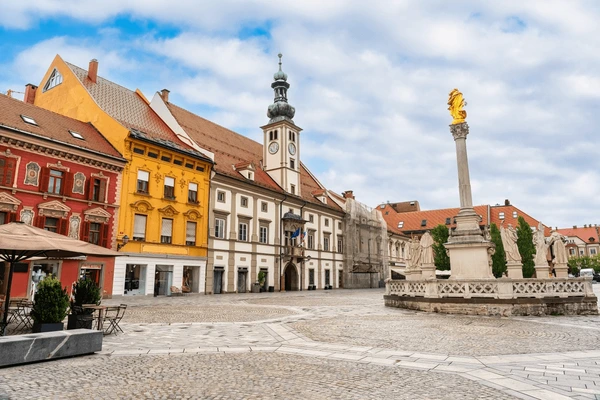
The most significant jump was recorded in Maribor and its surrounding area, where prices for existing apartments surged by more than 12%, pointing to a shift in demand toward more affordable urban centers.
Strong demand despite rising costs
The total value of residential real estate transactions reached approximately €1.9 billion in 2025, indicating that demand remains resilient despite higher prices and tighter financing conditions.
Ljubljana continues to dominate the market, with transactions involving resale apartments alone accounting for nearly €400 million. The number of such deals in the capital increased by around 25% compared to the previous year.
By the end of 2025, housing prices had reached more than double their 2015 levels, underlining the long-term upward trajectory of the market.
The commercial sector recovers slowly
The commercial property segment also saw price growth, though at a more moderate pace compared to previous years.
Retail and service spaces led the increase, with prices rising by over 15%, driven by the recovery of consumer activity. Office space, on the other hand, experienced only marginal growth, reflecting ongoing shifts in workplace trends and demand for flexible work environments.
Despite the price increases, transaction volumes in the commercial sector remain subdued. Although activity picked up by about 25% in 2025 after a weak 2024, it is still significantly below pre-pandemic levels.