Wall Street recorded its biggest daily advance in almost a year after U.S. President Donald Trump said the war against Iran could end within two to three weeks, a message that markets interpreted as a possible sign of de-escalation after a month of conflict that had shaken the Middle East and disrupted global energy markets. The Dow Jones rose 2.49 percent to 46,341 points, the S&P 500 gained 2.91 percent to 6,528, and the Nasdaq jumped 3.83 percent to 21,590, with the strongest support coming from technology and communications stocks. Shares of companies such as Nvidia, Alphabet and Meta Platforms rose by more than five percent, helping drive the rebound.
The market rally came even though the energy situation remained highly unstable. Trump also said the Strait of Hormuz, which Iran had blocked since the beginning of the war, was “no longer his problem,” even as the disruption continued to hang over global trade in oil and gas. At the same time, oil prices kept climbing and reinforced the sense that investors were reacting to two opposing forces at once: relief over a possible end to the conflict and continued anxiety over supply risks.
Oil prices, meanwhile, posted one of their most dramatic moves in decades. Brent crude rose 64 percent in March, the biggest monthly increase since the Gulf War in 1990, while futures for U.S. crude climbed to $102.72 a barrel, and Brent futures reached $105.29. Separate reports said Brent briefly touched $119 a barrel on Tuesday, near its highest level since the start of the U.S.-Israeli war with Iran. The reporting stressed that this was no longer being seen as a short-lived market shock but increasingly as a new pricing reality tied to fears of a prolonged conflict and deeper disruptions in supply.
The core driver of the surge remained the closure of the Strait of Hormuz, a strategic passage through which a large share of the world’s oil moves. The conflict widened from air strikes and missile exchanges to shipping routes in the Gulf, and the blockage fed expectations of tighter global supply. The reports underline that even occasional signals about possible talks had not eased the broader concern, because neither side appeared ready for a quick end to the confrontation.
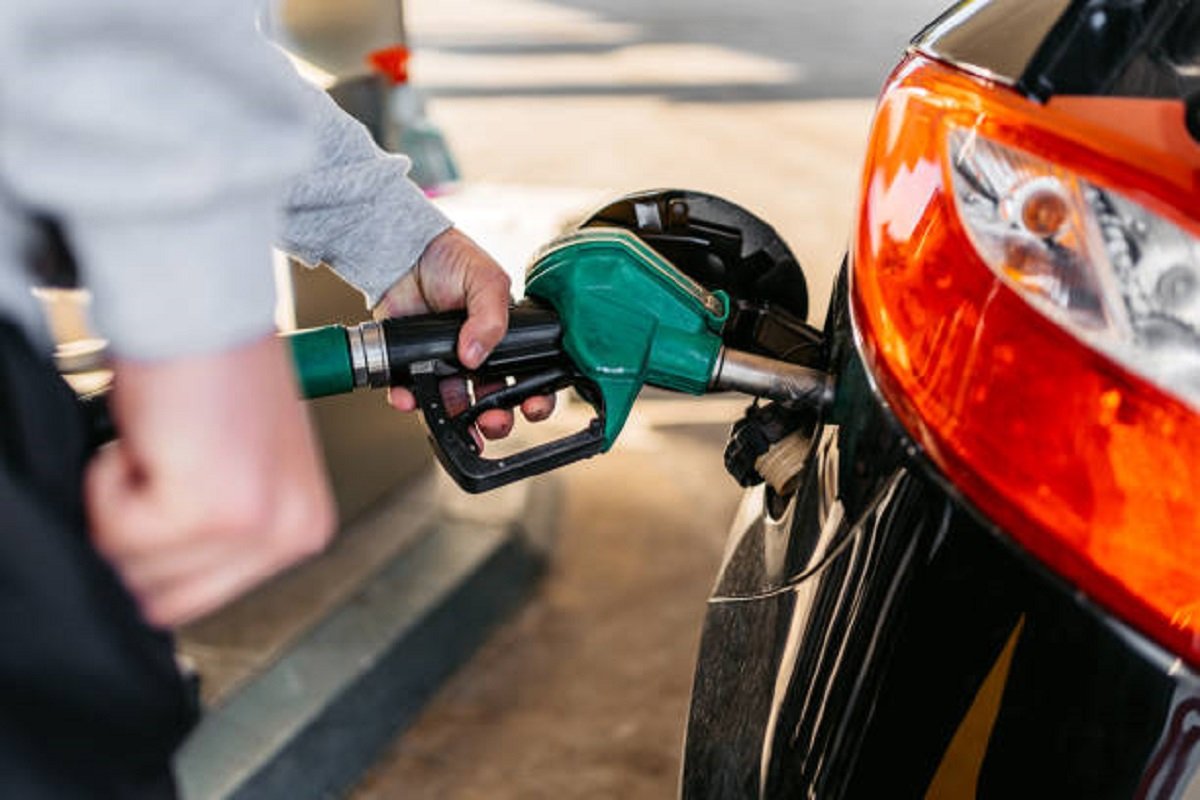
The impact has already been felt by consumers well beyond financial markets. In the United States, average gasoline prices moved above four dollars a gallon for the first time in nearly four years. In the United Kingdom, petrol rose to 152.8 pence per litre, the highest in two years and around 20 pence above the level at the start of the war, while average diesel prices climbed to 182.77 pence, the highest since December 2022 and roughly 40 pence above the level seen when the conflict began. The broader reporting said fuel prices in several countries had jumped to levels not seen in years.
Governments have begun responding in different ways to the pressure created by higher energy costs. One report said Australia introduced free bus transport, while Egypt asked shops, restaurants, and cafés to close earlier in an effort to reduce energy consumption. The same coverage presented these measures as signs that the consequences of the oil shock were no longer confined to trading floors but were beginning to shape public policy and daily life.
The rebound in U.S. equities also spilled into Asia, where stock markets followed Wall Street higher. An MSCI index of Asia-Pacific shares rose 2.7 percent after having fallen around 12 percent in March, while markets in Shanghai, Hong Kong, Australia, India, Japan and South Korea all posted gains. South Korea’s Kospi rose more than 6.5 percent, Japan’s Nikkei 225 climbed 4.04 percent, and India’s Nifty 50 advanced 2 percent, reflecting a broader return of risk appetite after Trump’s remarks.
Taken together, the reports describe a global market caught between optimism and deep uncertainty: equities surged on the possibility that the war might end soon, but oil remained above $100 a barrel after its largest monthly jump since 1990, signaling that traders still see the Middle East conflict and the blockade of Hormuz as a serious threat to global energy supply.