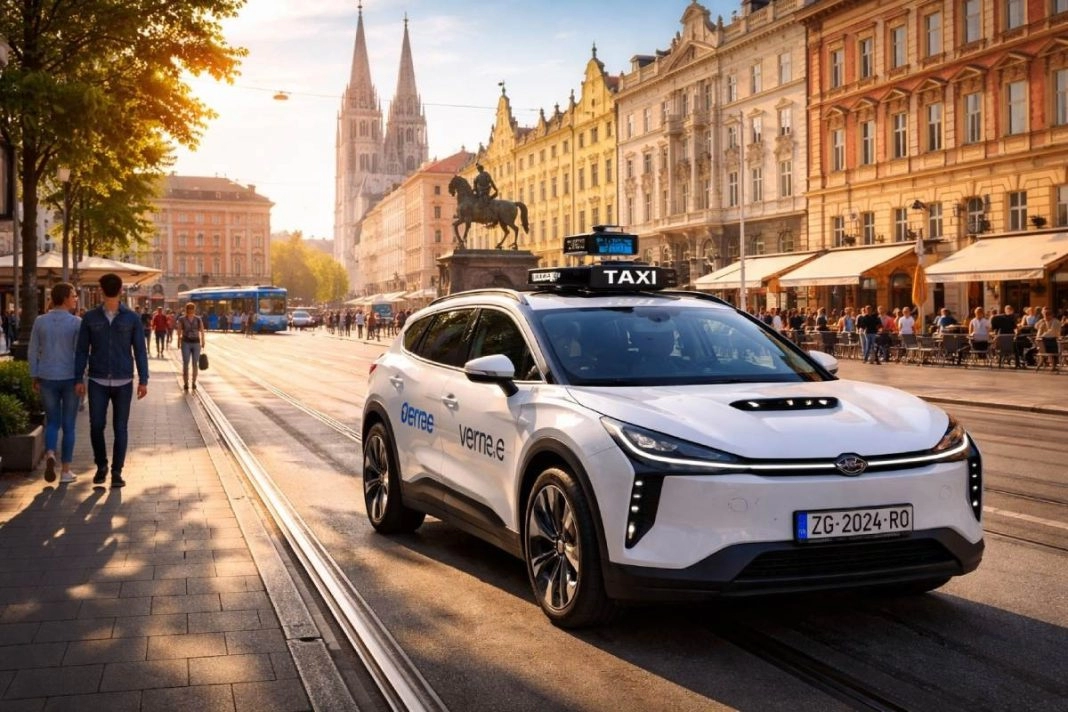
Zagreb has become the first city in Europe to introduce a fully commercial robotaxi service, marking a major technological step forward for the region and positioning Croatia at the forefront of autonomous mobility. The project is the result of a partnership between Uber, Pony.ai, and the Croatian startup Verne, combining global technological expertise with local operational support.
The system is built on a clear division of roles: Pony.ai provides the autonomous driving technology, Verne manages the fleet and handles operations on the ground, while Uber integrates the service into its global ride-hailing platform, allowing users to access robotaxis through familiar digital interfaces.
The service has already entered commercial operation in Zagreb, where users can book and pay for rides via the Verne application, with integration into the Uber app expected to follow. Initially, the service covers a wide urban area of approximately 90 square kilometers, including key parts of the city and the airport, and operates on a daily schedule, with plans for gradual expansion.
This launch represents a major milestone not only for Croatia but for Europe as a whole, as it is the first time that a fully commercial robotaxi service is available to the public on the continent. The project builds on prior testing and validation on Zagreb’s streets, demonstrating that autonomous driving systems can function in real urban conditions and within European regulatory frameworks.
Beyond the technological dimension, the initiative is also part of a broader strategy to scale autonomous mobility globally. The companies involved have announced ambitions to expand the service to other European cities and significantly increase the number of vehicles in operation in the coming years, aiming to create a large, scalable network of robotaxis.
Taken together, the development positions Zagreb as a testing ground and entry point for autonomous transport in Europe while signaling a wider shift in urban mobility. The introduction of robotaxis in the Balkan region is being presented as both a technological breakthrough and a preview of how everyday transport could evolve, with autonomous vehicles gradually becoming part of mainstream public use.