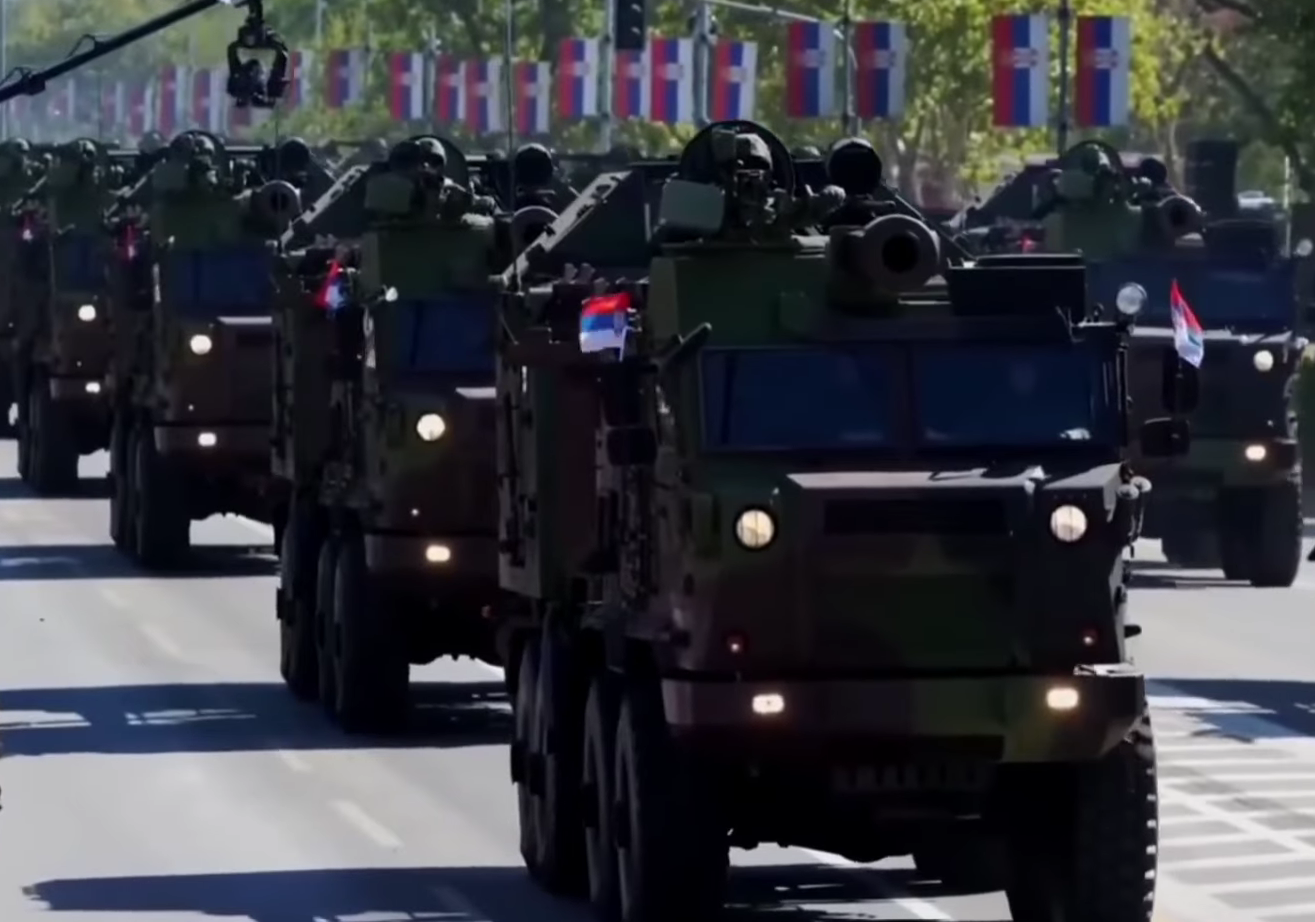
Serbian President Aleksandar Vucic has announced major new weapons sourcing contracts and military modernization plans, warning that the security situation has grown “somewhat more complex” due to what he described as an alliance between Tirana, Zagreb, and Pristina. Speaking at a presentation on Serbian army readiness attended by political leaders from Bosnia’s Republika Srpska entity, Vucic revealed that “very important contracts for the procurement of weapons and military equipment” would be signed in the coming days, with “large orders” already placed for the army.
The Serbian leader aims to modernize the armed forces and implement robotization and digitalization, as well as joint drone production with Israel that intends to strengthen unmanned aerial vehicle manufacturing.
While Vucic did not specify what weapons would be acquired, Serbia has already raised regional eyebrows by becoming the first European country to deploy Chinese CM-400 AKG hypersonic missiles, capable of striking targets up to 400 kilometers away, with Croatian officials noting they could reach Zagreb.
Vucic’s security concerns center on the defense cooperation agreement signed in March 2025 by Croatia, Albania, and Kosovo, which provides for joint military exercises, integrated training, and countering hybrid threats.
Serbian officials have consistently framed this as a “military alliance directed against Serbia,” despite denials from Zagreb, Tirana, and Pristina that the arrangement constitutes a formal alliance or poses any threat to Belgrade.
“Our commitment to preserving peace and stability has not changed,” Vucic insisted, while simultaneously warning that Serbia is preparing for potential aggression.
Milorad Dodik, the political leader of Republika Srpska who attended the event alongside Vucic, also mentioned these concerns, declaring that the cooperation agreement is directed “against the Serbian people as a whole” and represents “a factor of disturbance regarding the security of the entire region”.
Dodik’s appearance alongside Vucic highlights the growing partnership between Serbia’s government and the Bosnian Serb leadership, even as U.S. lawmakers push for new sanctions against Dodik for his actions aimed at breaking away from Bosnia and threatening the country’s unity.
The NATO members Croatia and Albania, alongside Kosovo, maintain that their cooperation aims solely at strengthening regional stability and Euro-Atlantic integration, not threatening Serbia.
However, Vucic’s language, mixing military buildup with claims that Serbia is being surrounded by enemies, suggests Belgrade views the region through an increasingly competitive lens, raising questions about whether these weapons purchases are purely defensive or part of a broader strategy to assert Serbian influence in the Western Balkans.