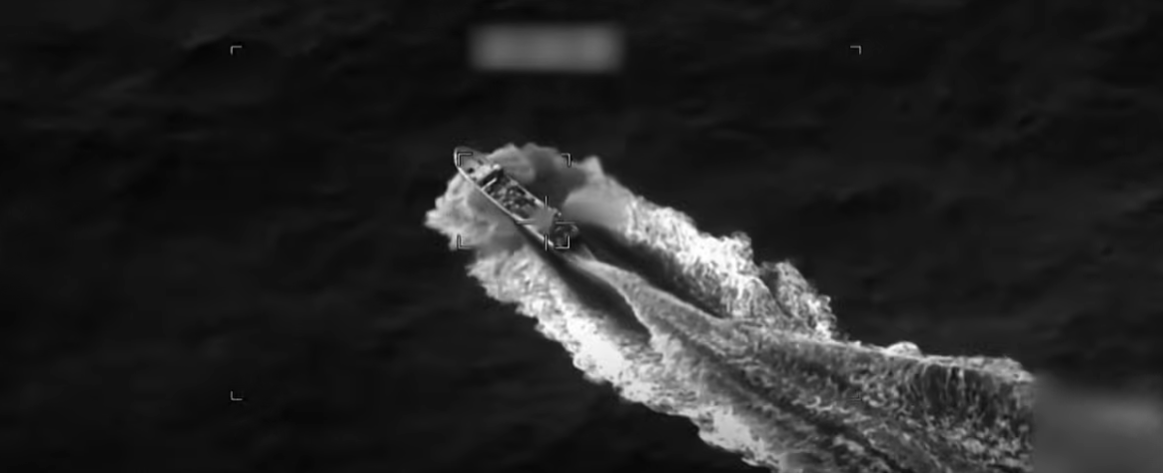
Three people were killed after U.S. forces struck a vessel in the eastern Pacific Ocean that Washington said was linked to drug trafficking, in the latest operation under an expanding American maritime campaign in Latin American waters. U.S. Southern Command said the boat was targeted as part of counter-narcotics operations, though public evidence confirming the presence of drugs on board was not presented.
The latest strike is part of a broader campaign launched by the Trump administration in September 2025, aimed at destroying vessels suspected of moving narcotics through waters off South and Central America, as well as the Caribbean. According to recent reporting, the campaign has already caused at least 186 deaths, making it one of the most controversial elements of Washington’s anti-cartel strategy.
After the attack, U.S. Southern Command released video showing a fast-moving boat before an explosion engulfed it. The military said its operations are focused on people suspected of transporting narcotics along known smuggling routes, while President Donald Trump has defended the campaign by describing it as part of an “armed conflict” with Latin American cartels and arguing that such actions are necessary to curb drug flows into the United States.
The campaign, however, is facing growing criticism. Rights groups and legal experts have questioned the legality of these strikes, calling them possible extrajudicial killings and arguing that the U.S. government has not consistently demonstrated that the destroyed vessels were in fact carrying drugs or posed an immediate threat. In several similar cases, the military described those killed only as alleged “narco-terrorists” without publicly identifying them or detailing the intelligence behind the operations.
The latest incident therefore adds to a widening debate over the balance between anti-trafficking enforcement and the legal limits of military force. While Washington presents the operations as a necessary response to transnational drug networks, critics say the rising death toll and lack of public evidence are making the campaign increasingly difficult to defend.