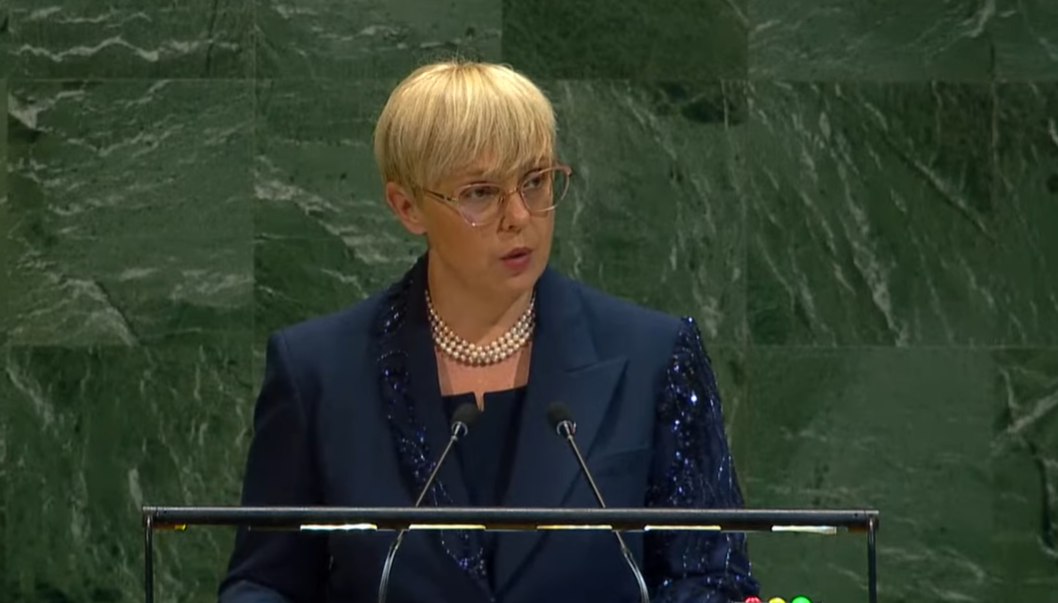
Slovenian President Nataša Pirc Musar has informed the public that she will not give a mandate to anyone to form the next government, after consultations with political parties failed to show that any candidate had the support of a parliamentary majority. Instead, she said the process of choosing the next prime minister will now be left to the National Assembly. The decision came after she had previously announced that consultations would continue following a first round that did not produce evidence of majority support, but on Saturday she said she was ending that process.
Pirc Musar stated that she had completed consultations on a candidate for the next prime minister and had established that no one had the support of the majority of representatives in the National Assembly. She therefore informed the speaker of parliament that she would not propose a candidate for prime minister. She also said she did not want to give a mandate even for the formation of a minority government, directing parliament to take over the entire procedure.
In explaining the decision, Pirc Musar pointed to a lack of mutual respect and trust during her consultations with parliamentary parties, describing it as a bad sign for cooperation with a potential new government. She said that on Slovenia’s political scene, respect, honesty and goodwill had too often given way to political calculations and short-term interests. She also said that one thing had been heard during the election campaign and something completely different after the elections, adding that she did not want to be part of such politics and calling on parliament to assume responsibility for electing the prime minister.
Under the parliamentary procedure described in the reports, a parliamentary group or ten members of parliament can propose a candidate for prime minister. To form a government, a candidate needs a majority of 46 votes in the National Assembly. Pirc Musar had earlier made clear that she would not grant a mandate without proof that the candidate had majority support in parliament.
Technical Prime Minister Robert Golob, president of the Freedom Movement, whose party was the relative winner of the election, said he could not gather enough support to form a government. Janez Janša, president of the Slovenian Democratic Party, has kept open the possibility of forming a government. The Freedom Movement won 29 seats, one more than the SDS. Janša announced that he would offer a coalition agreement to those in parliament who support his party’s proposed amendments to the government law, which would abolish and merge ministries.
According to the reports, the next move is expected in parliament. Janša said the SDS would not form a government at any cost, but with the support of the pre-election coalition led by NSi, which has eight MPs, the Democrats, with six MPs, and Resnica, with five MPs, he could reach more than the 46 votes needed for a majority in Slovenia’s 90-seat parliament. The president’s decision has therefore moved the post-election process from the presidential consultations to the parliamentary arena, where parties will now have to show whether a viable majority can be formed.