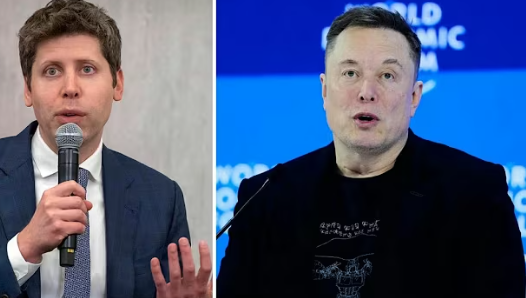
Elon Musk appeared in federal court this week as the first witness in his lawsuit against OpenAI, delivering a forceful argument that the company he helped create has abandoned the nonprofit mission on which it was founded.
The case, now being heard in federal court in California, could have major consequences for one of the most influential companies in artificial intelligence. Musk, who co-founded OpenAI in 2015 with Sam Altman, Greg Brockman and others, argues that the organization was originally created to develop advanced AI for the benefit of humanity, not to become a highly valuable commercial enterprise.
During his testimony, Musk framed the dispute in simple terms, saying the case was about whether a charity could be redirected for private gain. His legal team is asking the court to remove Altman and Brockman from their leadership roles and return OpenAI to a fully nonprofit structure.
OpenAI strongly rejects Musk’s claims. The company says the lawsuit is driven by Musk’s personal and business interests, especially after he launched his own AI company, xAI. OpenAI has accused him of trying to weaken a competitor through legal action and public attacks.
The trial comes at a critical moment for the AI industry. OpenAI, best known for ChatGPT, has become one of Silicon Valley’s most powerful companies and has attracted massive investor interest. Its commercial arm and partnership with Microsoft have helped finance the development of advanced AI systems, but they have also raised questions about whether the company has remained faithful to its original public-benefit mission.
At the center of the case is the question of what commitments OpenAI’s founders made to one another when the organization was created, and whether the later creation of a for-profit structure violated those commitments or any rules governing charitable organizations.
The courtroom drama has also become a high-profile clash between some of the biggest names in technology. Musk, Altman, Brockman and Microsoft CEO Satya Nadella are among the figures expected to feature in the proceedings. Legal filings have already brought to light private messages and emails that reveal tensions between key players in the AI industry.
Before jurors entered the courtroom, Judge Yvonne Gonzalez Rogers warned both Musk and Altman against posting about the trial on social media while the case is ongoing. Both agreed to refrain from further public commentary on the proceedings.
Musk’s lawyer portrayed him as the driving force behind OpenAI’s early development, saying he provided money, credibility, business judgment and access to leading researchers and technology executives. Musk echoed that view during his testimony, arguing that his reputation and network helped the organization attract talent and attention in its early years.
He also suggested that Altman was not yet widely known in the technology world when OpenAI was founded. According to Musk, his own connections were essential to getting the project off the ground, including relationships with senior figures at major technology companies.
OpenAI’s legal team presented a very different version of events. Under cross-examination, the company’s lawyer argued that Musk was not deeply involved in OpenAI’s technical work and that he did not have the level of AI expertise he claimed. The defense also suggested that Musk left the organization after failing to secure the level of control he wanted.
According to OpenAI’s side, the creation of a commercial structure was necessary because developing advanced AI required enormous amounts of capital. Microsoft, which later became a major backer of OpenAI, is also named as a defendant in Musk’s lawsuit. The company has argued that its investment helped fund OpenAI’s broader mission rather than undermine it.
Musk, however, testified that he objected when Altman and Brockman proposed moving toward a for-profit model. He said he believed such a shift was inappropriate for an organization that had been launched as a nonprofit.
The trial is expected to last several weeks and will likely examine not only OpenAI’s internal history, but also broader questions about who should control powerful AI systems, how public-interest commitments should be enforced, and whether companies developing transformative technologies can balance commercial growth with their original missions.
Whatever the outcome, the case has already become one of the most closely watched legal battles in the technology world, with implications that could extend far beyond the personal conflict between Musk and Altman.