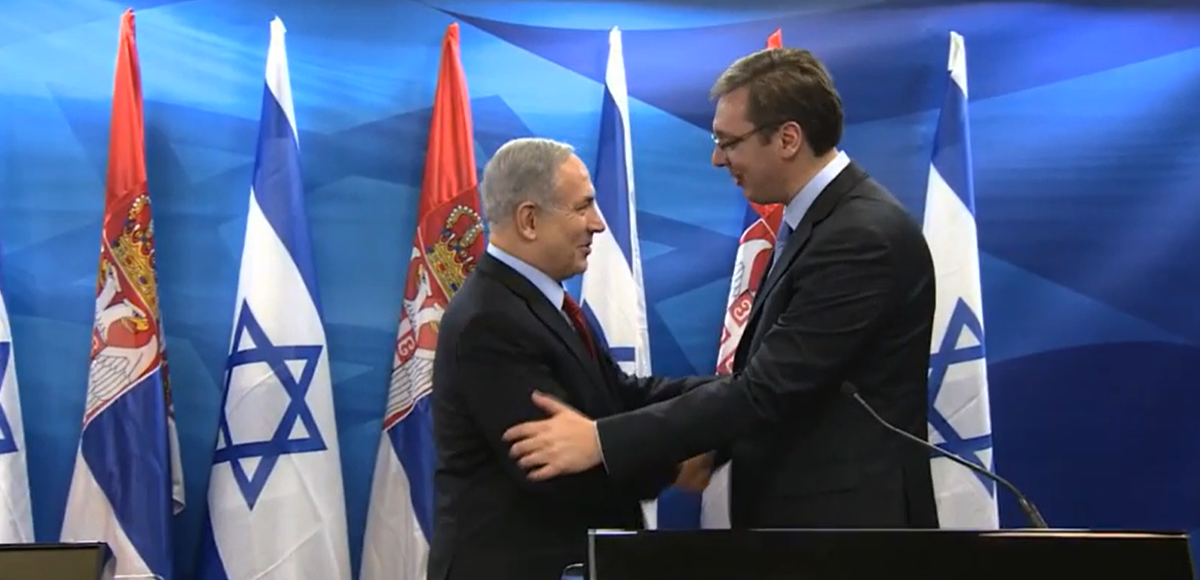
Serbia and Israel have signed a new defence-sector security agreement that could accelerate future arms procurement and deepen military cooperation between the two countries.
The agreement, signed by the Serbian and Israeli defence ministries, regulates the exchange and protection of classified information in the defence field. Serbia’s parliamentary Security Board has already supported the provisional application of the deal, meaning parts of it can take effect before the document is formally adopted by parliament.
According to the text of the agreement, earlier implementation would allow the faster signing and activation of contracts connected to the purchase of weapons and military equipment. The stated goal is to strengthen the operational capabilities of the Serbian Armed Forces.
Although officials have not publicly confirmed which contracts are directly linked to the agreement, attention has focused on Serbia’s recent defence cooperation with Israeli company Elbit Systems. The company has already sold Serbia advanced artillery systems and drones, while additional large-scale deals reportedly include drones, long-range missiles, electronic warfare equipment and other military technology.
There have also been reports that Serbia is preparing to produce drones domestically in cooperation with Elbit Systems, a plan later confirmed by President Aleksandar Vučić.
The agreement comes at a politically sensitive moment. Serbian arms exports to Israel have increased sharply since 2023, reaching a reported value of 114 million euros last year. This has drawn criticism from human rights groups and political opponents, especially amid international calls to halt weapons deliveries to Israel over the war in Gaza.
Opposition MP Bogdan Radovanović from the Green-Left Front, who voted against the agreement at the Security Board session, said the Defence Ministry had not clearly explained why urgent implementation was necessary. He also questioned how broad the concept of “mutual protection” of classified information could become, particularly when foreign security bodies are involved.
The agreement covers a wide range of defence-related cooperation, including arms sales, military know-how, dual-use goods, software, technology, contracts and joint ventures. It applies to public and private entities involved in defence deals, as well as to employees, representatives and consultants handling classified information.
Implementation will be handled by Serbia’s Defence Ministry and Israel’s Directorate for Security of the Defence Establishment, known as Malbab, a body connected to the protection of sensitive defence information and technological intelligence.
The document also provides for a joint working group and allows both countries to send security expert delegations to each other’s territory.
One of the more notable provisions is the confidentiality clause. Both sides agree not to publicly disclose disputes related to the agreement, while disagreements would not be taken before national or international courts or tribunals. Public statements about cooperation under the deal would also require written approval from the other party.
For Serbia, the agreement may open the way for faster access to advanced Israeli military technology. At the same time, it raises questions about transparency, oversight and the political consequences of expanding defence ties with Israel at a time of heightened international scrutiny.