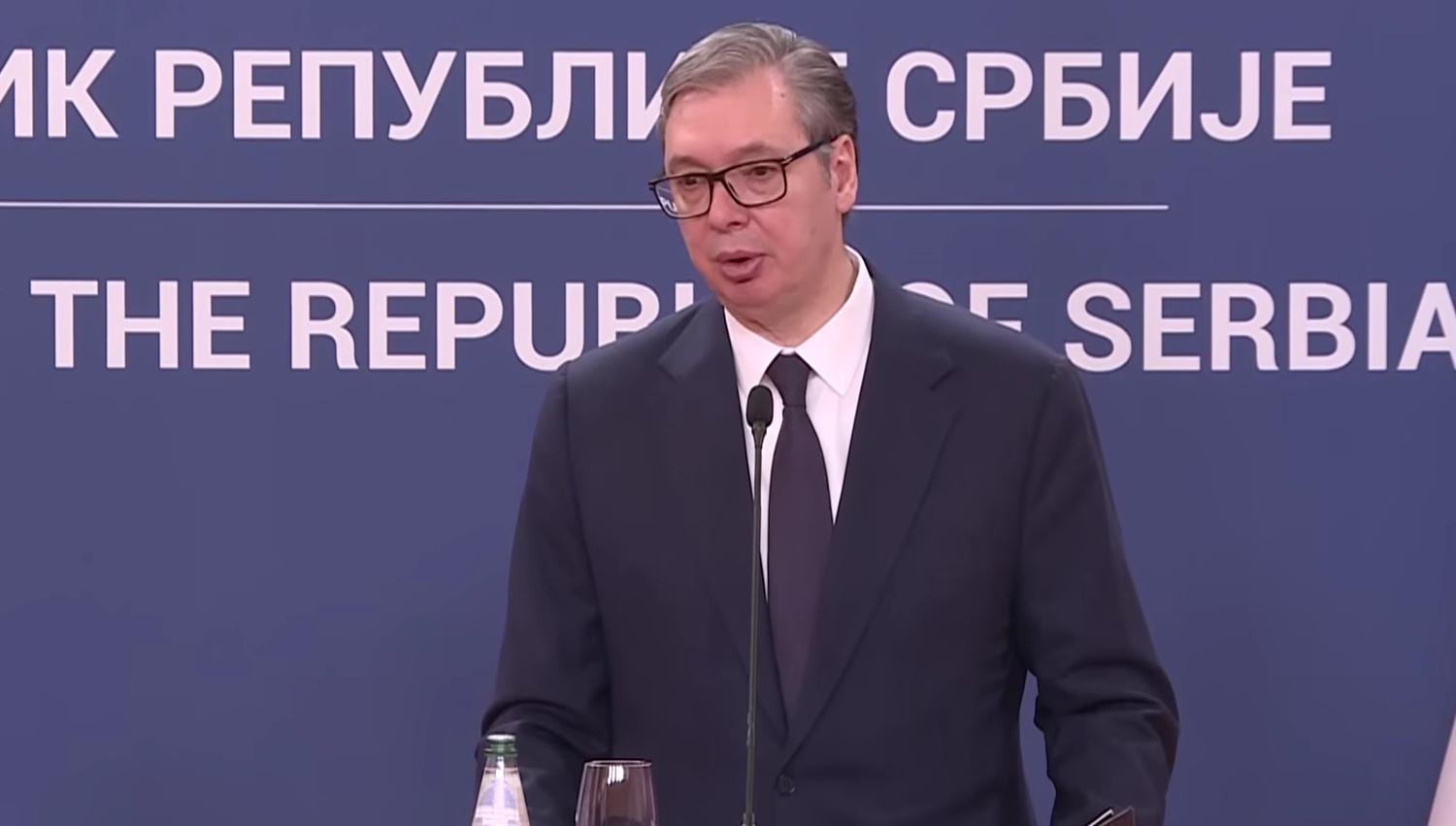
Serbian President Aleksandar Vučić announced that the government will release tens of thousands of tons of oil from state reserves onto the domestic market in the coming days, a move designed to shield consumers from surging global energy prices triggered by the Iran war and the effective closure of the Strait of Hormuz.
Vučić revealed that Serbia has already paid 17 million euros more than planned to replenish its reserves due to the sharp rise in oil prices, adding that the situation would be far worse if the country did not possess its own refinery in Pančevo. Despite expressing confidence that Serbia’s economic growth will reach between 2.7 and 2.8 % this year despite global conflicts and economic pressures, the decision underscores the unstable position of a country caught between its historical energy dependence on Russia and the crushing weight of Western sanctions .
The backdrop to this announcement is a year long energy crisis that has tested Serbia’s strategic balancing act. The country’s only refinery, NIS, is majority owned by Russia’s Gazprom Neft and has operated under US sanctions since October 2025, with Washington demanding complete Russian disinvestment. The sanctions forced a temporary shutdown of the Pančevo refinery in late 2025 when banks stopped processing payments and Croatia’s JANAF pipeline halted crude deliveries, leaving Serbia scrambling to secure alternative supply routes and import fuel for state reserves. Although a US Treasury license extended operations until April 17, 2026, the arrangement remains fragile, with ongoing negotiations between Hungary’s MOL and Gazprom Neft over the Russian stake in NIS still unresolved. Serbia has responded by expanding its mandatory oil reserves from 33 days to 52 days of average daily imports over the past three years, commissioning new storage tanks in Smederevo with a capacity of 96,000 tonnes, and implementing emergency measures including a 20 % cut in fuel excise taxes and price caps to keep petrol around €1.58 per liter and diesel near €1.77 per liter.
For the broader Balkan region, Serbia’s crisis offers a cautionary tale about the dangers of energy dependence on sanctioned Russian entities. While Belgrade has managed to keep fuel prices relatively modest compared to global spikes, petrol rising only from €1.51 to €1.61 per liter since February, the state is absorbing massive costs to maintain stability. The World Bank warns that the Iran war will trigger the largest energy price surge since Russia’s 2022 invasion of Ukraine, with a projected 24 % increase in energy costs this year that threatens to stall economic progress across developing nations . Vučić’s decision to tap strategic reserves reflects a recognition that Serbia cannot rely indefinitely on subsidy programs that drain budget revenues, particularly when the NIS sanctions waiver expires in mid April with no permanent solution in sight. As the Balkans face their most volatile energy environment in years, Serbia’s experience demonstrates that maintaining strategic reserves and domestic refining capacity, however politically complicated, remains essential for national security in an era of geopolitical disruption.