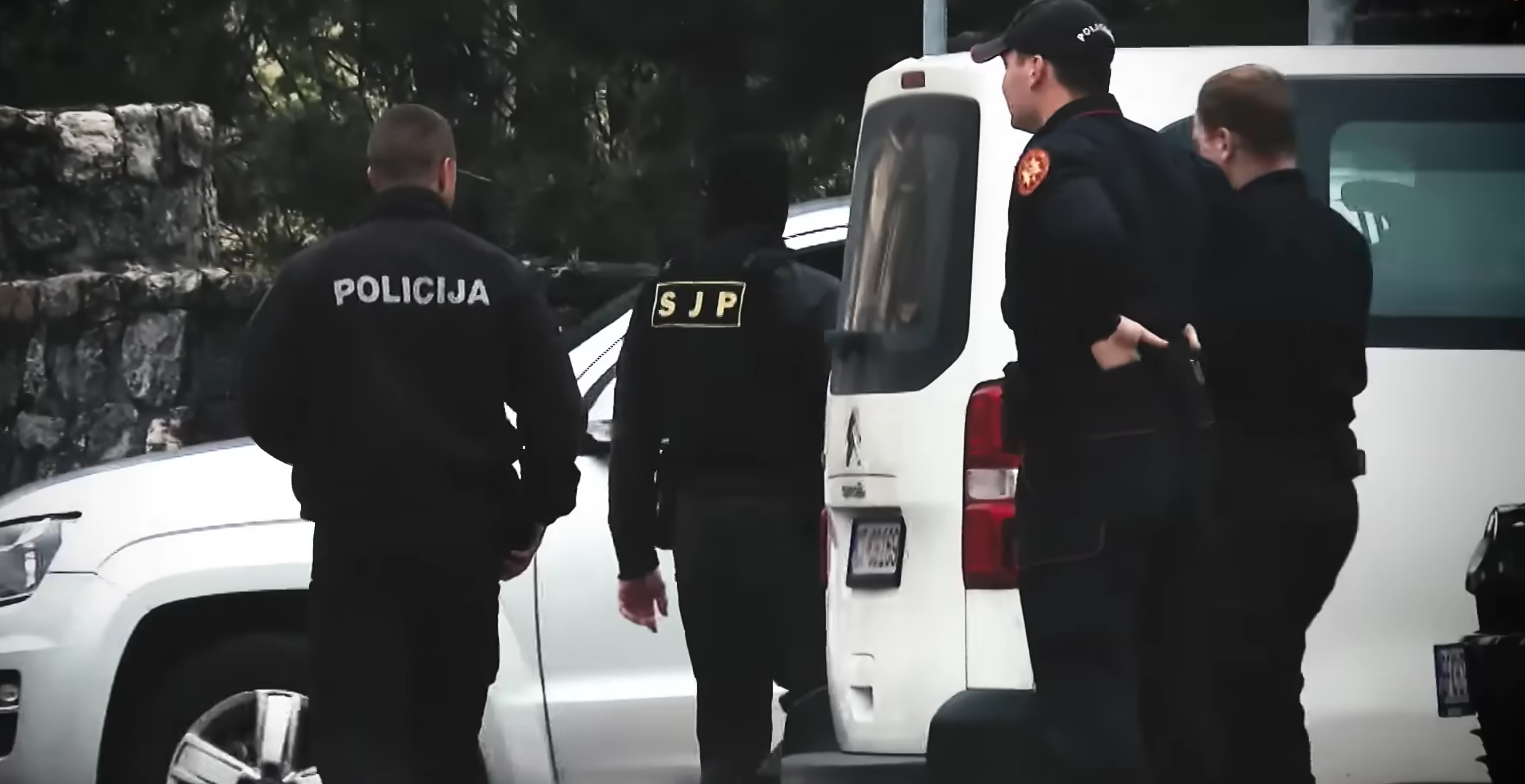
The Podgorica Higher Court has confirmed an indictment against 13 members of the Kavač criminal clan led by fugitive drug lord Radoje Zvicer, expanding a sweeping prosecution that now targets dozens of suspects in what authorities describe as one of Montenegro’s most extensive organized crime crackdowns. The 12 defendants named in the December 31 indictment include Nikola Vujotić, Vladimir Vujotić, Goran Čulić, Marko Knežević, Žarko Vukadinović, Ivan Popović, Vojin Vučinić, Stefan Ilić, and suspended Danilovgrad police chief Marko Drobnjak, all accused of joining the criminal organization in 2019 alongside previously indicted members. Prosecutors allege the group was formed by Zvicer and co leader Slobodan Kašćelan with the aim of committing murder, aggravated murder, illegal weapons possession, and drug trafficking across Montenegro and Europe for profit and power, with each member assigned specific roles in the hierarchy.
This latest confirmation builds on three earlier indictments filed by the Special State Prosecutor’s Office against Zvicer and 14 other members, including Vaso Ulić, once described by Australian media as “Montenegro’s Pablo Escobar”, for creating the criminal organization and related offenses, with the main trial already underway in Podgorica. The prosecution has also launched a financial investigation to trace money laundering and illegal assets, while a separate case targets former chief special prosecutor Milivoje Katnić and former police assistant director Zoran Lazović for allegedly creating a criminal organization that cooperated with the Kavač clan, abused official positions, and secured entry bans for clan members. The scale of infiltration extends to politics, Budva mayor Milo Božović was arrested in 2024 and accused of being part of the “police narco cartel” structure working for Zvicer’s benefit, with prosecutors citing encrypted Sky communications where Božović allegedly wrote “we are outside the system, we are criminals”.
The Kavač clan, named after a settlement in Kotor, has been locked in a bloody war with the rival Škaljari clan since 2014 when a 200 kilogram cocaine shipment went missing in Valencia, Spain, splitting what was once a unified Kotor mafia. The feud has claimed at least 50 lives across Europe, from Istanbul, where Škaljari leader Jovan Vukotić was assassinated in 2022, to Kyiv, where Zvicer survived a 2020 hit attempt when his wife Tamara fired back at attackers. Europol estimates that Balkan criminal organizations, including the Kavač and Škaljari clans, control at least 30 percent of the cocaine trade from Latin America to Europe, using extensive financial resources and proven international logistics networks to maintain operations despite arrests and internal conflicts. For Montenegro, the indictments represent both progress and an uncomfortable mirror: a society where organized crime has become what one commentator called “our most successful export product,” rooted in a toxic culture of masculinity and clan loyalty that the state has lacked the will to dismantle .