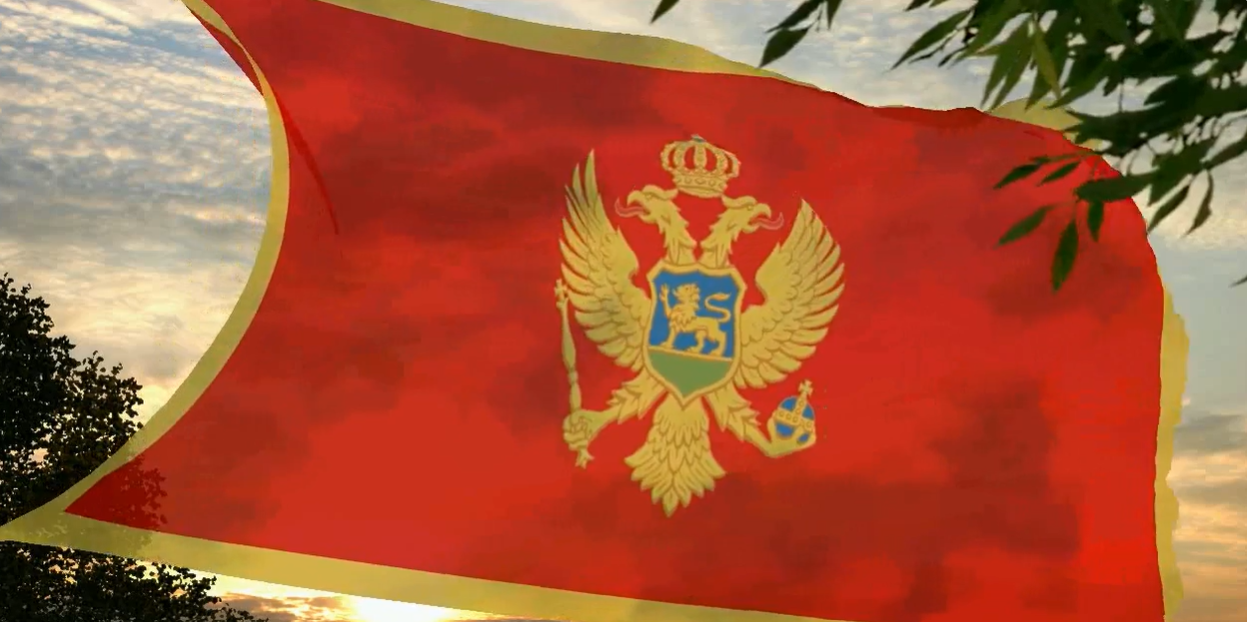
Montenegro’s Foreign Ministry has issued an unusually sharp rebuke of Serbian President Aleksandar Vučić after he publicly dismissed the country’s upcoming independence anniversary as a “glamorous celebration of secession,” exposing how raw the wounds of the 2006 referendum remain two decades later. In a statement released on 15 May, the ministry headed by Ervin Ibrahimović condemned Vučić’s rhetoric as politically irresponsible and incompatible with good neighbourly relations between two internationally recognised states, warning that narratives which deny Montenegrin statehood only encourage division and undermine democratic choices made by citizens. The clash comes at a delicate moment for both countries, Podgorica is racing to close its remaining EU accession chapters by year end, while Belgrade grapples with mounting Western pressure over democratic backsliding and its refusal to align with EU sanctions on Russia.
The immediate trigger for the diplomatic flare up was Vučić’s response to an invitation to attend ceremonies marking the twentieth anniversary of the 21 May 2006 referendum, in which 55.5% of Montenegrins voted to restore independence from the State Union of Serbia and Montenegro, a result validated under a 55% threshold brokered by EU envoy Miroslav Lajčák and monitored by international observers. “I would spit in my own and my people’s faces” if I attended, Vučić declared, framing the vote as an illegitimate severance rather than a democratic exercise. Podgorica fired back that Montenegro never “seceded” from Serbia because it was never part of Serbia in the manner Vučić suggests, rather, both republics were equal members of the state union that emerged after the collapse of Yugoslavia. The ministry stressed that the referendum was conducted in full accordance with the union’s constitutional charter, international law, and EU standards, and that celebrating the outcome is not directed against Serbia or the Serbian people, but honors the freely expressed will of Montenegro’s citizens and their distinct historical and state identity.
Diplomatic observers note that this exchange fits a recurring pattern of identity driven friction that has dogged bilateral ties since Montenegro restored its sovereignty. In 2012, then Serbian President Tomislav Nikolić claimed he did not acknowledge any difference between Serbs and Montenegrins, while in 2020 Belgrade’s ambassador to Podgorica was declared persona non grata over remarks questioning the 1918 Podgorica Assembly that had united the two kingdoms. More recently, pro Serbian parties inside Montenegro’s governing coalition, openly aligned with Vučić, have pushed initiatives to rehabilitate the red-blue-white tricolor flag and elevate Serbian language status, moves analysts link to Belgrade’s “Serbian World” concept of maintaining cultural and political influence across the border. The current Serbian leader’s latest intervention is therefore viewed in Podgorica not as an isolated gaffe, but as part of a broader strategy to keep tensions simmering at a time when Montenegro is poised to become the EU’s next member, a development that would turn the Serbia-Montenegro frontier into an external EU border.
For all the heated rhetoric, both governments continue to declare EU integration a strategic priority, yet the gulf between their interpretations of the past increasingly threatens to derail any meaningful partnership. Civil society groups on both sides warn that persistent historical revisionism and symbolic spats risk further polarising societies already fractured along identity lines, while cooling official communication makes security cooperation and regional policy coordination ever more fragile. With Montenegro determined to mark the anniversary with what it calls “dignity, pride and Europeanness,” and Belgrade showing no sign of tempering its narrative, the episode serves as a stark reminder that in the Western Balkans, the road to Brussels often runs through minefields of memory that no amount of technical accession progress can fully defuse.